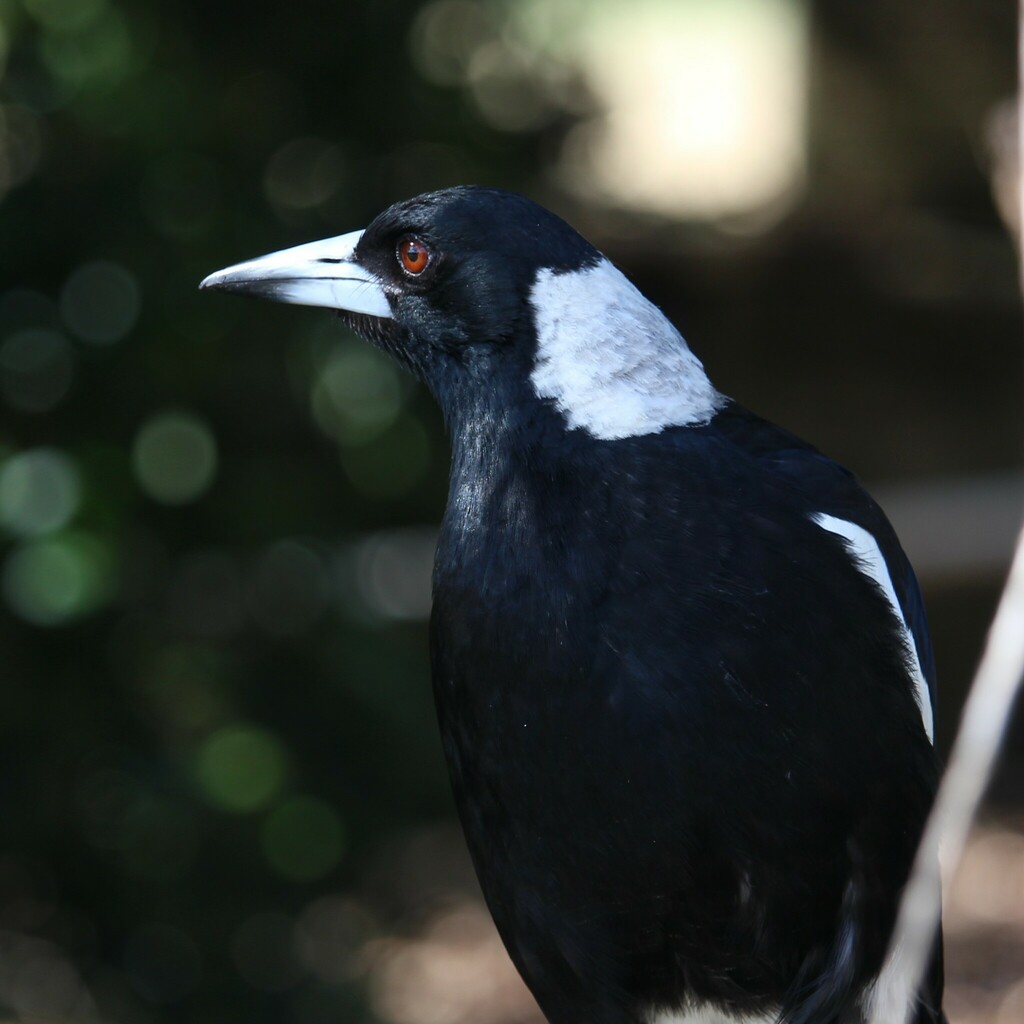
Australian Magpie
Photo © Natasha Taylor
Photo © Natasha Taylor — CC BY 4.0 — Source: iNaturalist #142424131Identification
The Australian magpie is a robust black and white passerine bird ranging from 37 to 43 cm in length. Adults display distinctive black and white plumage, gold-brown eyes, and a solid, wedge-shaped bluish-white and black bill. Males and females are similar in appearance but can be distinguished by differences in back markings: males have pure white feathers on the back of the head, while females have white blending to grey feathers. With its long legs, the Australian magpie walks rather than waddles or hops, and spends considerable time on the ground.
Range & Habitat
Native to Australia and southern New Guinea, the Australian magpie has been introduced to New Zealand, the Solomon Islands, and the Fijian island of Taveuni. The species is common and widespread throughout its range, having adapted remarkably well to human habitation. It is a familiar bird of parks, gardens, and farmland across Australia and New Guinea, where it is generally sedentary and territorial.
Behaviour & Diet
Described as one of Australia's most accomplished songbirds, the Australian magpie possesses an array of complex vocalisations. The species is omnivorous, with invertebrates making up the bulk of its varied diet. During breeding season (spring, and occasionally autumn), a small minority of breeding magpies—almost always males—become notably aggressive, swooping and attacking those who approach their nests. Research has demonstrated that magpies can recognise at least 100 different people and may be less likely to swoop individuals they have befriended.
Best Time & Places to See It
The Australian magpie is commonly encountered in parks, gardens, and farmland throughout Australia and New Guinea, making it easily accessible to travellers. Spring is an ideal season for observation, though visitors should remain alert during breeding season when some males may become territorial and aggressive near nests. Urban and semi-urban areas offer particularly reliable sighting opportunities.
Photography Tips
The magpie's striking black and white plumage provides excellent contrast for photography. Their ground-dwelling behaviour and comfortable adaptation to human environments mean they can often be approached in parks and gardens. The bird's distinctive features—its solid wedge-shaped bill, gold-brown eyes, and contrasting back markings—are worth capturing to document sex differences. Early morning or late afternoon light will enhance the definition of their bold plumage patterns.
Abel Tasman National Park
Alpine National Park
Aoraki / Mount Cook National Park
Arthur’s Pass National Park
Bald Rock National Park
Barrington Tops National Park
Belair National Park
Ben Boyd National Park
Blue Mountains National Park
Nothing matches these filters.
No community photos yet. Log in to add the first one.
No community observations of this species yet.