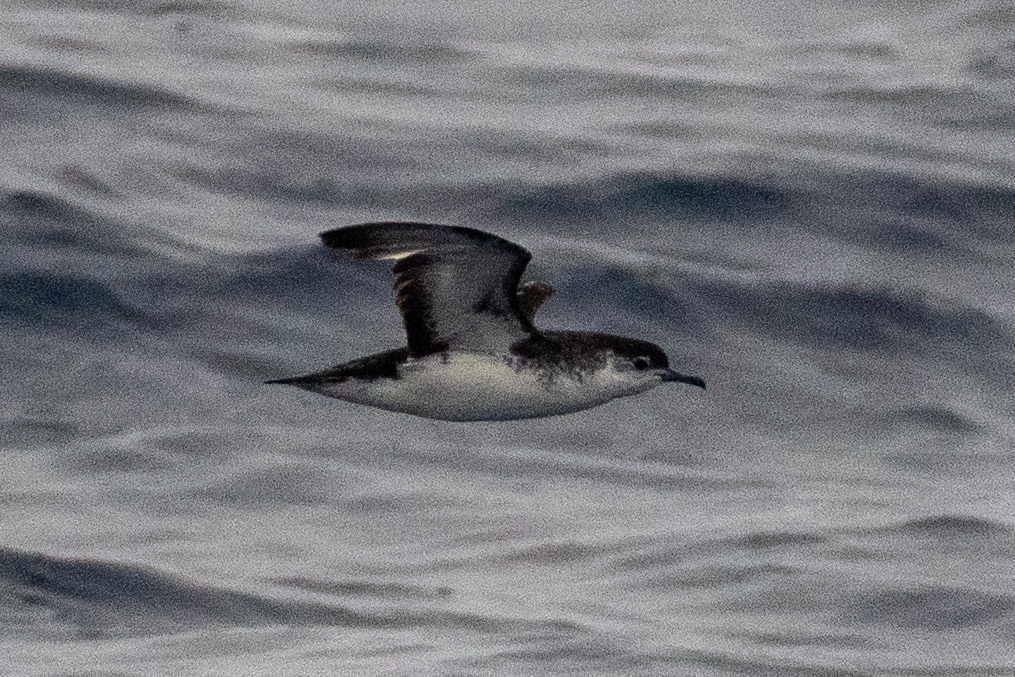
Barolo Shearwater
Photo © steve b
Photo © steve b — CC0 1.0 — Source: iNaturalist photo #673465958Identification
The Barolo shearwater is a small seabird that shares similarities with the Manx shearwater and other North Atlantic relatives, but several distinctive features set it apart. Look for a pale face with a strikingly dark eye, a silvery panel visible on the upperwings in flight, and notably shorter, more rounded wings compared to larger shearwater species. The blue feet are another useful identifying mark when birds are seen at close range.
Range & Habitat
This shearwater is endemic to Macaronesia, breeding on the Azores, Desertas, Savage Islands, and Canary Islands in the North Atlantic. The species' largest known colony, numbering around 1,400 pairs, is found on the Selvagen Islands. Outside the breeding season, Barolo shearwaters range across tropical and subtropical waters of the northeast Atlantic, making them a genuine pelagic species dependent on ocean conditions.
Behaviour & Diet
Barolo shearwaters are versatile foragers, feeding primarily on fish and cephalopods in the upper 15 metres of the water column. In the Azores, the paper nautilus (Argonauta argo) is their most commonly taken cephalopod, while fish from the genus Phycis dominate their fish intake. Unlike many seabirds, they show no preference for particular times of day when hunting or resting, though they appear more active in flight during daylight hours. They readily forage both day and night.
Best Time & Places to See It
The Azores and Canary Islands offer the most reliable opportunities to encounter Barolo shearwaters during the breeding season at their island colonies. Pelagic boat trips in the tropical and subtropical northeast Atlantic during the non-breeding season may also yield sightings, though these birds are primarily nocturnal visitors to their nesting sites. Early morning or dusk visits to breeding islands increase chances of observation.
Photography Tips
The pale facial markings and dark eye provide excellent contrast for photography. The silvery upperwing panels are most visible in flight, so photographing birds in air often reveals key field marks better than resting birds. Early morning light is ideal for capturing the subtle plumage details and the distinctive blue feet. Use a fast shutter speed to freeze wing movement and reveal the rounded wing shape that distinguishes this species from larger shearwaters.
Timanfaya National Park
Tinajo, Spain
+37 birds
Across Lanzarote's northwestern plains, where the Atlantic wind sculpts black lava fields into a landscape of geological drama, lies one of Europe's most visually arresting volcanic…
VIEW NATIONAL PARKCabo Peñas
Susacasa, Spain
+303 birds+21 mammals
Where sea cliffs rise sheer from the Bay of Biscay, Susacasa's observation point commands one of Asturias's most dramatic coastal vistas. The landscape here is defined…
VIEW OBSERVATION POINTNo community photos yet. Log in to add the first one.
No community observations of this species yet.