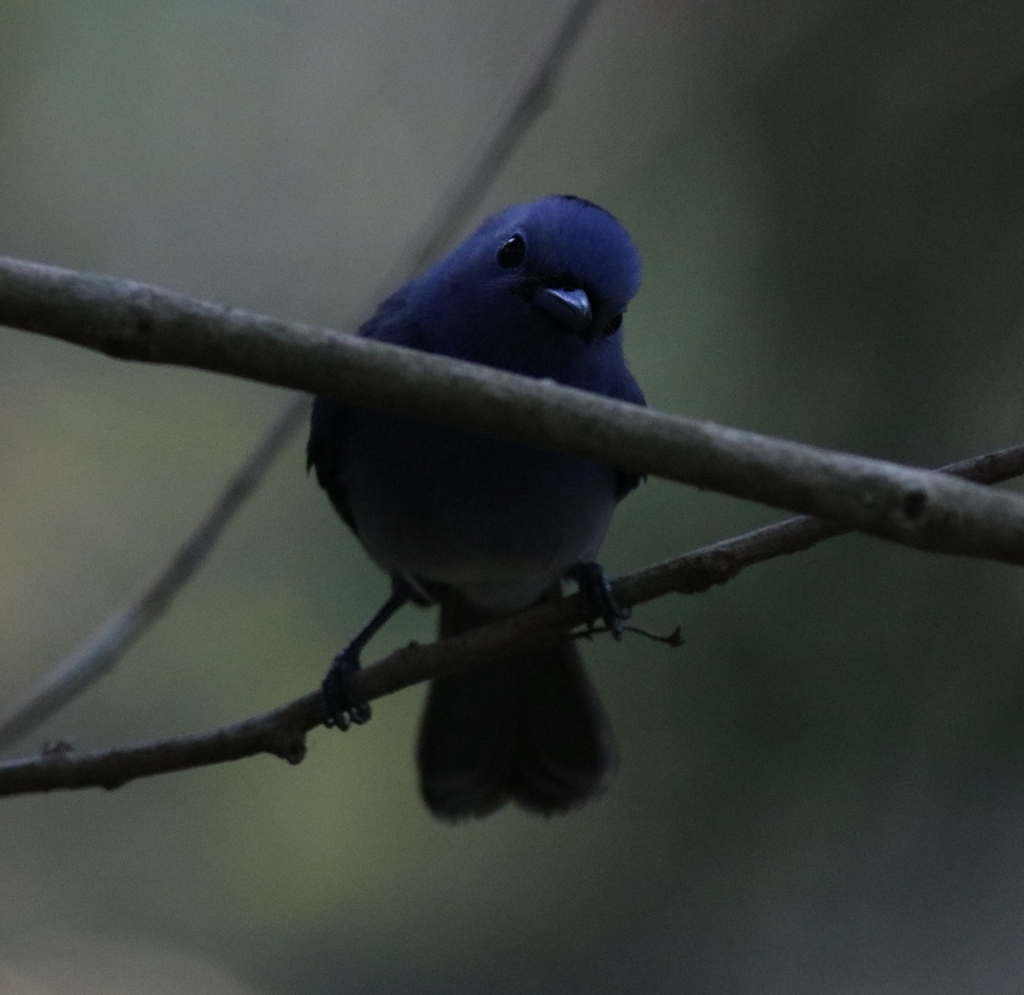
Black-naped Monarch
Photo © Afsar Nayakkan
Photo © Afsar Nayakkan — CC BY 4.0 — Source: iNaturalist #160524139Identification
The black-naped monarch is a striking small passerine, approximately 16 cm in length, easily recognized by bold sexual dimorphism. Males are predominantly pale azure blue with a distinctive black patch on the nape and a narrow black gorget (half-collar) across the upper breast, creating a striking "necklace" effect. The lower belly is whitish. Females are considerably duller, lacking these dramatic black markings entirely, with grey-brown wings and back that blend into duller plumage overall. The bird's gape is yellowish to green. However, considerable variation exists across the species' range; twenty-three subspecies are recognized, with populations differing in plumage shade and extent of markings—some males have predominantly blue underparts, others whitish bellies tinged with blue, and the Sri Lankan race lacks the black nape entirely, showing more purplish tones instead.
Range & Habitat
This monarch flycatcher is found across tropical southern Asia, with its range extending from Iran and Sri Lanka eastward through the Indian subcontinent, Southeast Asia, and into Indonesia and the Philippines. The species shows remarkable geographic variation, with different subspecies occupying distinct regions from the Andaman Islands to the Lesser Sundas, and from mainland Thailand to Borneo and Java.
Black-naped monarchs are birds of thick forests and other well-wooded habitats, preferring dense vegetation where they can forage actively among the canopy and middle story.
Behaviour & Diet
These are active, agile flycatchers with sharp, abrupt calls described as "skrip." Their vocalizations are similar to those of the Asian paradise flycatcher. In tropical forest habitats, pairs regularly join mixed-species foraging flocks, moving through the woodland in search of invertebrate prey. Their breeding season varies by location; in India, the main breeding season occurs in summer from May to July, with pairs constructing cup nests placed in tree forks and typically laying two to three eggs.
Best Time & Places to See It
The black-naped monarch's extensive range makes it accessible to travellers throughout southern and southeastern Asia. The species is most readily observed during the breeding season in forested areas across its range. Birdwatchers in India should focus efforts during the May to July period. The bird's preference for well-wooded habitats means that protected forest reserves and national parks throughout its range offer the best opportunities for encounters.
Photography Tips
The male's striking azure plumage and bold black markings make it a rewarding photographic subject, though the species' activity within thick forest canopy presents challenges. Males are more visually distinctive than females and should be prioritized for photography. The bird's small size and active foraging behavior demand fast shutter speeds and patient positioning. Joining mixed-species feeding flocks offers opportunities to predict the bird's movements and position yourself accordingly. Early morning hours typically provide the best light in forest habitats and may coincide with increased foraging activity.
Kanha Tiger Reserve
Minneriya National Park
Bandhavgarh National Park
Bandipur National Park
Bardiya National Park
Berbak National Park
Chitwan National Park
Doi Inthanon National Park
Eravikulam National Park
Nothing matches these filters.
No community photos yet. Log in to add the first one.
No community observations of this species yet.