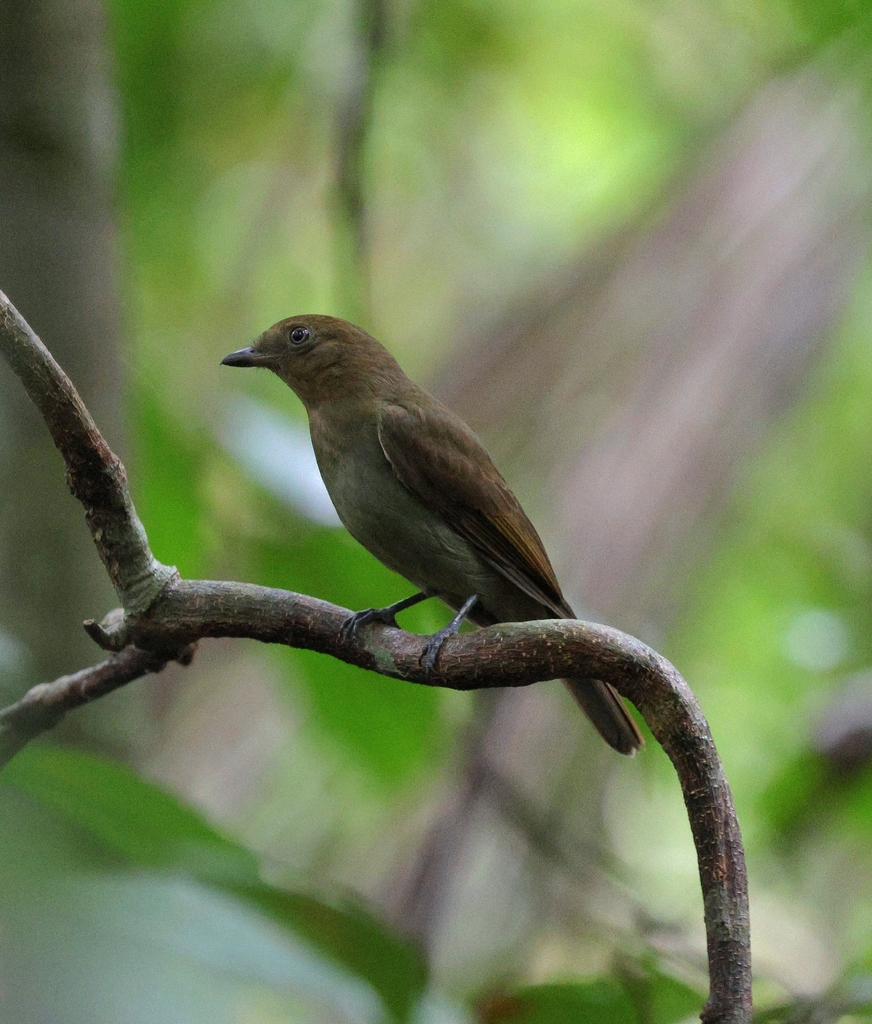
Brown-winged Schiffornis
Photo © Miguel
Photo © Miguel — CC BY-SA 4.0 — Source: iNaturalist #330149745Identification
The brown-winged schiffornis is a small bird, measuring 15.5 to 16.5 cm in length and weighing 22 to 38 grams. Both sexes share identical plumage. The most distinctive feature is a pale eye-ring set against an otherwise brownish olive face. The upperparts and tail are dull brownish olive, while the wings display dull brownish olive coloring with rufescent feather edges. The breast is lighter brownish olive-gray, gradually transitioning to pale olive-gray on the belly and vent. All subspecies possess a dark brown iris, blackish bill, and olive-grayish legs and feet. Geographic variation exists across subspecies: some populations show a rufescent crown tinge, while others are paler overall with variations in throat coloring and underpart shades.
Range & Habitat
This Neotropical species has a disjunct distribution across six countries: Colombia, Venezuela, Ecuador, Peru, Bolivia, and Brazil. Different subspecies occupy distinct regions, from the northwestern Amazon basin through the western and central Amazon to southeastern Brazilian Atlantic forests. The species primarily inhabits the interior of humid forests but occasionally ventures to forest edges, secondary growth, and drier forest types. Elevational range varies by location, reaching 800 meters in Venezuela, 1,500 meters in Peru, and up to 1,000 meters in Brazil.
Behaviour & Diet
The brown-winged schiffornis is almost certainly sedentary, maintaining year-round residence within its territory. It feeds on both fruits and insects, though specific dietary details remain poorly documented. This species typically forages singly, only rarely joining mixed-species feeding flocks. It concentrates its foraging activity in the forest understory, often clinging to low-level vertical stems and gleaning food from vegetation with short sallies from a perch.
Breeding occurs from February through April depending on location, with little else known about reproduction aside from one recorded nest constructed from plant fibers and dry leaves in a partially rotted tree stump. The species is vocal, with a distinctive song consisting of a variable sequence of 2–4 clear, rich musical whistles, typically with the last note sharply upslurred. It also produces a short rattling chatter.
Best Time & Places to See It
The brown-winged schiffornis is considered locally fairly common in Colombia, fairly common in Venezuela, uncommon in Peru, and frequent to uncommon throughout Brazil. It occurs in many protected areas across its range, though coverage is limited in the southeastern Brazilian Atlantic forests. Look for this species year-round in humid forest interiors, particularly in the Amazon basin and Brazilian Atlantic forest regions. Early mornings offer the best opportunity to locate birds by their distinctive vocalizations.
Photography Tips
This small, understory bird presents challenges for photography due to its preference for dense vegetation and low perches. Patience and early morning visits when birds are most vocal will increase your chances of locating individuals. Focus on the pale eye-ring and subtle plumage details to distinguish this species from similar forest birds. A telephoto lens and high shutter speed are essential for capturing sharp images in the dim understory light. Listen carefully for the bird's distinctive whistle song to pinpoint its location before attempting photography.
Amacayacu National Park
Amazônia National Park
Bahuaja Sonene National Park
Campos Amazónicos National Park
Cerros de Amotape National Park
French Guiana Amazonian Park
Jaú National Park
Manu National Park
Mapinguari National Park
Nothing matches these filters.
No community photos yet. Log in to add the first one.
No community observations of this species yet.