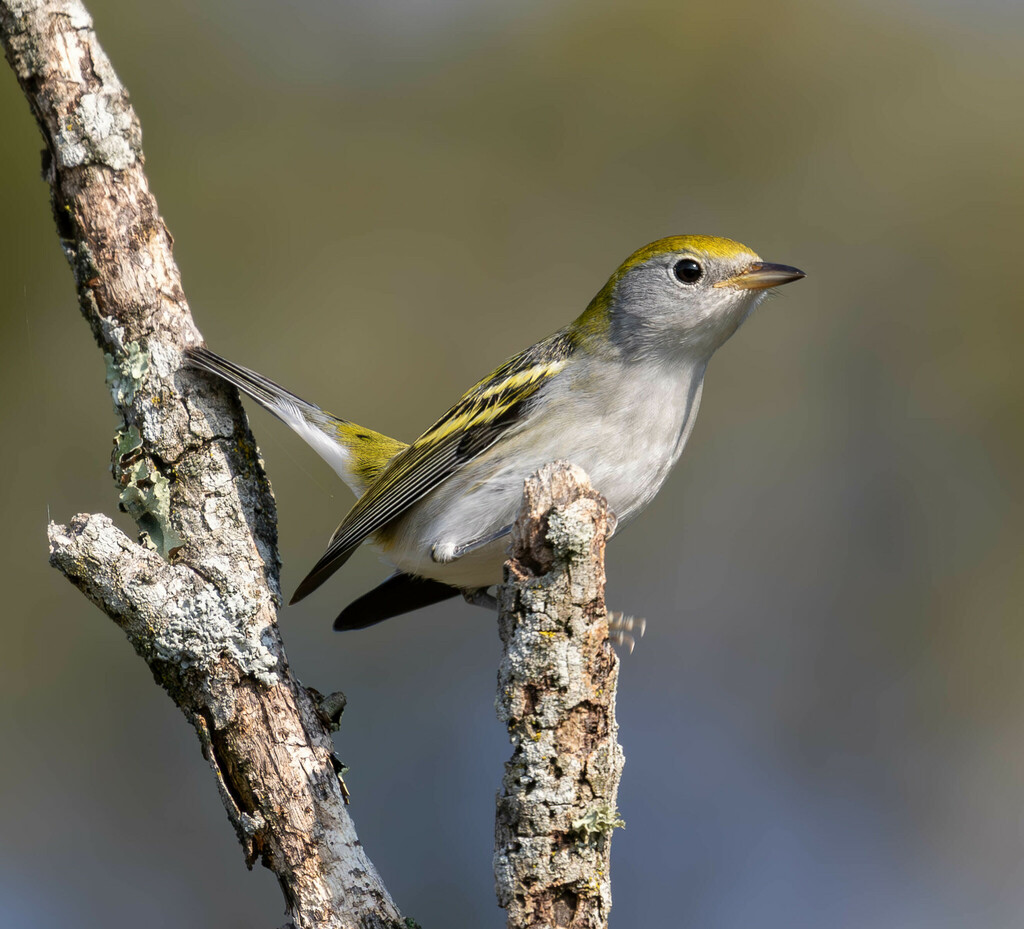
Chestnut-sided Warbler
Photo © kirk gardner
Photo © kirk gardner — CC BY 4.0 — Source: iNaturalist #186494845Identification
The chestnut-sided warbler is a moderately-sized New World warbler measuring 10–14 cm in length with a wingspan of 16–21 cm. Summer males are unmistakable: they sport dark-streaked gray backs, white faces with black eyestripes, and bright yellow crowns. Their white underparts feature distinctive chestnut flanks and two white wing bars. Females appear as washed-out versions of males, lacking the bold head pattern and chestnut coloring on the flanks. Non-breeding birds of both sexes display bright yellow-green crowns, white eye-rings on gray faces, unstreaked pale gray breasts, and pale underparts, though the white wing bars remain constant year-round.
Range & Habitat
Chestnut-sided warblers breed across eastern North America from Saskatchewan to the Maritimes, typically south of 50°N and reaching their southernmost breeding grounds in northwestern Georgia. They overwinter from Central America to northern Colombia, with the highest concentrations in Costa Rica. These birds have benefited dramatically from forest disturbance, thriving in second-growth habitats, clearcuts, and post-fire forests. Their populations peak seven to eight years after disturbance. In tropical wintering grounds, they favor mid- to upper-canopy zones of mature rainforest, coffee plantations, and riparian areas.
Behaviour & Diet
These are Neotropical migrants with distinctive vocalizations: males sing high-whistled accented songs described as "pleased, pleased, pleased to MEECHA" for courtship, and unaccented versions for territorial defense. Chestnut-sided warblers are primarily insectivorous, feeding on lepidopteran and dipteran larvae, spiders, and occasionally seeds and fruits. They actively forage in shrubs and small trees, gleaning insects from foliage and sometimes catching prey in mid-air. During winter, they supplement their diet with berries.
Best Time & Places to See It
Breeding birds arrive on northern grounds in May, with males preceding females by several days to a week. Peak breeding activity occurs May through July. Fall migration occurs from late August through late September, with birds departing wintering grounds in April. For the best viewing opportunities, visit breeding habitats in the Great Lakes region or eastern North America during spring and summer. Winter observers should seek them in Costa Rican rainforests, coffee plantations, and riparian zones, particularly in the mid- to upper canopy.
Photography Tips
Summer males offer the most striking photographic subjects with their distinctive white faces, yellow crowns, and chestnut flanks. Position yourself in second-growth forests or regenerating clearcuts during breeding season when birds are active and vocal. Early morning light best reveals their plumage details. In wintering grounds, look upward into the canopy with binoculars first to locate birds before attempting photography. The constant white wing bars visible in all plumages provide a useful identification feature to confirm in your images.
Acadia National Park
Algonquin Provincial Park
Alligator River National Wildlife Refuge
Arenal Volcano National Park
Arrecifes de Cozumel National Park
Banff National Park
Barbilla National Park
Barra del Colorado National Wildlife Refuge
Baru Volcano National Park
Nothing matches these filters.
No community photos yet. Log in to add the first one.
No community observations of this species yet.