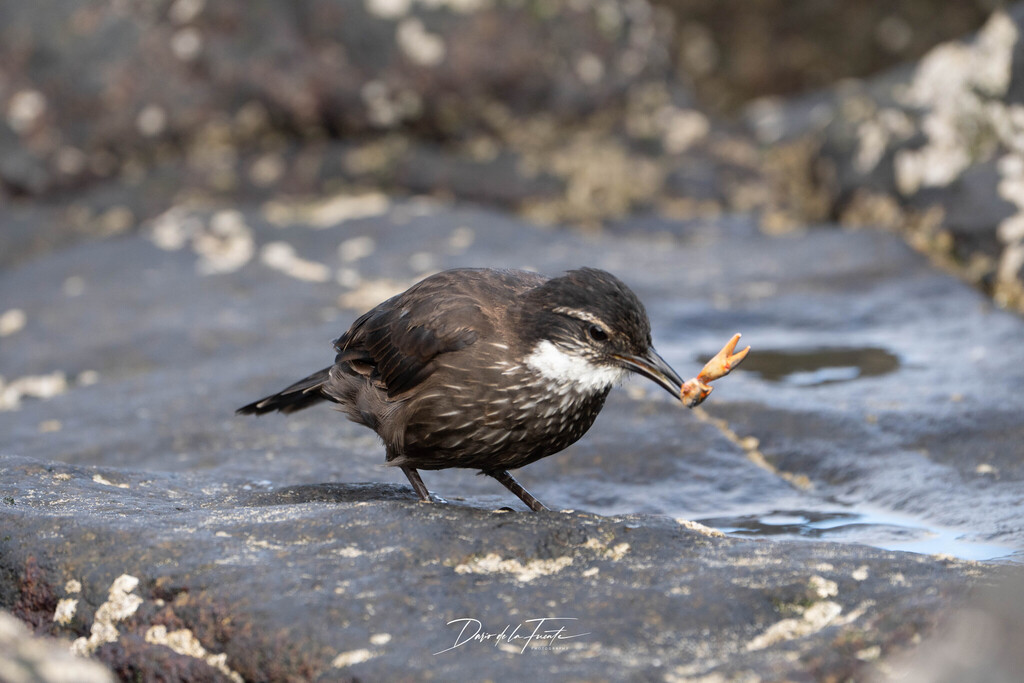
Chilean Seaside Cinclodes
Photo © Darío De la Fuente
Photo © Darío De la Fuente — CC BY 4.0 — Source: iNaturalist photo #499663294Identification
The Chilean seaside cinclodes is a large cinclodes measuring 21 to 27 cm in length and weighing 63 to 67 grams. Both sexes share identical plumage. This striking bird features a blackish-brown crown and upperparts, with smoky-black wings marked by a pale rufous band at the base of the flight feathers. Its most distinctive feature is the narrow pale buff or whitish supercilium that contrasts with an otherwise blackish-brown face. The tail is black, with the outer three pairs of feathers displaying pale rufous or ashy-brown tips. The throat and neck sides are white, while the breast is smoky gray with small white or pale cinnamon dots on the upper portion and light cinnamon streaks below. The belly remains plain smoky gray. The bird has a straight, blackish bill (sometimes with a gray base on the mandible), dark brown iris, and brownish-gray to blackish legs and feet. There is a subtle clinal variation in plumage, with northern populations appearing somewhat paler than their southern counterparts.
Range & Habitat
The Chilean seaside cinclodes is endemic to Chile, found along the coast from the Arica y Parinacota Region in the north south to the Los Ríos Region, as well as on several nearshore islands. This species shows a strong preference for rocky intertidal zones, where it is seldom found far from the water's edge. It is a year-round resident throughout its range, making it a reliable subject for observers visiting the Chilean coast.
Behaviour & Diet
The Chilean seaside cinclodes holds a unique distinction as one of only two passerine species that forage at the ocean's surf line—a remarkable adaptation to its coastal environment. It forages singly or in pairs in the intertidal zone and adjacent sandy areas, feeding on aquatic invertebrates including small crabs and other crustaceans, marine worms, small bivalves and snails, limpets, and insects, along with small fish. During breeding season, which extends at least from August to January and possibly beyond, males perform conspicuous courtship and territorial displays from high rocks, opening their wings while singing. The species constructs messy nests from herbs, algae, and lichen, placing them in rock cavities, burrows dug into earthen banks, in roofs or other human structures, and even in abandoned pipes. Clutch size ranges from two to four eggs, with both parents provisioning the nestlings.
Best Time & Places to See It
The Chilean seaside cinclodes is a year-round resident, making it accessible to visitors throughout the year. Look for it along the rocky Chilean coastline from the Arica y Parinacota Region to the Los Ríos Region, particularly in intertidal zones where it forages among rocks. The species is considered locally fairly common but occurs in very few protected areas, so research specific coastal localities before planning your visit. Breeding season from August to January offers opportunities to observe courtship displays and territorial behavior.
Photography Tips
Photograph this species in its natural rocky intertidal habitat to capture its unique ecological niche. The bird's distinctive pale supercilium and contrasting blackish-brown face provide good identification markers for your images. Watch for males performing courtship displays on high rocks—these dynamic poses with open wings offer compelling photographic opportunities. Early morning light along the coast will best illuminate the bird's subtle plumage patterns and the dramatic interplay of rocks, surf, and sand that defines its habitat. Exercise caution around rocky, wet terrain where these birds forage, as safety must come before photography.
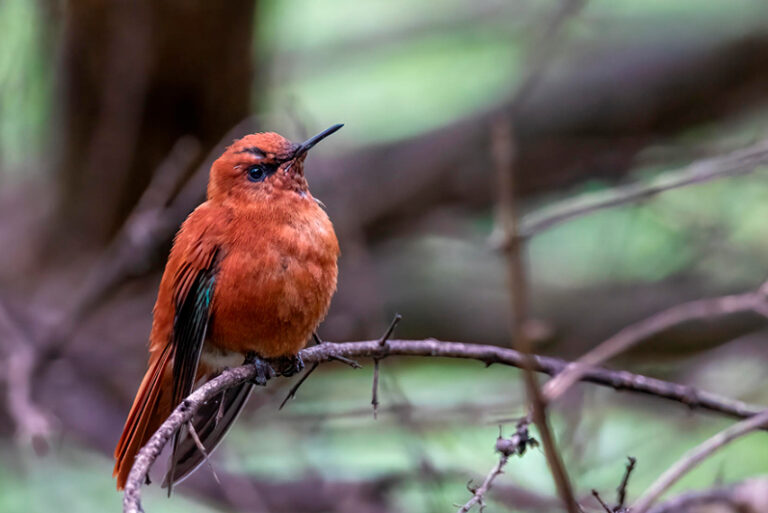
Chile: Fuegian Snipe & Juan Fernandez
No community photos yet. Log in to add the first one.
No community observations of this species yet.