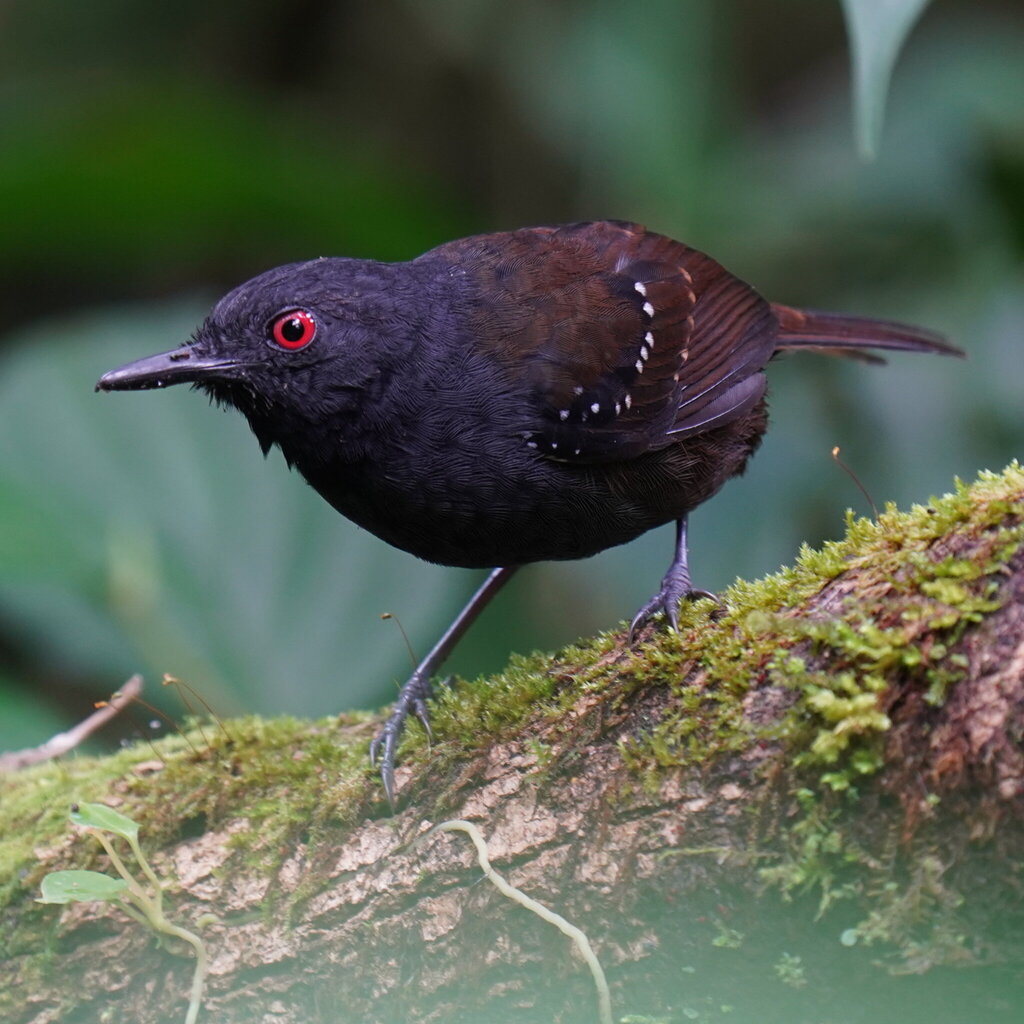
Dull-mantled Antbird
Photo © Daniel S. Katz
Photo © Daniel S. Katz — CC BY 4.0 — Source: iNaturalist #330596051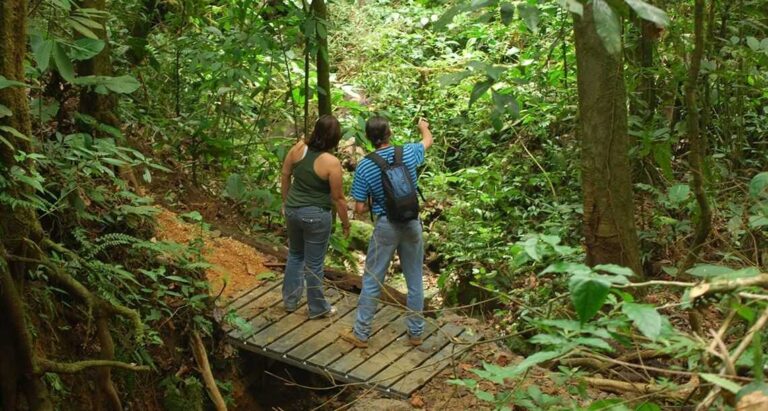
Birding TourEasy
Nothing matches these filters.
The dull-mantled antbird (Sipia laemosticta) is a perching bird species in subfamily Thamnophilinae of family Thamnophilidae, the "typical antbirds". It is found in Colombia, Costa Rica, and Panama. == Taxonomy and systematics == The dull-mantled antbird was described by the English naturalist Osbert Salvin in 1865 and given the binomial name Myrmeciza laemosticta. A molecular phylogenetic study published in 2013 found that the genus Myrmeciza, as then defined, was polyphyletic. In the resulting rearrangement to create monophyletic genera, four species including the dull-mantled antbird were moved to the resurrected genus Sipia that had been introduced by the Austrian ornithologist Carl Eduard Hellmayr in 1924. What is now the Magdalena antbird (S. palliata) was previously considered conspecific with the dull-mantled antbird but was elevated to species status based on an analysis of vocalization and mitochondrial DNA sequences published in 2010. The dull-mantled antbird's closest relative appears to be the Esmeraldas antbird (S. nigricauda). The other two members of genus Sipia, the Magdalena antbird and stub-tailed antbird (S. berlepschi) are the next most closely related. The chestnut-backed antbird (Poliocrania exsul) and grey-headed antbird (Ampelornis griseiceps) are somewhat more distantly related. The dull-mantled antbird is monotypic. == Description == The dull-mantled antbird is…
Nothing matches these filters.
Nothing matches these filters.
Nothing matches these filters.
No community photos yet. Log in to add the first one.
No community observations of this species yet.
We'd love to hear from you. We'll reply as soon as possible.
Found an error? Have a suggestion? We read every message.
A compact view of how this species lives, moves and responds to its environment.
Select a card to explore the details.
Please confirm the photo rights and credit terms first.
I'm the author of this photo or hold the rights to it, and I keep full ownership. I grant Wild Atlas Guide a free, non-exclusive licence to display it on the site and in Wild Atlas Guide's own channels, including social media, always credited to me by my display name or the Instagram handle I choose to provide. I confirm it does not reveal a sensitive wildlife location or a recognisable person without their permission. I can withdraw future social use for this photo or ask for it to be removed at any time.
Please accept the photo rights and credit terms to continue.
Uploading…
We use cookies to measure traffic and improve Wild Atlas Guide. You decide. Privacy policy