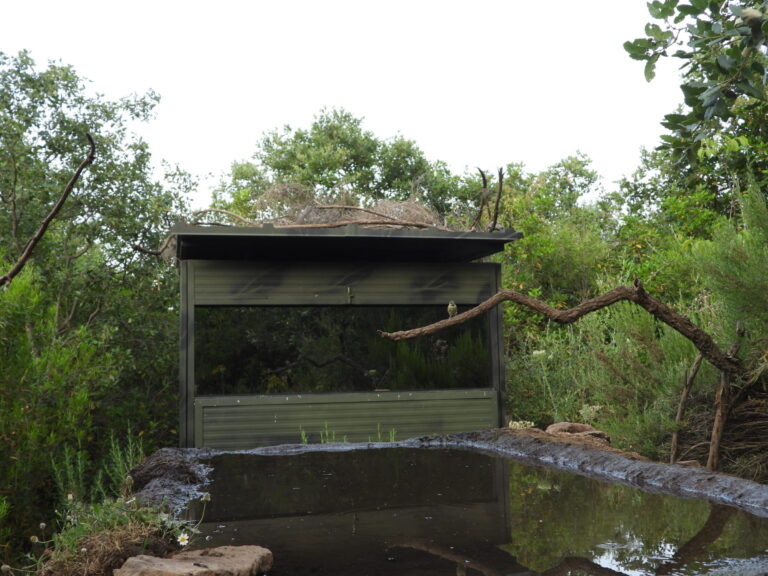
Hide el Venero de los Rabilargos
Great Spotted Woodpecker · Iberian Magpie+33
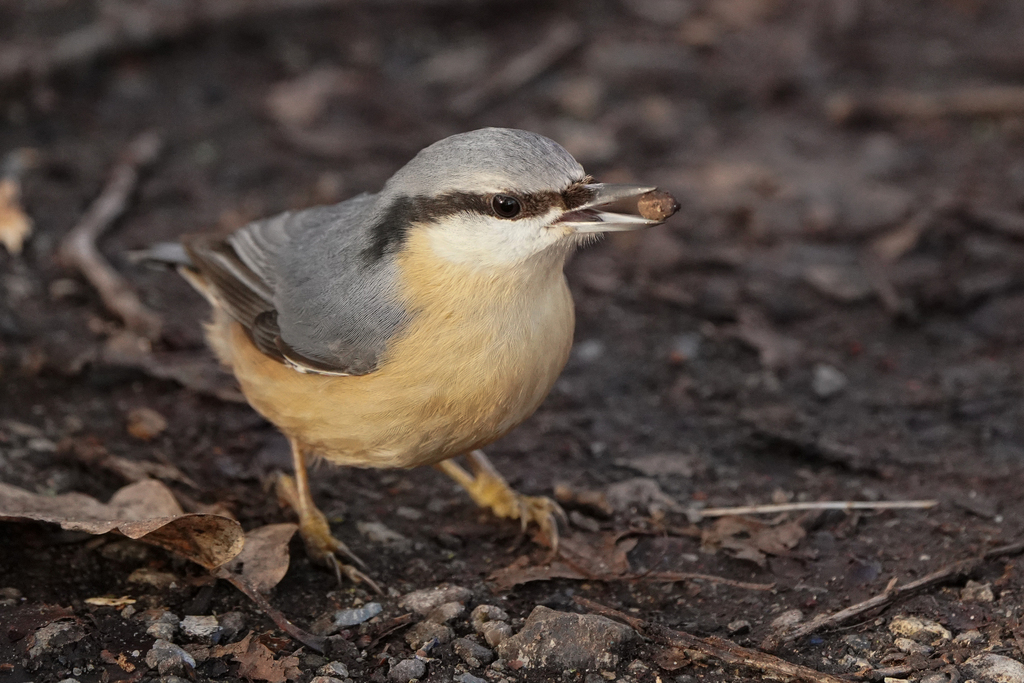
The Eurasian Nuthatch is a compact, short-tailed passerine measuring around 14 cm in length. It is instantly recognisable by its blue-grey upperparts, distinctive black eye-stripe, and long, pointed bill—characteristic features shared with all nuthatches. The bird is highly vocal, producing a repeated loud "dwip" call that often betrays its presence in woodland.
Plumage varies across the species's range. Western European birds display orange-buff underparts with a contrasting white throat, while Russian populations have whitish underparts. Eastern subspecies resemble their European cousins but lack the white throat marking. In total, there are more than 20 subspecies, divided into three main geographical groups, though intermediate forms appear where ranges overlap.
The Eurasian Nuthatch is found throughout the Palearctic and across Europe, with its range continuing to expand. The species shows a marked preference for mature deciduous or mixed woodland featuring large, old trees—particularly oak. Pairs maintain permanent territories year-round, establishing strong bonds with their woodland homes.
For nesting, nuthatches exploit tree holes, typically utilising abandoned woodpecker nests or natural cavities. The female demonstrates remarkable behaviour by plastering oversized entrance holes with mud to reduce them to an appropriate size, sometimes coating the cavity interior as well. A clutch of six to nine red-speckled white eggs is laid on a deep base of pine chips or other wood debris.
The Eurasian Nuthatch is primarily an insectivore, feeding extensively on caterpillars and beetles during the breeding season. In autumn and winter, it supplements this diet with nuts and seeds, becoming an inveterate hoarder that stores food year-round. Young are reared mainly on insects with some seeds, which parents source from tree trunks and large branches.
This species forages with remarkable agility, descending tree trunks head-first as readily as climbing upward—a hallmark of nuthatch feeding behaviour. It readily visits bird tables, consuming fatty human-provided food and seeds alongside natural prey. The Eurasian Sparrowhawk represents its main natural predator. Despite some local breeding losses due to woodland fragmentation, the species maintains a large population and huge breeding range, classified by the IUCN as of least concern.
Travellers seeking the Eurasian Nuthatch should target mature woodlands across Europe and the Palearctic, with particular attention to areas featuring large, old trees and oak stands. The species's year-round presence in its territories means it can be encountered in any season, though the vocal "dwip" calls are particularly helpful in locating birds during the quieter months.
Visiting bird tables in woodland settings increases chances of observation, as nuthatches readily visit feeders. Spring and early summer offer the added reward of observing nesting behaviour, though visitors must remain respectful of breeding birds. The species's expanding range means new populations may be discovered in previously unoccupied woodland areas.
Photographing the Eurasian Nuthatch presents exciting opportunities for patient observers. Position yourself near mature oak trees or established bird tables, where nuthatches regularly visit. The bird's acrobatic foraging—particularly its distinctive head-first descent—provides dynamic subjects, though fast shutter speeds are essential to freeze rapid movement along tree trunks.
The striking black eye-stripe and subtle plumage variations make close-up portraiture rewarding, while the bird's vocal nature allows photographers to locate subjects by sound. The contrasting blue-grey upperparts and pale underparts photograph well in natural light, particularly when the bird is positioned against darker bark. Winter feeding visits to bird tables offer more predictable opportunities for composition and positioning.
Nothing matches these filters.
Nothing matches these filters.
No community photos yet. Log in to add the first one.
No community observations of this species yet.
We'd love to hear from you. We'll reply as soon as possible.
Found an error? Have a suggestion? We read every message.
A compact view of how this species lives, moves and responds to its environment.
Select a card to explore the details.
Please confirm the photo rights and credit terms first.
I'm the author of this photo or hold the rights to it, and I keep full ownership. I grant Wild Atlas Guide a free, non-exclusive licence to display it on the site and in Wild Atlas Guide's own channels, including social media, always credited to me by my display name or the Instagram handle I choose to provide. I confirm it does not reveal a sensitive wildlife location or a recognisable person without their permission. I can withdraw future social use for this photo or ask for it to be removed at any time.
Please accept the photo rights and credit terms to continue.
Uploading…
We use cookies to measure traffic and improve Wild Atlas Guide. You decide. Privacy policy