Identification
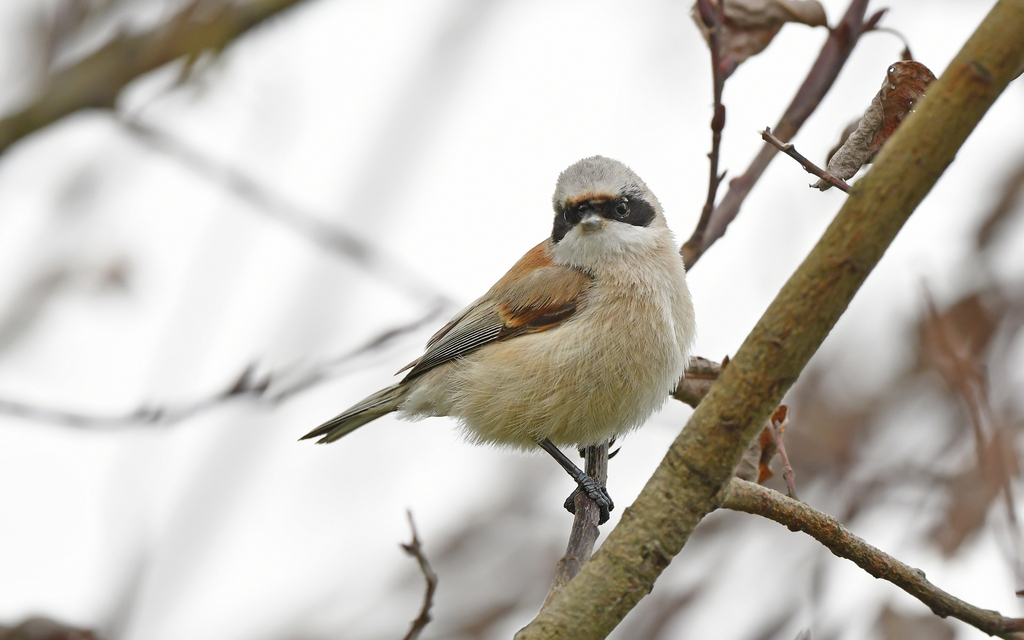
The Eurasian penduline tit is a diminutive passerine, measuring just 10–11.5 cm in length with a characteristically finely pointed bill and relatively long tail. The most striking feature is its distinctive head pattern: a light grey crown and cheeks contrasted sharply with a bold black mask through the eye. The back is warm chestnut brown. Males and females are remarkably similar, though males display a broader eye-mask and more rufous back colouration, a subtle distinction requiring close observation in the field.
Range & Habitat
This species is relatively widespread throughout the western Palearctic, with its range expanding notably across Western Europe during the 1980s and 1990s. The breeding range now extends from Europe to the Ural Mountains, Caucasus, and western Turkey, with additional populations in eastern Turkey, Syria, Armenia, and northwestern Iran. Migratory in northern latitudes, the species is resident year-round in southern regions, occasionally wandering as far south as northern Morocco in winter. Four subspecies are recognised across this vast range.
Behaviour & Diet
The penduline tit is renowned for constructing one of nature's most elaborate nests—an ingenious free-hanging pouch suspended from thin, long branches of willows, elms, or birches, often positioned over water or amongst reed stems. This intricate structure, measuring approximately 25 cm in height and 17 cm in diameter, is woven from plant fibres, grass, hair, and wool and takes roughly 20 days for both sexes to complete. Eggs are laid from late April through early July; clutches of 6–8 white eggs are incubated for 14 days, typically by a single parent, with chicks fledging around 22 days old.
Diet consists primarily of insects and spiders, supplemented by seeds from willows and other plants. The tit forages acrobatically through trees and reeds, employing a characteristic technique of clinging to reed stems with one foot while using the other to extract seed clusters.
Best Time & Places to See It
Spring and early summer offer the best opportunities to observe this species during breeding season, when elaborate nests become visible suspended over wetlands and waterside vegetation. Look for breeding birds from late April onwards in suitable habitats: reed beds, willow thickets, and waterside scrub throughout the western Palearctic. Winter visitors may be encountered further south, particularly in Mediterranean regions and occasionally North Africa.
Photography Tips
The distinctive head pattern and compact size make the penduline tit a rewarding photographic subject. Position yourself near known nest-bearing willows or reed beds during the breeding season for the best opportunities. The bird's acrobatic foraging style and hovering behaviour around seed heads provide dynamic shooting opportunities. Early morning light works best for capturing the subtle colour gradations between the chestnut back and grey head. The spectacular hanging nest is equally photogenic—a wide-angle approach captures both nest and nesting habitat context, particularly effective when photographed against water backgrounds.