Hide 9 Pins
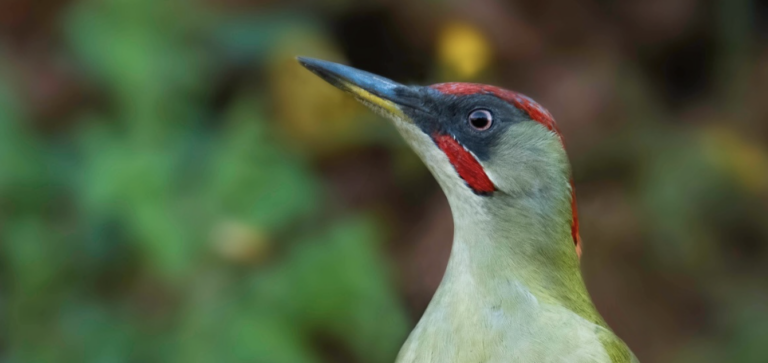
Iberian Green Woodpecker · Great Spotted Woodpecker+17
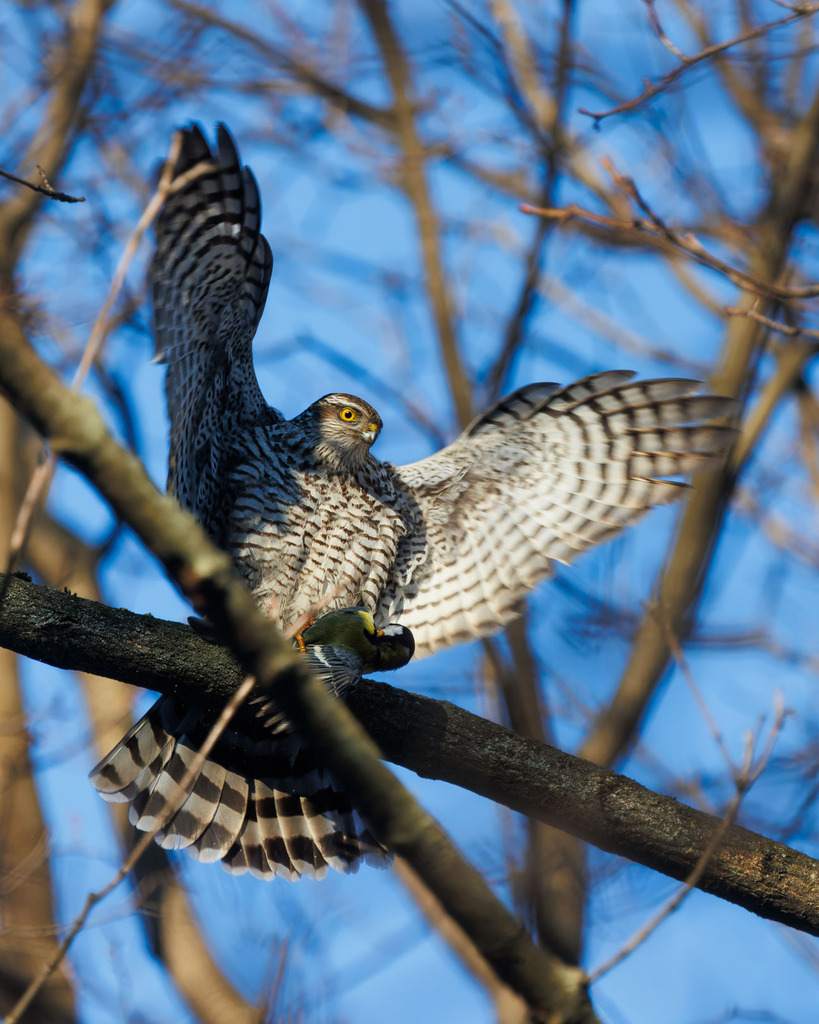
The Eurasian sparrowhawk is a small bird of prey with striking sexual dimorphism. Adult males display bluish-grey upperparts contrasted with distinctive orange-barred underparts, earning them the folk name "blue hawk." Females and juveniles are brown above with brown barring below. Remarkably, females are up to 25% larger than males—one of the greatest size differences between the sexes in any bird species. This size difference reflects their different hunting strategies: males pursue smaller birds such as tits, finches, and sparrows, while females catch primarily thrushes and starlings, and are capable of killing birds weighing 500 grams or more.
The Eurasian sparrowhawk is found throughout the temperate and subtropical parts of the Old World, with geographic variation across its extensive range. Birds from northern populations migrate south for winter to reach the Mediterranean, Northeast Africa, Arabia, and Pakistan, while southern counterparts remain resident or make dispersive movements. The species breeds in suitable woodland of any type, constructing large twiggy nests measuring up to 60 centimetres across in trees. Clutches typically consist of four or five pale blue, brown-spotted eggs.
Though specialising as a woodland bird predator, the Eurasian sparrowhawk is remarkably adaptable and can be found in virtually any habitat, frequently hunting garden birds in towns and cities. Breeding success depends critically on the female maintaining high body weight while the male brings her food. Chicks hatch after 33 days and fledge after 24 to 28 days. Juvenile survival rates are relatively low at 34% in the first year, though adult survival reaches 69% annually, with a typical lifespan of four years.
The Eurasian sparrowhawk is now one of the most common birds of prey in Europe, having recovered from a dramatic population crash following the Second World War caused by organochlorine pesticide contamination. Today it is classified as of least concern. The species can be encountered year-round in resident populations across southern regions, while northern areas see them primarily during breeding season, with migrants passing through during spring and autumn movements.
Photographing this agile predator presents considerable challenges due to its speed and woodland habitat preference. Garden visits offer the best opportunities for patient photographers, particularly when sparrowhawks hunt at bird feeders. Look for the characteristic rapid, low-level flight through vegetation. The striking plumage differences between males and females provide excellent compositional opportunities if you can capture both sexes. Early morning visits to suitable woodland may yield sightings of perched birds before they begin active hunting.
Nothing matches these filters.
Nothing matches these filters.
No community photos yet. Log in to add the first one.
No community observations of this species yet.
We'd love to hear from you. We'll reply as soon as possible.
Found an error? Have a suggestion? We read every message.
A compact view of how this species lives, moves and responds to its environment.
Select a card to explore the details.
Please confirm the photo rights and credit terms first.
I'm the author of this photo or hold the rights to it, and I keep full ownership. I grant Wild Atlas Guide a free, non-exclusive licence to display it on the site and in Wild Atlas Guide's own channels, including social media, always credited to me by my display name or the Instagram handle I choose to provide. I confirm it does not reveal a sensitive wildlife location or a recognisable person without their permission. I can withdraw future social use for this photo or ask for it to be removed at any time.
Please accept the photo rights and credit terms to continue.
Uploading…
We use cookies to measure traffic and improve Wild Atlas Guide. You decide. Privacy policy