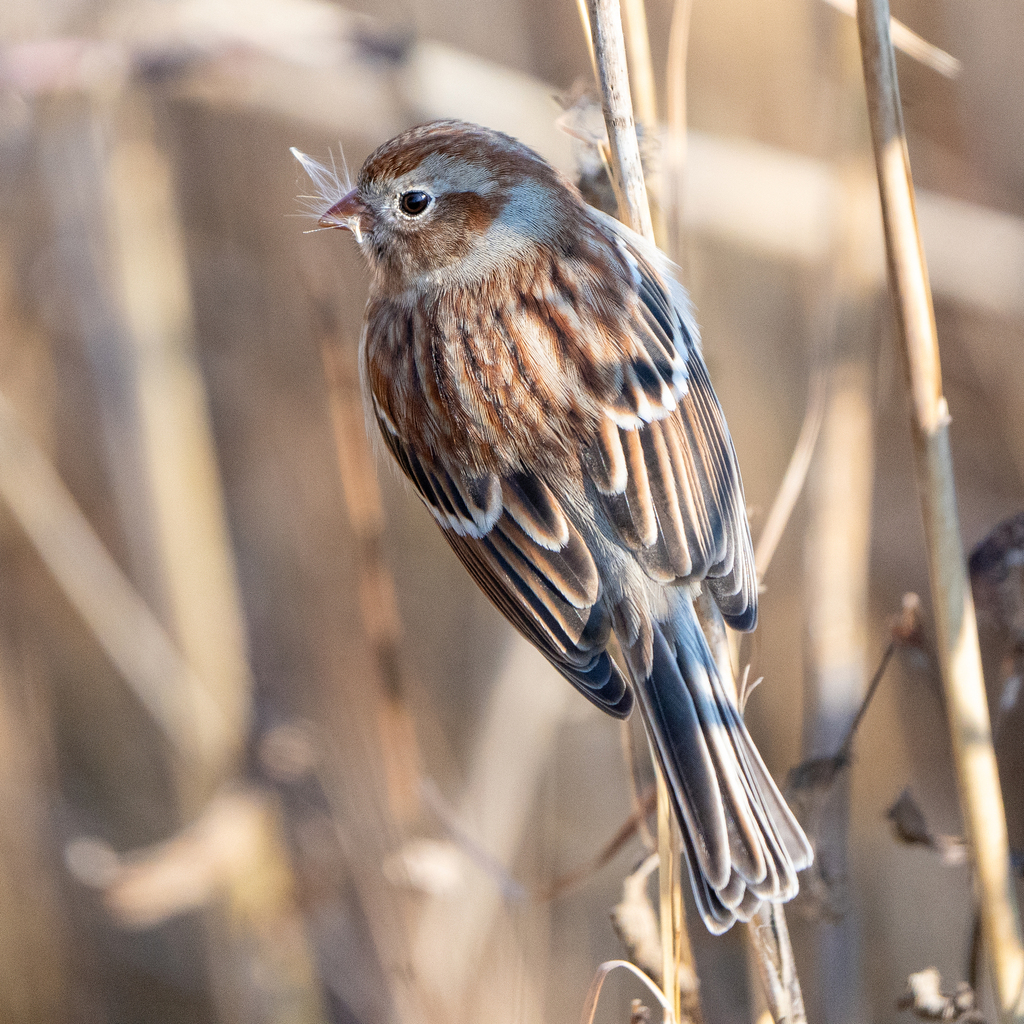
Field Sparrow
Photo © Anthony Batista
Photo © Anthony Batista — CC BY 4.0 — Source: iNaturalist #195647826Identification
The field sparrow is a small, delicate sparrow measuring about 6 inches (140 mm) in length and weighing roughly 0.4 ounces (12.5 g). Adults are characterized by a distinctive grey face with a rusty crown, prominent white eye-ring, and notably pink bill. The upperparts are brown with black and buff streaking, while the breast is buffy, the belly white, and the tail distinctly forked. Two whitish wing bars and rusty markings behind the eye complete the plumage. The species exhibits two colour morphs—one greyer and one more rufous in overall tone. Males and females appear similar, though males are slightly larger.
Range & Habitat
The field sparrow is distributed across eastern Canada and the eastern United States. Northern populations migrate southward in fall to the southern United States and northeastern Mexico, while birds in the southern portions of the range are permanent residents. This species favors brushy, shrubby fields and grassland habitats. They nest in open cup structures built on the ground, typically concealed beneath a clump of grass or small thicket. Interestingly, birds often breed multiple times within a single season, constructing new nests each time and building progressively higher as vegetation develops and leaves expand.
Behaviour & Diet
Field sparrows forage on the ground and in low vegetation, feeding primarily on seeds and insects. Outside the breeding season, they may gather in small flocks. Males sing from elevated perches such as shrubs or fenceposts to establish and defend their nesting territory. The song is distinctive—a series of sad, clear whistles that accelerate into a trill, often likened to the sound of a bouncing ball coming to rest, typically lasting around 4 seconds. Eggs are laid in May or June and are pale bluish white, speckled and blotched with yellowish brown and grayish purple markings.
Best Time & Places to See It
As a common species with a wide range, field sparrows are relatively accessible to observers throughout eastern North America during breeding season. Northern populations are present from spring through early fall, while southern residents may be observed year-round. Look for them in open brushy fields, grasslands with scattered shrubs, and along fencerows. Early morning is often productive for locating singing males during the breeding season, as they perch conspicuously to advertise their territories.
Photography Tips
The field sparrow's small size and preference for low perches in open habitat make it an approachable subject for patient photographers. The rusty crown, white eye-ring, and pink bill are key field marks to capture. Position yourself to photograph males singing from shrubs or fenceposts, as these elevated vantage points offer cleaner backgrounds than ground-feeding birds. Early morning light will best render the subtle coloration of the plumage. A telephoto lens is recommended, though the bird's tameness in suitable habitat sometimes permits closer approach than expected.
Acadia National Park
Algonquin Provincial Park
Alligator River National Wildlife Refuge
Badlands National Park
Bic National Park
Big Bend National Park
Bitter Lake National Wildlife Refuge
Blackwater National Wildlife Refuge
Bombay Hook National Wildlife Refuge
Nothing matches these filters.
No community photos yet. Log in to add the first one.
No community observations of this species yet.