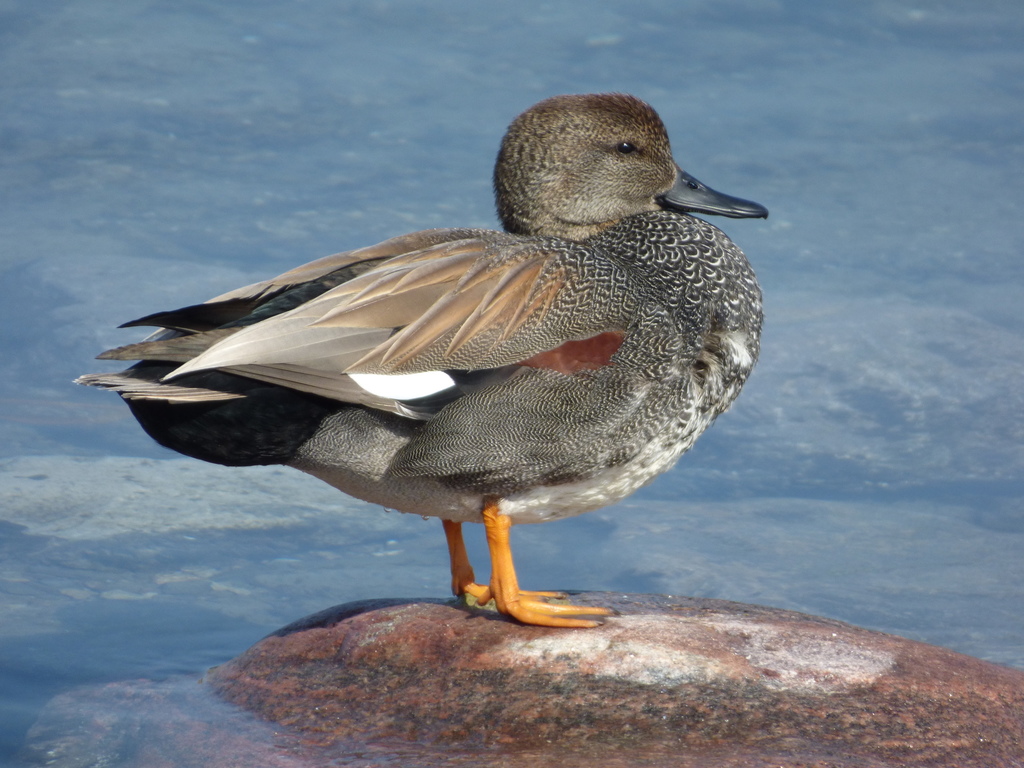
Gadwall
Photo © Luke
Photo © Luke — CC BY-SA 4.0 — Source: iNaturalist photo #116092130Identification
The gadwall is a medium-sized dabbling duck measuring 47–58 cm in length with a wingspan of 78–85 cm. Males are noticeably larger than females, averaging 990 g compared to females at 850 g. The breeding male is distinctive with grey patterning, a black rear end, light chestnut wings, and a brilliant white speculum that is particularly obvious in flight. In non-breeding eclipse plumage, males resemble females more closely but retain their characteristic male wing pattern and are generally greyer above with less orange on the bill.
Females are light brown with plumage superficially similar to female mallards, but several features distinguish them: a dark orange-edged bill, smaller overall size, white speculum, and white belly. Both sexes undergo two moults annually following their juvenile moult. The gadwall is generally a quiet duck, though females produce a call similar to the female mallard quack but higher-pitched (transcribed as gag-ag-ag-ag), while males produce a grunt (mep) and whistle, particularly during courtship displays.
Range & Habitat
The gadwall breeds across the northern areas of Europe and the Palearctic, as well as central North America. In North America, breeding populations range from the Saint Lawrence River through the Great Lakes, Alberta, Saskatchewan, the Dakotas, south to Kansas, west to California, and along coastal Pacific Canada and southern coastal Alaska. The species is strongly migratory, wintering farther south across a range extending from coastal Alaska through Central America and into the eastern United States including Idaho, Kansas, Ohio, and Virginia.
In Great Britain, gadwalls are scarce breeding birds and winter visitors, though populations have increased recently through a combination of introduction and colonisation by continental birds. A small breeding population has recently become established in Ireland, with populations centred on County Wexford and Lough Neagh. The species also appears in parts of South Asia, particularly southern India. Gadwalls favour open wetlands including prairie or steppe lakes, wet grassland, and marshes with dense fringing vegetation.
Behaviour & Diet
Gadwalls are birds of open wetlands that typically feed by dabbling for plant food with their heads submerged. Unlike many dabbling ducks, they are also capable of diving underwater proficiently for food and may steal food from diving birds such as coots. They nest on the ground, often at some distance from water. Outside the breeding season, gadwalls are less gregarious than some other dabbling ducks, typically forming only small flocks.
These ducks are monogamous and may begin breeding after their first year. Pair formation commences during fall migration or on breeding grounds, and has also been recorded in August when males are still in eclipse plumage. During the nesting season, females lay clutches of 7–12 eggs, with incubation lasting 24–27 days. Nestlings leave the nest after approximately 1–2 days, and gadwalls raise only one brood per season. Males display with distinctive courtship behaviours including the burp display and the grunt-whistle display, during which males rear their outstretched heads and displace water droplets towards females.
Best Time & Places to See It
The gadwall's expanding range makes it increasingly accessible to birders across North America and Europe. In North America, breeding populations can be found across prairie regions and the Great Lakes during summer months, while winter visitors are present across much of the southern United States and Central America. In Great Britain and Ireland, gadwalls are best seen during winter months when visiting birds swell resident populations, though breeding birds are now present year-round in increasing numbers, particularly in Scotland and Ireland's established breeding areas.
Open wetland habitats such as prairie lakes, coastal marshes, and wet grasslands with fringing vegetation offer the best viewing opportunities. The species' habit of forming small flocks rather than large congregations means patient observation is often rewarded. The gadwall's expanding population trend suggests increasing sighting opportunities, particularly in eastern North America where the breeding range continues to expand.
Photography Tips
Photographing gadwalls requires patience and attention to plumage detail, as they can be challenging to distinguish from similar dabbling ducks, particularly females from female mallards. The male's breeding plumage offers excellent opportunities for striking portraits, with the contrast between grey patterning, black rear, and chestnut wings providing strong visual composition. The brilliant white speculum is most prominent when the bird takes flight or stretches its wings, so anticipating these moments will yield the most impressive images.
During courtship season, males perform distinctive displays including the burp display and the dramatic grunt-whistle display with water displacement, providing dynamic action photography opportunities. Females and eclipse males require closer attention to subtle field marks such as the orange-edged bill, white belly, and white speculum for positive identification in photographs. Early morning and late afternoon light will enhance the subtle grey and chestnut tones of male plumage, making these times ideal for photography sessions at open wetland habitats.
Kanha Tiger Reserve
Tombstone Territorial Park
Acadia National Park
Alaska Maritime National Wildlife Refuge
Algonquin Provincial Park
Alligator River National Wildlife Refuge
Alpilles Regional Nature Park
Alta Murgia National Park
Altai Tavan Bogd National Park
Nothing matches these filters.
No community photos yet. Log in to add the first one.
No community observations of this species yet.