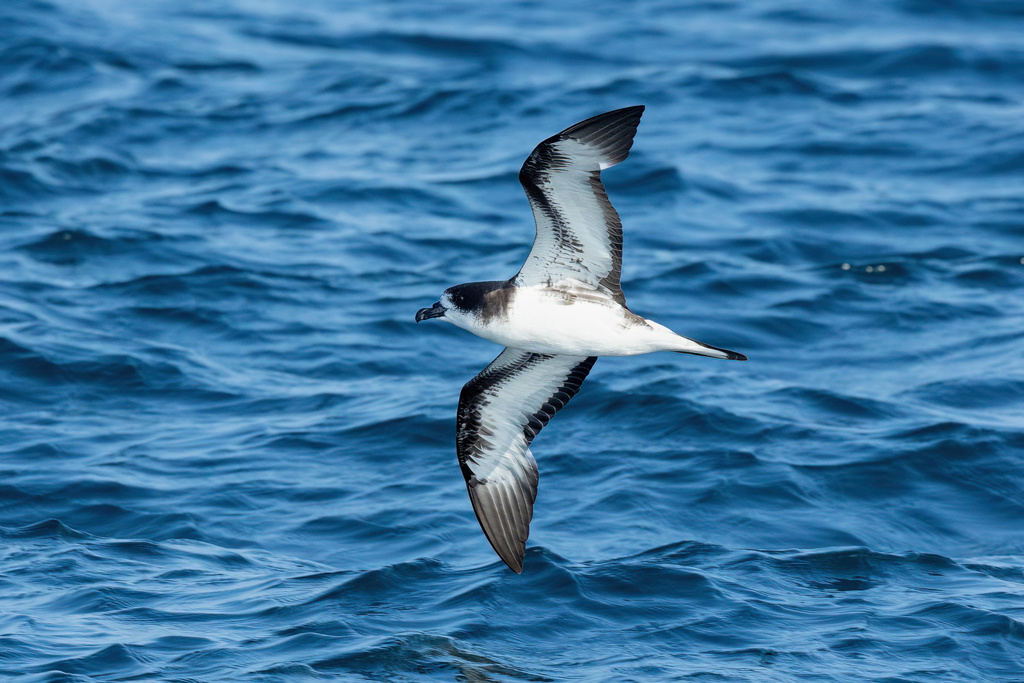
Galapagos Petrel
Photo © Thibaud Aronson
Photo © Thibaud Aronson — CC BY-SA 4.0 — Source: iNaturalist photo #189225421The Galápagos petrel (Pterodroma phaeopygia) is one of the six endemic seabirds of the Galápagos. Its scientific name derives from Ancient Greek: Pterodroma originates from pteron and dromos, meaning "wing" and "runner", and phaeopygia comes from phaios and pugios, meaning "dusky" and "rump". Members of Pterodroma genus are also called the gadfly petrels because their erratic twisting and turning in flight resemble that of gadflies. Known by locals as pata pegada or "web-footed one", Galápagos petrels are highly adapted to the ocean and spend most of their time at sea eating invertebrates and fish. At sea, they are indistinguishable from the Hawaiian petrels: consequently, they were considered the same species for a while. When breeding season arises, they return to their large colonies located on the highlands of some Galápagos islands. The populations of Galápagos petrels have declined substantially over the last three generations (60 years) due to anthropogenic disturbances. Introduced predation (i.e. feral cats, dogs, pigs, and rats) and agricultural expansion have decreased the species' overall breeding success, survivability, and quality of habitats and nesting colonies. Although many conservation efforts are underway, its populations are currently still declining with an estimate of 6,000–15,000 mature individuals remaining. The species is…
No community photos yet. Log in to add the first one.
No community observations of this species yet.