Identification
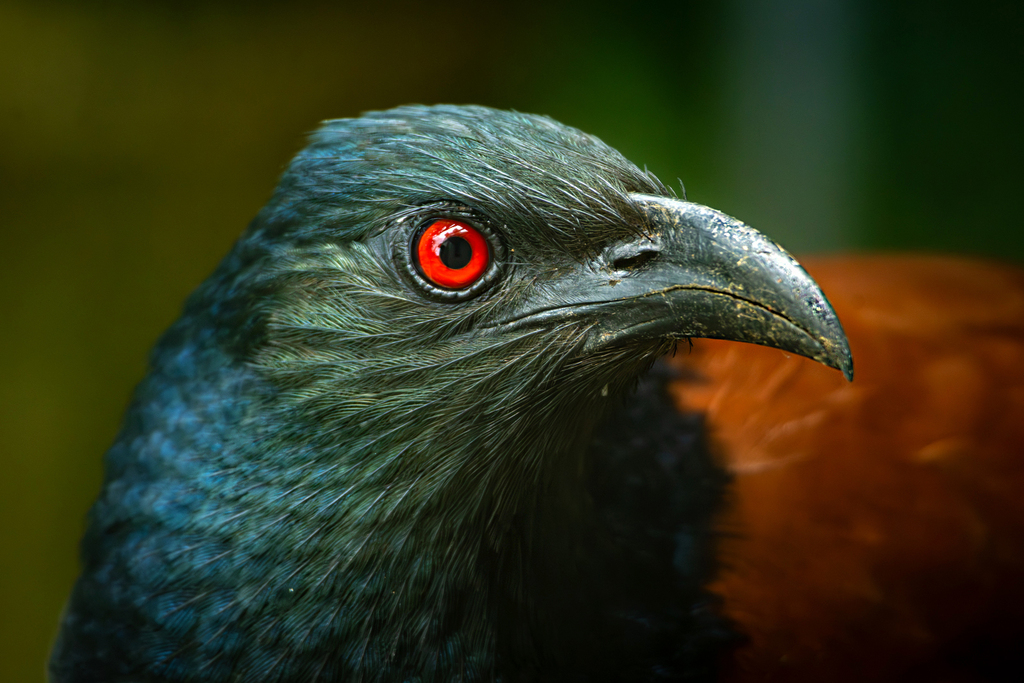
The greater coucal is a large species of cuckoo, measuring 48 cm, with distinctive plumage that has earned it the alternative name "crow pheasant." The head is black, and the upper mantle and underside are glossed with purple-black, while the back and wings display striking chestnut brown coloring. Most striking are its ruby-red eyes, which stand out against the dark head. Juveniles are duller, with spots on the crown and whitish bars on the underside and tail. Females are slightly larger than males, though the sexes are otherwise similar in plumage. Several geographic races exist across its range, with some variations in size and coloration; notably, the southern Indian race has a more brownish face and throat with blue-glossed underparts.
Range & Habitat
The greater coucal is a widespread resident throughout the Indian subcontinent and Southeast Asia. The nominate race ranges from the Indus Valley through the sub-Himalayan and Gangetic plains, Nepal, and Assam into southern China. Other races are distributed across peninsular India, Bangladesh, Myanmar, Thailand, Indochina, the Malay Peninsula, and various Southeast Asian islands including Sumatra, Java, Bali, Borneo, and the Philippines. These birds thrive in a remarkable variety of habitats, from dense jungle and cultivation to urban gardens, demonstrating considerable adaptability to human-modified landscapes.
Behaviour & Diet
The greater coucal is a weak flier and is more often observed clambering through vegetation or walking on the ground while foraging. Its diet is diverse and opportunistic, including insects, caterpillars, snails, and small vertebrates. The birds also consume bird eggs and nestlings, fruits, and seeds, making them occasional agricultural pests in oil palm plantations. They are most active during the warm hours of morning and late afternoon, and often sunbathe singly or in pairs with wings spread on top of vegetation.
The species is famous for its distinctive vocalizations: a deep, resonant booming call of repeated "coop-coop-coops" with variations, rapid rattling sounds, harsh scolding notes, and hissing threat calls. These calls have cultural significance and are associated with various omens throughout its range. Males and females duet together, with females producing lower-pitched calls.
Best Time & Places to See It
The breeding season varies by location but generally occurs chiefly from June to September, with some populations breeding after the monsoon. The birds are most active during warm daylight hours, making early morning and late afternoon the best times for observation. Their presence in gardens and cultivated areas as well as wild habitats makes them accessible to travelers across their extensive range throughout the Indian subcontinent and Southeast Asia.
Photography Tips
Photographing the greater coucal's ruby-red eyes against its glossy black head offers striking portrait opportunities. Early morning when birds sunbathe with wings spread provides excellent lighting and behavior shots. Their ground-feeding habits and clambering movements through dense vegetation require patience and positioning. The chestnut-brown wings contrast vividly with the dark head and body, so backlighting and side angles will emphasize this coloration. Listen for their distinctive booming call to locate them, and be prepared for the bird's relatively weak flight and preference for moving through cover rather than open perches.
Kanha Tiger Reserve
Minneriya National Park
Angamedilla National Park
Bandhavgarh National Park
Bandipur National Park
Banke National Park
Bardiya National Park
Chitwan National Park
Doi Inthanon National Park
Nothing matches these filters.
No community photos yet. Log in to add the first one.
No community observations of this species yet.