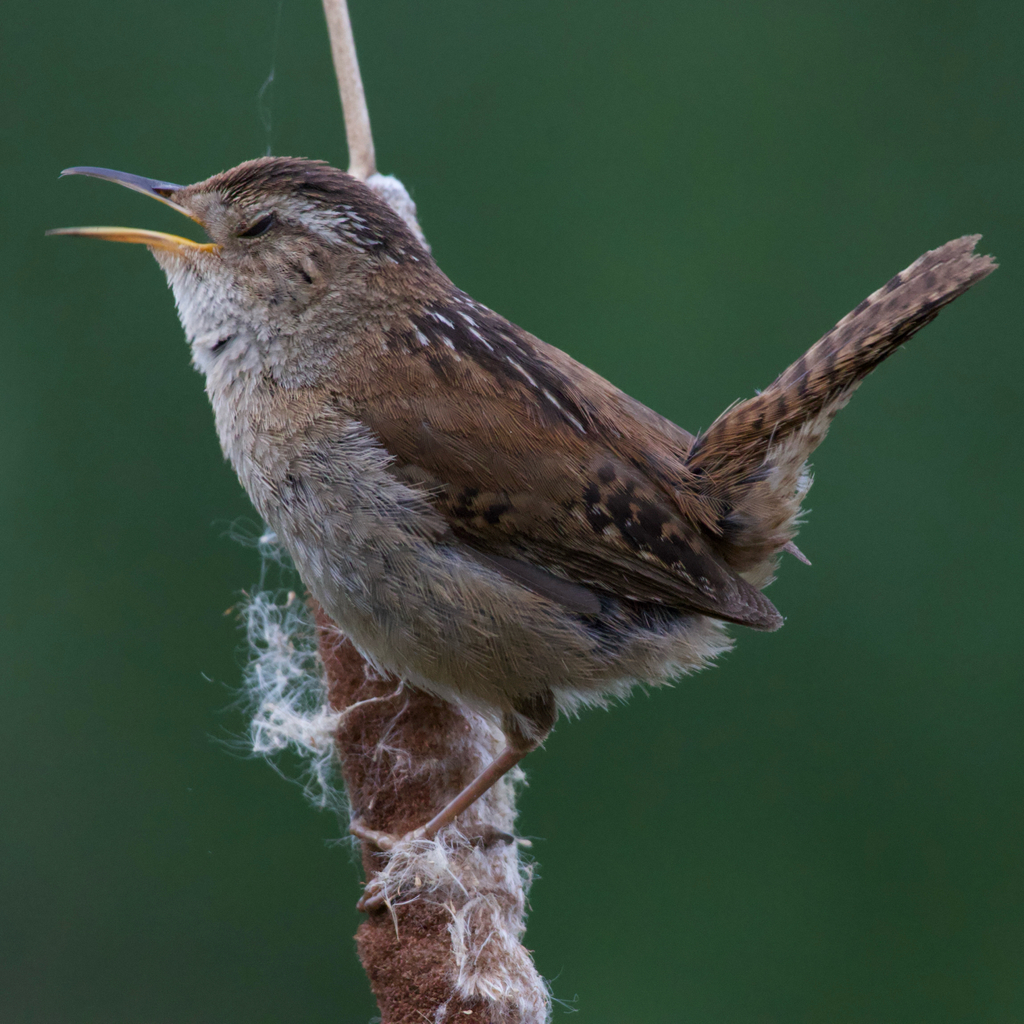
Identification
The Marsh Wren is a small songbird measuring 3.9–5.5 inches in length and weighing just 0.3–0.5 ounces. Adults are distinctive with brown upperparts contrasted by a black-and-white striped back. The underparts are pale, with a light brown belly and flanks offset by a white throat and breast. A dark cap with a prominent white eyebrow stripe and a short, thin bill complete the field marks. Males produce a loud, gurgling song used to defend their territories, with western populations showing particularly varied vocal repertoires.
Range & Habitat
This North American native breeds across the northeastern United States and Canada, with populations extending through much of the continent. Non-breeding birds migrate southward to marshes in the southern United States and Mexico, though some western residents remain year-round. The species shows a strong preference for marshes dominated by tall, uniform vegetation such as cattails, where they can forage and nest among dense cover close to water.
Behaviour & Diet
Marsh Wrens are active foragers that glean insects from vegetation near water and occasionally dart out to snap prey from the air. Their diet consists primarily of insects, supplemented by spiders and snails. Studies of western populations reveal a varied menu: bugs comprise about 29% of intake, caterpillars and chrysalids 17%, beetles 16%, with smaller proportions of ants, wasps, spiders, and other arthropods. Males are remarkably industrious architects, constructing multiple dummy nests throughout their territory—a behaviour thought to serve as courtship displays while females construct the actual breeding nest.
Best Time & Places to See It
Marsh Wrens are most reliably found during breeding season in extensive cattail marshes and similar wetlands with tall vegetation. Spring and early summer offer the best opportunities to locate them, when males are actively singing to defend territories. Any substantial marsh habitat across their range—from northeastern breeding grounds to southern wintering areas—can harbour these birds, though coastal salt marshes in winter months also attract significant populations.
Photography Tips
Patience and early morning visits yield the best results, as males are most vocal at dawn. Position yourself at marsh edges where you can scan the vegetation without disturbing birds. The Marsh Wren's small size and preference for dense cover demand a telephoto lens (400mm or longer) and careful stalking. Look for the characteristic posture of males singing from exposed perches atop cattails or reeds—these elevated positions provide excellent photographic opportunities. The contrasting plumage and distinctive white eyebrow stripe photograph well in good light, making overcast mornings particularly rewarding for capturing field-mark details.
Acadia National Park
Algonquin Provincial Park
Alligator River National Wildlife Refuge
Arches National Park
Banff National Park
Bear River Migratory Bird Refuge
Big Bend National Park
Bitter Lake National Wildlife Refuge
Blackwater National Wildlife Refuge
Nothing matches these filters.
No community photos yet. Log in to add the first one.
No community observations of this species yet.