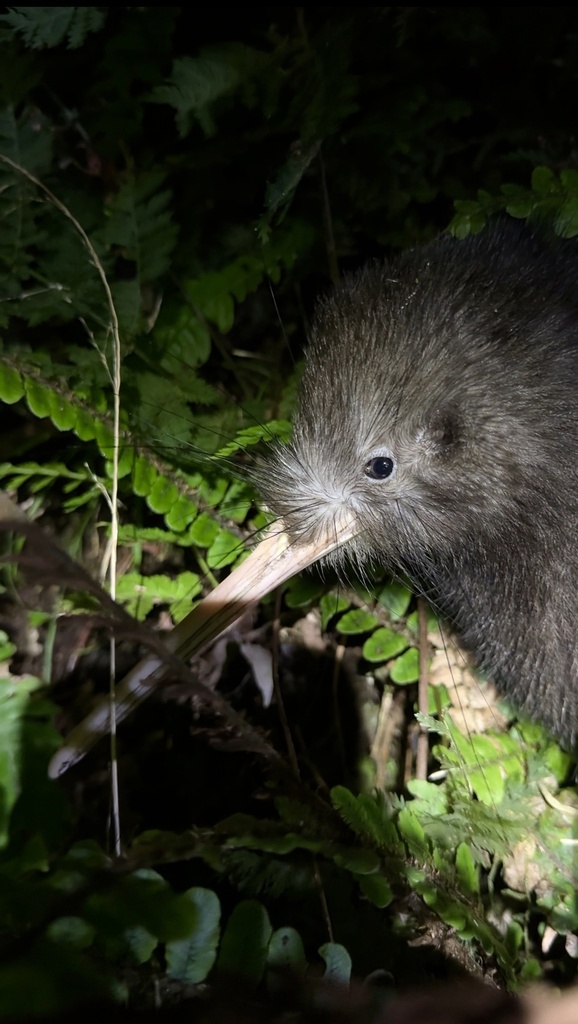
North Island Brown Kiwi
Photo © Liam Clayton Media
Photo © Liam Clayton Media — CC0 1.0 — Source: iNaturalist photo #433562694Identification
The North Island brown kiwi is a large, flightless bird with distinctive spiky, streaked brown feathers. Females are noticeably larger than males, weighing between 2.06–3.85 kg compared to males' 1.44–3.06 kg. The species is characterized by its long bill, measuring 13–20.5 cm in length, which it uses to probe for food on the forest floor. These adaptations make the North Island brown kiwi instantly recognizable among New Zealand's native birds.
Range & Habitat
The North Island brown kiwi is widespread throughout the northern two-thirds of New Zealand's North Island, with about 35,000 individuals remaining—making it the most common kiwi species. The birds inhabit four primary regions: Northland and its associated islands, the Coromandel, and both the eastern and western North Island.
Historically, North Island brown kiwi thrived in New Zealand's indigenous forests. Today, while they still prefer densely vegetated lowland and coastal indigenous forest where population densities are highest, these birds have proven remarkably adaptive. They successfully utilize exotic pine forests, overgrown pasture, sand dunes, regenerating forests, and forest remnants. The primary driver of habitat choice appears to be the availability of food and shelter rather than forest type alone, making the North Island brown kiwi flexible in its ecological requirements.
Behaviour & Diet
The North Island brown kiwi is strictly nocturnal, spending the majority of its time foraging on the forest floor for invertebrates. Their diet comprises 85–95% invertebrate species, particularly spiders and worms, with plant material making up the remainder. This ground-feeding lifestyle is supported by a remarkable evolutionary adaptation: kiwis have the smallest visual field of any bird species relying on non-visual cues for foraging. This reduction in vision is offset by their highly developed senses of smell and touch, allowing them to hunt effectively in low-light forest conditions while reducing metabolic costs.
Best Time & Places to See It
As a nocturnal species, North Island brown kiwi are best observed during night-time excursions in their preferred habitats. The birds are most active during darkness, when they emerge from their burrows and forest refuges to forage. Visitors should focus on the four primary regions where they occur: Northland and its islands, the Coromandel Peninsula, and the eastern and western North Island. Protected sanctuaries and guided night tours offer the most reliable opportunities to encounter these elusive birds in their natural habitat.
Photography Tips
Photographing North Island brown kiwi presents significant challenges due to their nocturnal nature and preference for dense forest habitats. Night photography equipment, including powerful flash units and high-ISO capability, is essential. The birds' streaked, spiky plumage and distinctive long bill are key identifying features worth capturing. Patience is crucial—kiwi are shy and easily disturbed. Consider joining organized night tours at sanctuaries or protected areas where photography opportunities are better managed and the birds are somewhat habituated to human presence, increasing your chances of obtaining clear images of these remarkable flightless birds.
Egmont National Park
Te Urewera
Tongariro National Park
Whanganui National Park
Nothing matches these filters.
No community photos yet. Log in to add the first one.
No community observations of this species yet.