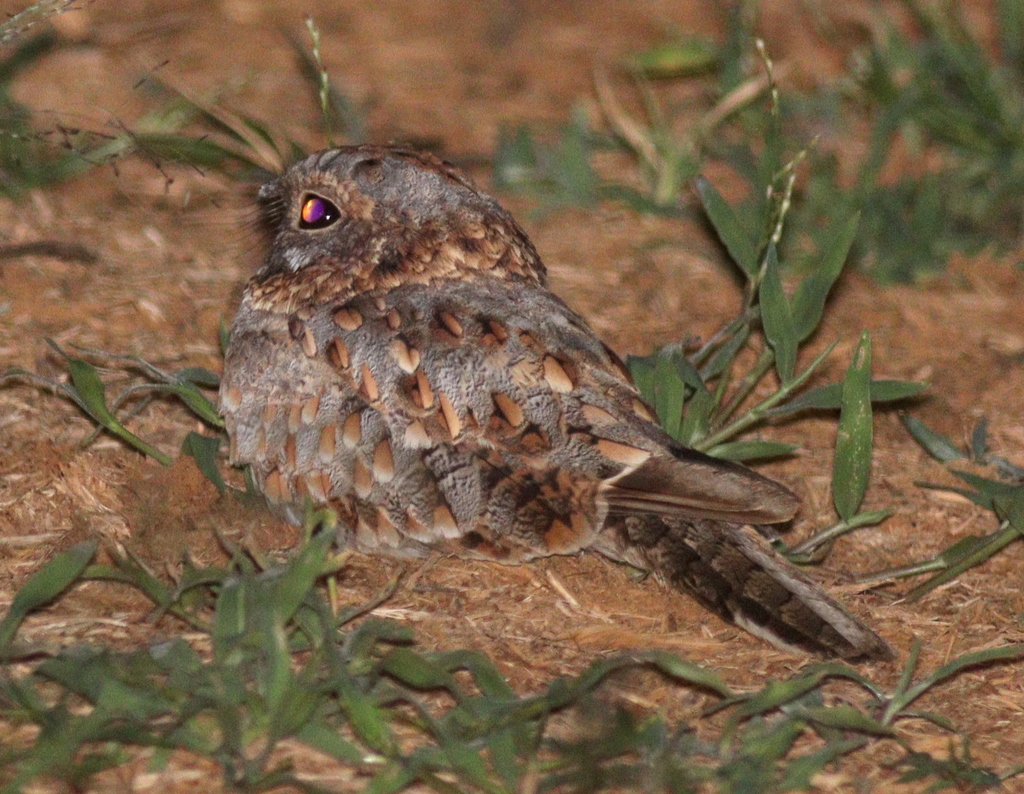
Nubian Nightjar
Photo © Jan Ebr & Ivana Ebrová
Photo © Jan Ebr & Ivana Ebrová — CC BY 4.0 — Source: iNaturalist #105627212The Nubian nightjar (Caprimulgus nubicus) is a species of nightjar in the family Caprimulgidae. It is found in salt marshes of Djibouti, Egypt, Eritrea, Ethiopia, Israel, Kenya, Oman, Saudi Arabia, Somalia, Sudan, and Yemen. == Description == The Nubian nightjar is 20–22 cm (7.9–8.7 in) long. It is a nocturnal species, known for its large eyes and beak, which help it hunt at night. The bird resembles the Moorish nightjar, but is smaller, has a shorter tail and blunt wings compared to the Moorish nightjar. Another characteristic feature is a red-brown band over the neck. The white wing spots are not further away from the wing tips than other types of nightjars. == Nesting == Like other nightjars, the Nubian nightjar nests on the ground. Its nests are clustered in small groups of 1 to 3. It is hypothesized to prefer to nest near agricultural areas for greater access to food.
Tsavo East National Park
Athi ward, Kenya
+468 birds+50 mammals
Across the semi-arid lowlands of southeastern Kenya, where acacia woodland fragments into scrubland and the landscape rolls toward the Indian Ocean horizon, lies one of Africa's…
VIEW NATIONAL PARKTsavo West National Park
Mwatate, Kenya
+513 birds+49 mammals
Where volcanic ridges and weathered lava flows meet the semi-arid lowlands of south-central Kenya, Tsavo West National Park unfolds across a landscape sculpted by fire and…
VIEW NATIONAL PARKAwash National Park
Didiga, Ethiopia
+473 birds+23 mammals
Where the Ethiopian Rift Valley carves through volcanic plateaus, a ribbon of riverine forest winds through acacia scrubland and grassland, creating a mosaic of habitats that…
VIEW NATURAL PARKSamburu National Reserve
Samburu, Kenya
+430 birds+42 mammals
Across the arid plains of northern Kenya, where scattered acacia woodland gives way to rocky outcrops and dry riverbeds, Samburu National Park unfolds as one of…
VIEW NATURE RESERVENo community photos yet. Log in to add the first one.
No community observations of this species yet.