Identification
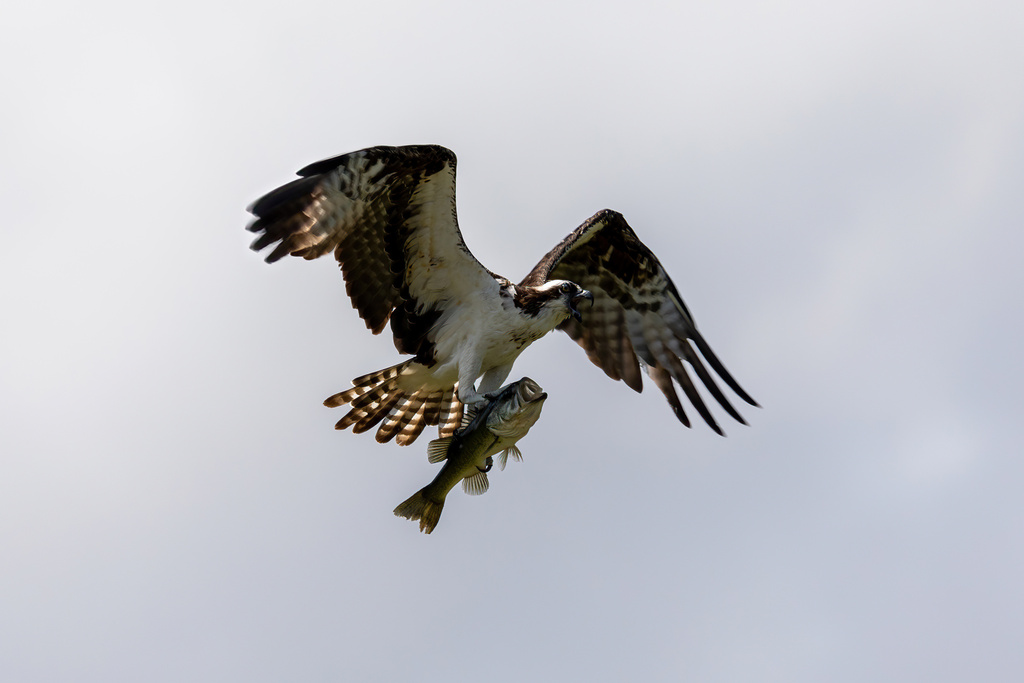
The osprey is a large, distinctive raptor reaching more than 60 cm in length with a wingspan of up to 180 cm. It is brown on the upperparts and predominantly greyish on the head and underparts, making it relatively easy to identify in the field. The osprey differs from other diurnal birds of prey in several key ways: its toes are of equal length, its tarsi are reticulated, and its talons are rounded rather than grooved. Most notably, the osprey and owls are the only raptors whose outer toes are reversible, allowing them to grasp their slippery fish prey with two toes in front and two behind.
Four subspecies are generally recognised, though differences between them are subtle. The North American osprey is larger with a darker body and paler breast than the European form. The Australasian osprey is the smallest and most distinctive subspecies, while Ridgway's osprey, found in the Caribbean, has a very pale head and breast with a weak eye mask.
Range & Habitat
The osprey is a cosmopolitan species distributed on all continents except Antarctica, though in South America it occurs only as a nonbreeding migrant. The Eurasian osprey ranges across the Palearctic realm from the Azores and Iberian Peninsula east to Japan and Kamchatka, and throughout much of Africa, South Asia, and Southeast Asia. The North American osprey occurs from Alaska and Canada to much of Central America. The Australasian osprey is non-migratory and occurs along Australia's marine coastlines and some larger freshwater rivers, as well as in Tasmania.
Ospreys live in a wide variety of habitats but consistently nest in locations near bodies of water that provide an adequate food supply. This dependence on aquatic environments is central to their ecology and distribution.
Behaviour & Diet
The osprey is a diurnal, fish-eating bird of prey with highly specialised physical characteristics and unique hunting behaviour. Its diet consists almost exclusively of fish, which it pursues with remarkable skill and precision. The reversible outer toes and rounded talons are perfectly adapted for securing slippery prey from water.
Best Time & Places to See It
Ospreys can be found year-round in tropical and subtropical regions where they are non-migratory, such as Australia and the Caribbean. In temperate regions, the breeding season offers the best viewing opportunities, particularly near lakes, rivers, and coastal areas where nesting birds are most active and visible.
Photography Tips
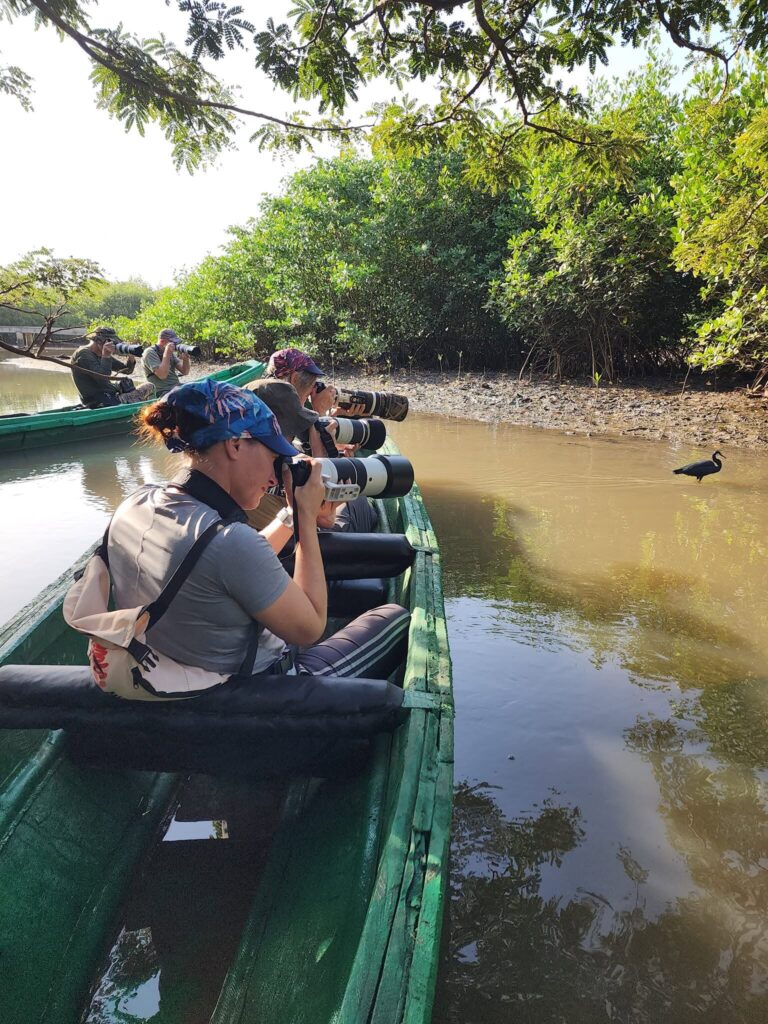
Photograph ospreys near bodies of water where they hunt and nest. Look for them perched prominently near their nesting sites or hunting over water. The species' large size and distinctive silhouette make it relatively approachable compared to other raptors, and the contrast between its brown upperparts and greyish underparts provides good photographic contrast in varied lighting conditions.