Peregrine Falcon
Photo © Vladimir Kharuk
Photo © Vladimir Kharuk — CC BY 4.0 — Source: iNaturalist photo #143426685Identification
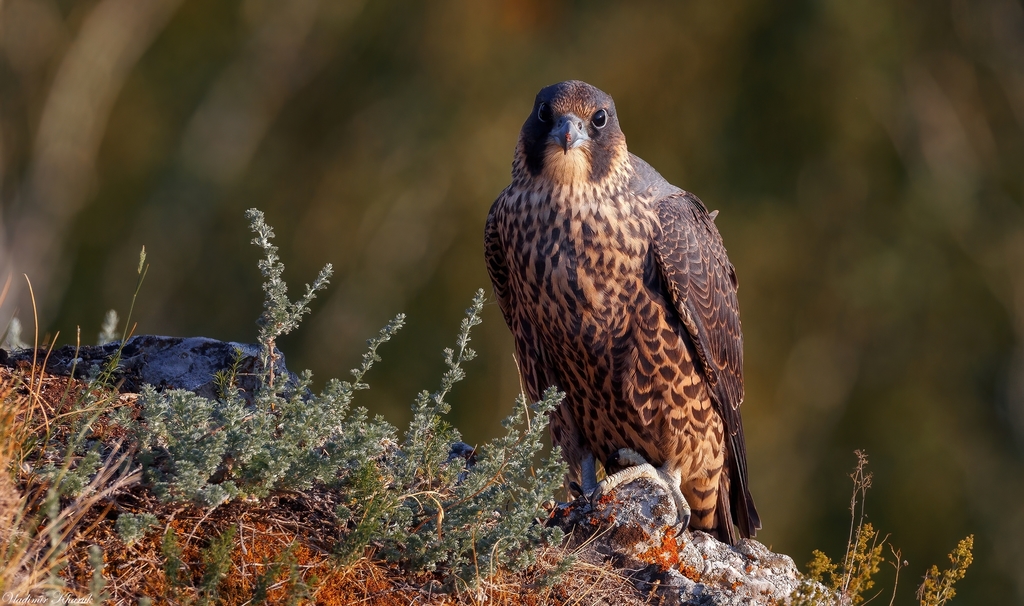
The peregrine falcon is a large, crow-sized raptor with distinctive markings that make it relatively easy to identify. Adults display a blue-grey to slate-grey back with darker barring, contrasting sharply with white to rusty underparts that are finely barred with dark brown or black. The most striking feature is the head pattern: a black crown and distinctive black "moustache" stripe along the cheeks set against a pale neck and white throat. The cere (bare skin around the eyes) and feet are bright yellow, while the beak and claws are black. The upper beak features a notable notch near the tip—a specialized adaptation for severing the spinal columns of prey. Females are considerably larger than males, sometimes weighing 30% more, though both sexes share similar plumage patterns. Immature birds are much browner overall, with streaked rather than barred underparts.
Range & Habitat
The peregrine falcon is the world's most widespread raptor, found on every continent except Antarctica and absent only from New Zealand among major ice-free landmasses. Its breeding range spans from Arctic tundra to tropical regions, though it avoids extreme polar areas, very high mountains, and most tropical rainforests. Around 18 to 19 regional subspecies are recognized, with only minor genetic differences between them.
In recent decades, peregrine falcons have become highly successful urban dwellers, exploiting tall buildings as nest sites and thriving on abundant prey, particularly feral pigeons and ducks. Cities now support many peregrine populations year-round, making urban environments prime habitat for this adaptable species.
Behaviour & Diet
The peregrine falcon's diet consists almost exclusively of medium-sized birds, though it occasionally hunts small mammals, reptiles, or insects. The species name "peregrinus" refers to its migratory habits, with many northern populations undertaking seasonal journeys. Peregrines reach sexual maturity at just one year of age and mate for life, nesting in simple scrapes typically on cliff edges or, increasingly, on tall human-made structures such as buildings and bridges.
Best Time & Places to See It
Urban centres throughout the peregrine's range offer excellent opportunities for observation, particularly where tall buildings provide nesting habitat. Cities with significant feral pigeon populations are especially reliable. Look for peregrines hunting over open spaces where medium-sized birds congregate, including parks, waterfronts, and areas with abundant ducks or pigeons. Migratory populations in northern regions are most visible during breeding season and migration periods.
Photography Tips
The peregrine's striking head pattern and contrasting plumage make it a rewarding photographic subject. The distinctive black moustache stripe and yellow cere provide excellent identifying features for close-up shots. Photograph birds in strong sunlight to capture the contrast between the dark head and pale throat. Urban settings offer predictable locations for obtaining behaviour shots, particularly near known nesting sites on buildings. Capture the notched upper beak and yellow feet as diagnostic details, and try to photograph immature birds separately, as their browner plumage and streaked underparts differ markedly from adults.
Private Full-Day Birdwatching Tour from Lisbon to the Tagus Estuary
Nothing matches these filters.
Bwindi Impenetrable National Park
Kanha Tiger Reserve
Lake Mburo National Park
Mabamba Swamp
Minneriya National Park
Queen Elizabeth National Park
Tombstone Territorial Park
Aberdare National Park
Abijata-Shalla Lakes National Park
Nothing matches these filters.
No community photos yet. Log in to add the first one.
No community observations of this species yet.