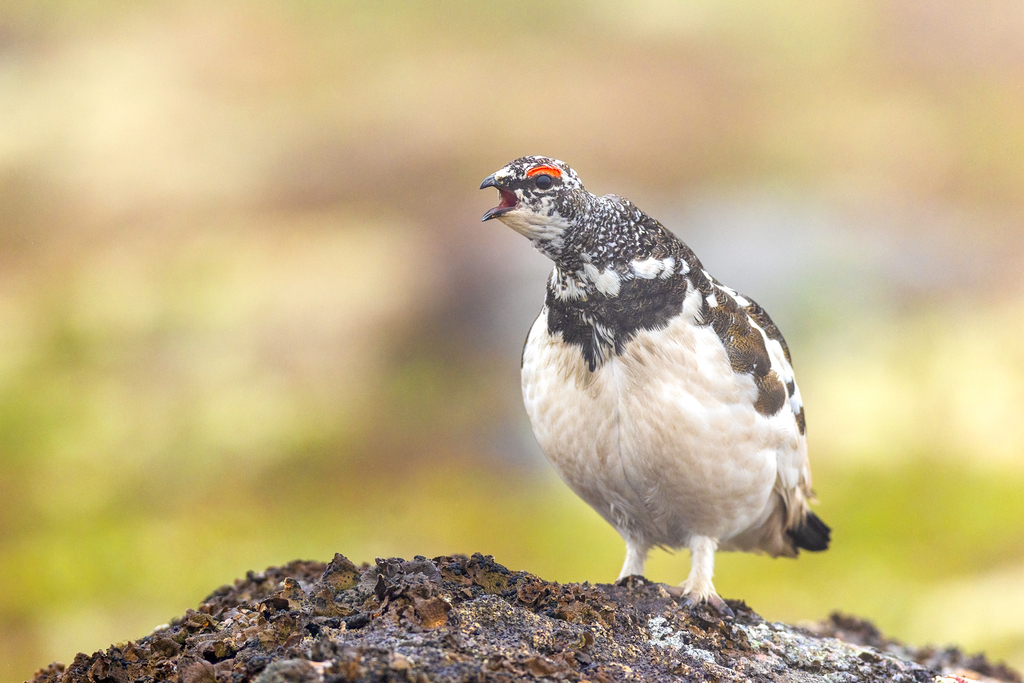
Rock Ptarmigan
Photo © egorbirder
Photo © egorbirder — CC BY 4.0 — Source: iNaturalist photo #567319423Identification
The rock ptarmigan is a medium-sized grouse measuring 34–36 cm in length with a wingspan of 54–60 cm, making it about ten percent smaller than its close relative, the willow ptarmigan. Its most striking feature is its seasonal camouflage: in winter, the plumage becomes almost completely white except for black outer tail feathers and a black eye line, while in spring and summer the bird moults to grey and brown tones. The breeding male displays greyish upper parts with white wings and underparts, and can be identified by its slender bill and black lores (the area between eye and bill), which are absent in the willow ptarmigan.
Range & habitat
This sedentary species breeds across Arctic and Subarctic regions of Eurasia and North America, including Greenland, inhabiting rocky mountainsides and tundra. Its range spans from Norway and Sweden eastward to the Siberian Far East, and it maintains isolated populations in the mountains of Scotland, the Pyrenees, the Alps, Bulgaria, the Urals, the Pamir Mountains, the Altay Mountains, and Japan (where it is restricted to the Japanese Alps and Mount Haku). The rock ptarmigan prefers higher elevations and more barren habitats than the willow ptarmigan.
Behaviour & diet
Male rock ptarmigans are highly vocal during breeding season, producing guttural snores and rattles directed at rival males. Their aerial courtship displays are spectacular: males perform fast forward flight with rapidly beating wings followed by an upward glide with fanned tail, during which they belt out a rasping call often likened to a stick being pulled across a picket fence. On the ground, males defend territories through calling and chasing, with physical conflicts being rare. They also signal with fanned tails, extended necks, and lowered wings when circling receptive females. The small population on Franz Josef Land survives by feeding on rich vegetation found on and beneath high cliffs where seabird colonies gather in summer.
Best time & places to see it
Due to its remote habitat on rocky mountainsides and tundra, the rock ptarmigan has few natural predators and can be surprisingly approachable. Prime viewing locations include the Arctic regions of Canada (particularly Nunavut), Scandinavia, and Siberia. Mountain ranges such as the Alps, Pyrenees, and Japanese Alps also harbour populations. The bird's seasonal plumage changes make spring and summer ideal for observing the transition from white to grey-brown colouration.
Photography tips
The rock ptarmigan's exceptional seasonal camouflage presents both challenge and opportunity for photographers. In winter, its white plumage blends seamlessly into snowy landscapes—patience and careful positioning are essential to capture detail against pale backgrounds. Summer plumage offers better contrast opportunities against rocky terrain. The bird's surprising approachability and dramatic aerial courtship displays make breeding season particularly rewarding for photography. Wide-angle shots capturing the stark tundra landscape complement close-ups of the bird's striking seasonal transitions and distinctive black eye line and tail feathers.
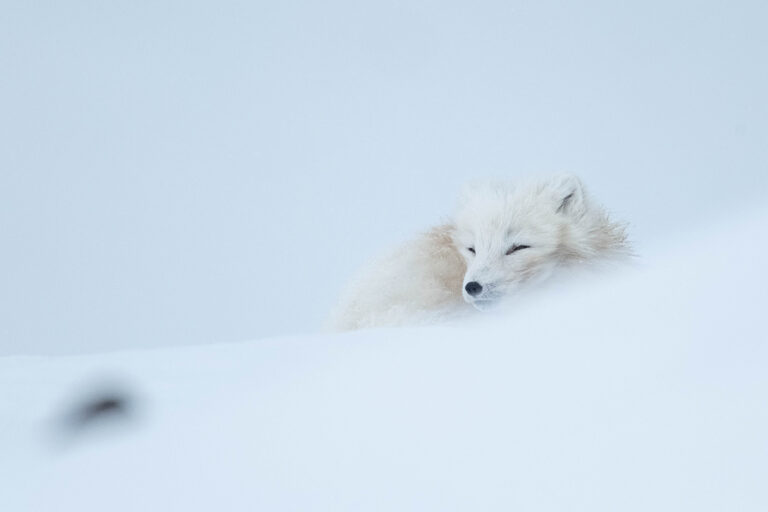
Arctic Ecology and Ecosystem Conservation Tour
Nothing matches these filters.
Tombstone Territorial Park
Alaska Maritime National Wildlife Refuge
Arctic National Wildlife Refuge
Becharof National Wildlife Refuge
Beinn Eighe National Nature Reserve
Búðahraun Nature Reserve
Cairngorms National Park
Capçaleres del Ter i del Freser Natural Park
Chartreuse Regional Nature Park
Nothing matches these filters.
No community photos yet. Log in to add the first one.
No community observations of this species yet.