Ruff
Photo © Валерия Ковалева
Photo © Валерия Ковалева — CC BY 4.0 — Source: iNaturalist photo #154499832Identification
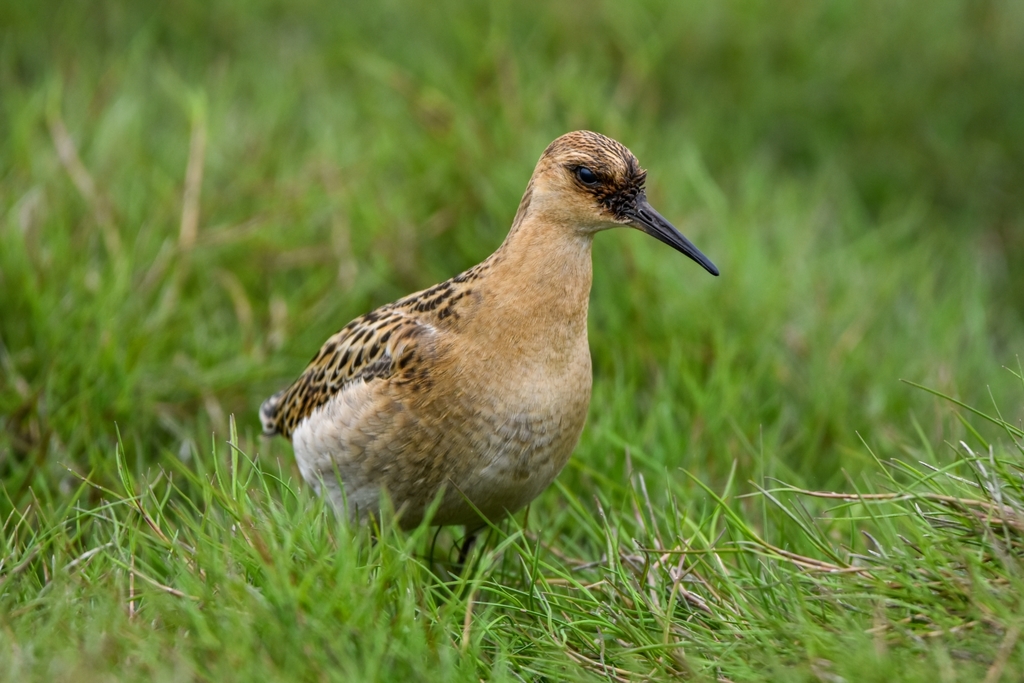
The ruff is a medium-sized wading bird with a distinctive pot-bellied appearance, small head, longish neck and heavy body. Males are noticeably larger than females (called reeves), measuring 29–32 cm long with a 54–60 cm wingspan, while females are 22–26 cm long with a 46–49 cm wingspan. In breeding plumage, males are unmistakable: they develop brightly coloured head tufts, bare orange facial skin, extensive black on the breast, and the large ornamental collar of feathers that gives the species its name. These neck decorations vary dramatically between individuals, appearing black, chestnut or white, with solid, barred or irregular patterning—thought to aid individual recognition at their communal breeding displays. Legs and bills are orange during breeding season, becoming duller in winter.
Outside the breeding season, males lose their head and neck decorations and resemble females more closely, though they remain larger. Both sexes in non-breeding plumage have grey-brown upperparts and mainly white underparts with grey mottling on the breast and flanks. Juveniles resemble non-breeding adults but show a neat, scale-like feather pattern with a strong buff tinge to the underparts. In flight, ruffs display a distinctive thin white bar on the wing and white ovals on the sides of the tail, along with a deeper, slower wing stroke than other similarly sized waders.
Range & Habitat
The ruff breeds in marshes and wet meadows across northern Eurasia, with particularly large breeding populations in Scandinavia and the Arctic. This highly migratory species winters across a vast range including southern and western Europe, Africa, southern Asia and Australia, sometimes forming enormous flocks at wintering grounds. The species shows no recognized subspecies or geographical variants.
Habitat preferences centre on wet grassland and soft mud environments. During breeding season, ruffs occupy marshes and wet meadows, while on migration and in winter they utilize similar wetland habitats where they can forage effectively. However, the species has experienced range contractions in much of Europe due to land drainage, increased fertiliser use, loss of traditionally mown or grazed breeding sites, and over-hunting.
Behaviour & Diet
Ruffs are highly gregarious birds that display remarkable breeding behaviour. Males gather at leks (traditional communal display arenas) where three differently plumaged types use varied strategies to obtain mating opportunities. The colourful head and neck feathers are erected as part of elaborate courtship displays, though the species is usually silent. Females lay four eggs in well-hidden ground nests and raise the mobile chicks alone, producing one brood per year. Predators of eggs and chicks include mammals such as foxes, feral cats and stoats, and birds including large gulls, crows and skuas.
Ruffs forage by probing or searching by sight in wet grassland and soft mud. They primarily feed on insects, especially during the breeding season, but also consume plant material including rice and maize during migration and winter. The species is classified as "least concern" on the IUCN Red List, though it is listed in the Agreement on the Conservation of African-Eurasian Migratory Waterbirds due to regional population declines.
Best Time & Places to See It
Spring and autumn migration periods offer excellent opportunities to observe ruffs, particularly in wetland areas used as stopover points. Winter visitors can be found in southern and western Europe, Africa, southern Asia and Australia. Breeding season (May–June) in northern Eurasia provides the chance to see males in their spectacular breeding plumage, though accessing remote marshes and wet meadows in Scandinavia and the Arctic requires planning and specialist knowledge.
Look for ruffs in wet grasslands, marshes and areas of soft mud where they congregate in flocks. Migration periods often bring large numbers through temperate wetlands, making spring and autumn ideal for viewing. The dramatic transformation of males into breeding plumage can be observed gradually through spring as they return to breeding areas.
Photography Tips
The ruff's extreme plumage variability offers compelling photographic subjects, especially during breeding season when males display their individually distinctive head tufts and neck ruffs. The contrast between the flamboyant breeding males and duller females and non-breeding birds provides diverse compositional opportunities. Capture males with head and neck ornaments erected during their display behavior to showcase the species' most striking features.
In flight, watch for the distinctive thin white bar on the wing and white tail ovals. The bird's deeper, slower wing stroke compared to other waders may help with tracking in-flight shots. Large flocks at wintering grounds or migration stopover sites offer opportunities for wide-angle compositions showing the species' gregarious nature. Early spring when males are transitioning into breeding plumage provides particularly interesting images as ornaments gradually develop.
Private Full-Day Birdwatching Tour from Lisbon to the Tagus Estuary
Week-long Birdwatching Programme in Northern & Central Portugal
Nothing matches these filters.
Lake Mburo National Park
Mabamba Swamp
Murchison Falls National Park
Queen Elizabeth National Park
Aberdare National Park
Abijata-Shalla Lakes National Park
Addo Elephant National Park
Agulhas National Park
Alaska Maritime National Wildlife Refuge
Nothing matches these filters.
No community photos yet. Log in to add the first one.
No community observations of this species yet.