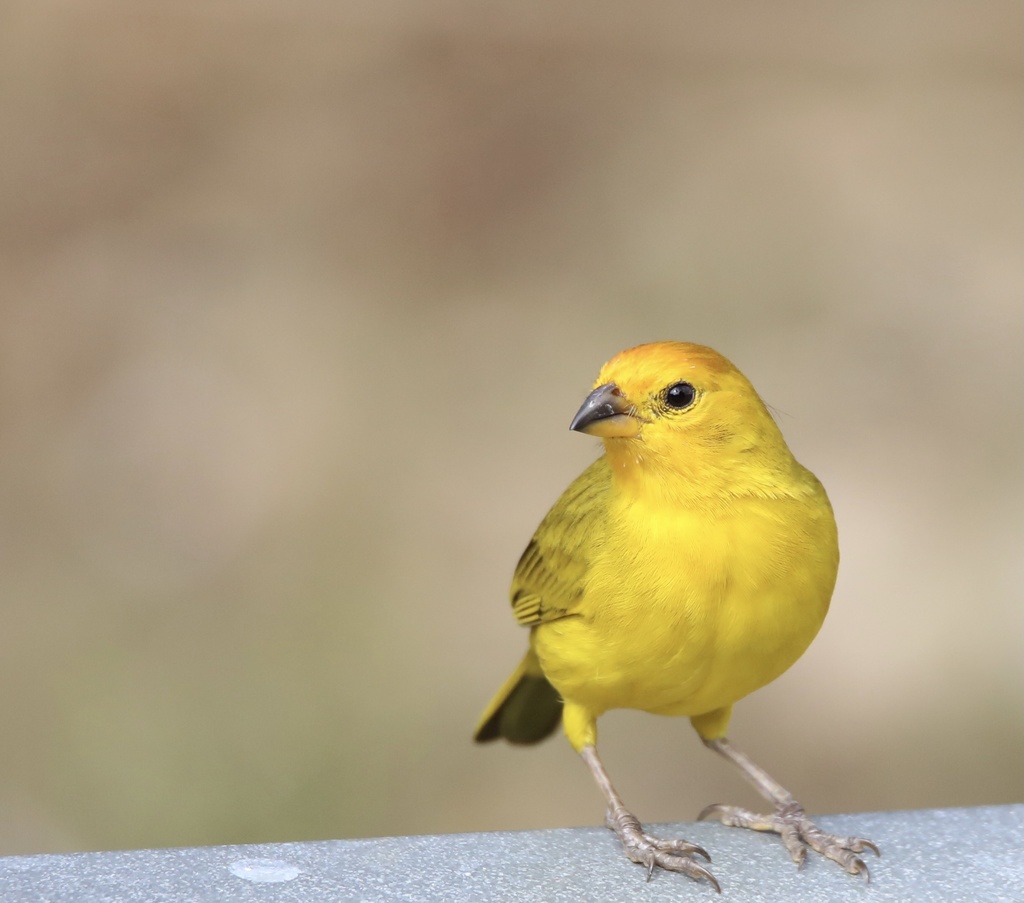
Saffron Finch
Photo © Aitor
Photo © Aitor — CC BY 4.0 — Source: iNaturalist #73521018Identification
The saffron finch is unmistakable in its bright plumage. Males are brilliant yellow overall with a distinctive orange crown, making them stand out among other yellow finches in the region. Females are trickier to identify: in most populations they resemble duller versions of males, but in the southern subspecies (S. f. pelzelni) they are notably different, showing olive-brown plumage with heavy dark streaking. Despite their canary-like appearance and common names in various regions, saffron finches are not true canaries but rather tanagers closely related to seedeaters.
Range & Habitat
This species is widely distributed across South America, found in lowland areas outside the Amazon Basin across Colombia, northern Venezuela, western Ecuador, western Peru, eastern and southern Brazil, Bolivia, Paraguay, Uruguay, northern Argentina, and Trinidad and Tobago. It favours open and semi-open habitats and shows a remarkable ability to adapt to human-modified landscapes. The bird has also been introduced to Hawaii, Panama, Puerto Rico, Jamaica and other locations beyond its native range.
Behaviour & Diet
Saffron finches are notably tolerant of human proximity, readily appearing in suburban areas and visiting bird tables. They typically nest in cavities, making creative use of abandoned rufous hornero nests, bamboo branches, and spaces under house roofs. Males are territorial and polygamous, often mating with two females during the breeding season. The species is vocal, with males producing a pleasant but repetitious song that, combined with their striking appearance, has made them popular as caged birds throughout their range and beyond.
Best Time & Places to See It
Look for saffron finches in open and semi-open lowland habitats across their South American range. Their tolerance for human settlement makes them accessible in suburban areas, gardens, and around rural properties where they may visit bird feeders. The bright yellow males are conspicuous year-round, though breeding season activity (with territorial males and nesting behaviour) offers particularly rewarding viewing opportunities.
Photography Tips
The male's brilliant yellow plumage and orange crown provide excellent photographic subjects with strong colour contrast. Photograph males in good light to capture the intensity of their colouration. Female photography is more challenging, especially in southern populations where their olive-brown and streaked appearance blends into vegetation; patience and positioning near known nesting or feeding sites will improve your chances. Their frequent visits to bird feeders and house roofs offer opportunities for closer approach and detailed shots.
Amacayacu National Park
Araucárias National Park
Bahuaja Sonene National Park
Brasília National Park
Calilegua National Park
Campos del Tuyú National Park
Campos Gerais National Park
Carlos Botelho State Park
Chaco National Park
Nothing matches these filters.
No community photos yet. Log in to add the first one.
No community observations of this species yet.