Identification
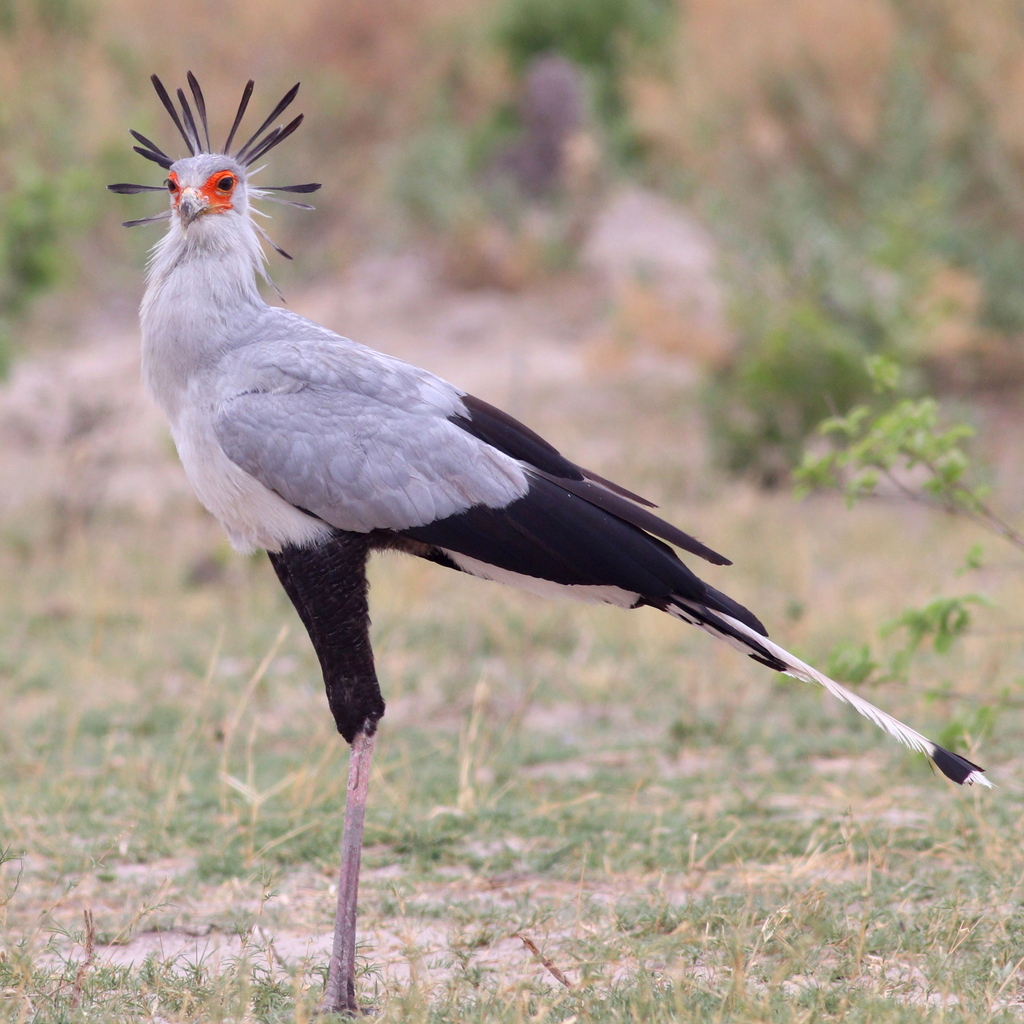
The secretarybird is instantly recognizable as a very large bird of prey, standing as much as 1.3 metres (4 feet 3 inches) tall. It possesses a distinctive combination of features: an eagle-like body mounted on crane-like legs that give it an unusually tall, striking silhouette. Adults have predominantly grey plumage, with a flattened dark crest, black flight feathers and black thighs. The face is featherless and red-orange in colour, adding to the bird's distinctive appearance. The sexes are similar in appearance.
Range & Habitat
The secretarybird is endemic to Africa, found throughout the sub-Saharan region where it inhabits open grasslands and savanna. It is mostly terrestrial, spending the vast majority of its time on the ground rather than in the air. This ground-dwelling preference is fundamental to its ecology and hunting strategy.
Behaviour & Diet
The secretarybird hunts and catches prey on the ground, employing a distinctive and effective technique: it often stomps on victims to kill them. Its diet consists of insects and small vertebrates. Breeding can occur at any time of year, though it tends to peak late in the dry season. The bird builds its nest at the top of a thorny tree, laying a clutch of one to three eggs. In years when food is plentiful, all three young can survive to fledging.
Best Time & Places to See It
The secretarybird's large African range offers multiple opportunities for viewing, though populations are experiencing rapid decline due to habitat destruction. Open grasslands and savanna habitats in the sub-Saharan region are your best bet for encounters. The species is listed as endangered by the International Union for Conservation of Nature, making sightings increasingly precious for wildlife travellers.
Photography Tips
The secretarybird's distinctive silhouette—combining an eagle's powerful body with crane-like legs—makes it a remarkable photographic subject. Its ground-dwelling habits mean you should position yourself at ground level to capture its full height and commanding stance. The striking contrast between its grey plumage, black flight feathers, and distinctive red-orange face provides excellent opportunities for detailed portraiture. The bird's characteristic stomping hunting behaviour, if witnessed, offers dynamic action shots that capture its unique predatory strategy.