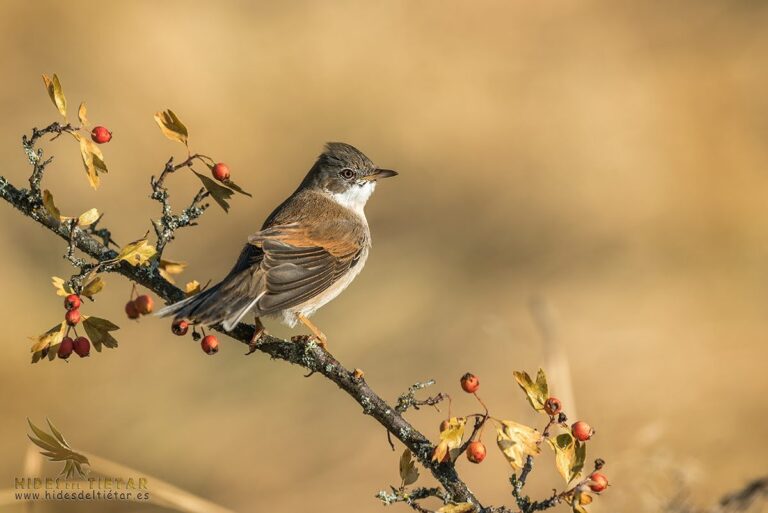
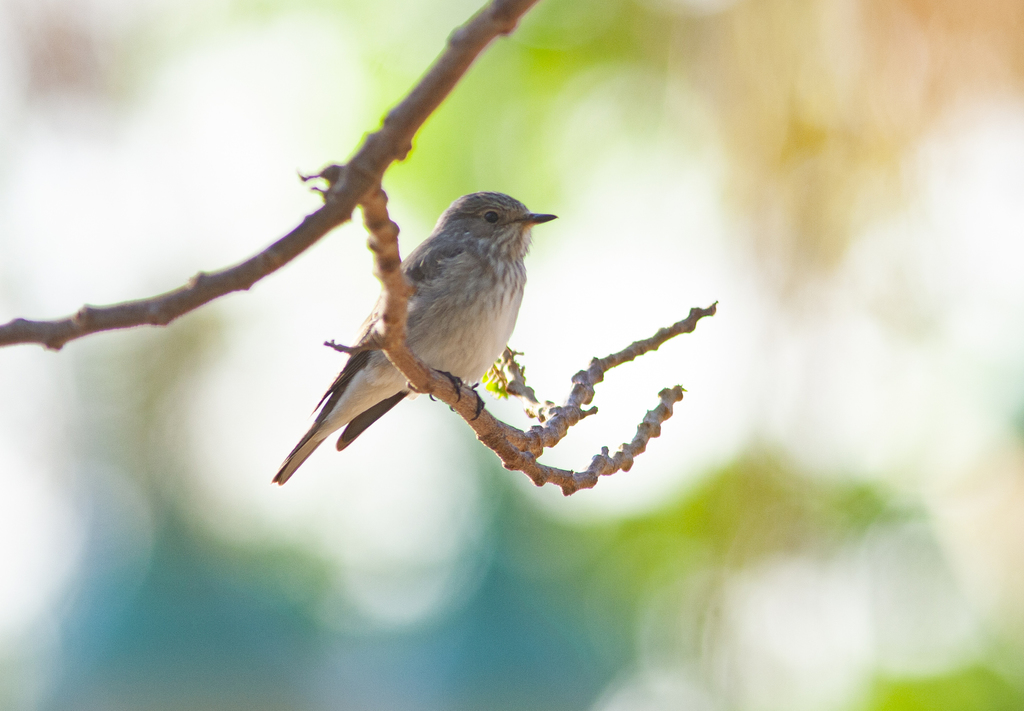
Spotted Flycatcher
Muscicapa striata
Photo © Tero Linjama
Photo © Tero Linjama — CC0 1.0 — Source: iNaturalist photo #105973908ABOUT
Subspecies of Spotted Flycatcher
Tyrrhenian Mediterranean FlycatcherBalearic Mediterranean FlycatcherCommon spotted flycatcherEastern spotted flycatcherSouth-Central asian spotted flycatcherCrimean spotted flycatcherMongolian spotted flycatcher
Identification
The spotted flycatcher is a small, slim bird measuring around 14.5 cm in length, weighing just 14–20 grams. It is an undistinguished-looking species with dull grey-brown upperparts and off-white underparts. The bird's common name derives from its distinctive streaked crown, throat, and breast, which are marked with brown striations. The wings and tail feathers are edged with pale, thin margins. Its short black legs and black bill—broad but pointed in shape, typical of aerial insectivores—are useful identification features. Juveniles differ from adults by being browner overall, with ochre-buff spots on the upperparts and scaly brown spots below. The sexes are alike in appearance.
Range & Habitat
The spotted flycatcher breeds across most of Europe and the Palearctic region extending to Siberia, with five recognized subspecies occupying different geographic areas from western Europe through to Mongolia and central Asia. All subspecies winter in southern Africa and southwestern Asia. The species is migratory, undertaking long-distance seasonal movements between breeding and wintering grounds. It has been recorded in Sri Lanka, suggesting its full distribution may be wider than currently documented. Notably, the species is in decline across parts of its range.
These birds favour deciduous woodlands, parks, and gardens, showing a clear preference for open areas amongst trees. They are adaptable birds that readily exploit human-modified landscapes for breeding.
Behaviour & Diet
The spotted flycatcher is an aerial insectivore that hunts from conspicuous perches, making characteristic sallies after passing flying insects before typically returning to the same perch. Its upright posture while perching is particularly distinctive. The bird's call is a thin, drawn-out, soft and high-pitched sound described as slightly descending in pitch.
Spotted flycatchers exhibit an unusual moulting strategy among passerines, replacing their outer flight feathers before those nearer the body—opposite to the typical sequence. They build open nests in suitable recesses, often against walls, and readily adopt open-fronted nest boxes. They lay 4–6 eggs per clutch. The species demonstrates excellent egg recognition abilities, which ornithologists believe indicates it was once victimized by the common cuckoo but evolved sufficient discrimination to reject parasitic eggs, eventually ceasing to be a cuckoo host.
Best Time & Places to See It
Spotted flycatchers are present in their European breeding range during the breeding season, typically in deciduous woodlands, parks, and gardens. The best time to observe them is during the breeding season when they are actively hunting from perches and defending territories. Gardens and parks with scattered trees and open spaces offer excellent viewing opportunities, and birds readily use open-fronted nest boxes, making them predictable for observation in suitable locations.
Photography Tips
Photograph spotted flycatchers from positions that allow you to capture their characteristic upright perching posture. Their habit of hunting from conspicuous perches and returning repeatedly to the same spot makes them relatively predictable subjects once located. The pale underparts and streaked head and breast provide good contrast for photography. Early morning light will best reveal the subtle grey-brown and off-white plumage tones. Focus on capturing the bird in its typical hunting behaviour—perched alertly before making a sally after passing insects.
HIDES
EXPERIENCES
Sort by
Birding TourEasy
GAMBIA & SENEGAL BIRDS TOURS
Private Full-Day Kotu Birdwatching Experience: An Introduction to Kotu’s Diverse Birdlife
Full day tour start at 6:30am and ends at 5.30pm
7
EN
Greater Painted-snipe · Oriole Warbler +43
197,45 €/ person
Book nowNothing matches these filters.
HOTSPOTS
Country
Type
Sort by
5,0 (1)
National Park
Bwindi Impenetrable National Park
Kanyashogi·Uganda
+603 birds+26 mammals
5,0 (1)
National Park
Lake Mburo National Park
Uganda
+505 birds+24 mammals
5,0 (1)
Nature Reserve
Mabamba Swamp
Memere·Uganda
+464 birds+2 mammals
5,0 (1)
National Park
Murchison Falls National Park
Uganda
+608 birds+33 mammals
5,0 (1)
National Park
Queen Elizabeth National Park
Uganda
+672 birds+30 mammals
National Park
Aberdare National Park
Mweiga ward·Kenya
+394 birds+30 mammals
National Park
Abijata-Shalla Lakes National Park
Ethiopia
+438 birds+7 mammals
National Park
Abruzzo, Lazio and Molise National Park
Pescasseroli·Italy
+139 birds+18 mammals
National Park
Addo Elephant National Park
Sundays River Valley Local Municipality·South Africa
+388 birds+55 mammals
Nothing matches these filters.
COMMUNITY
Share your photo of this species
Sort by
0
Observed by
0
Hotspots reported
0
Countries
No community observations of this species yet.