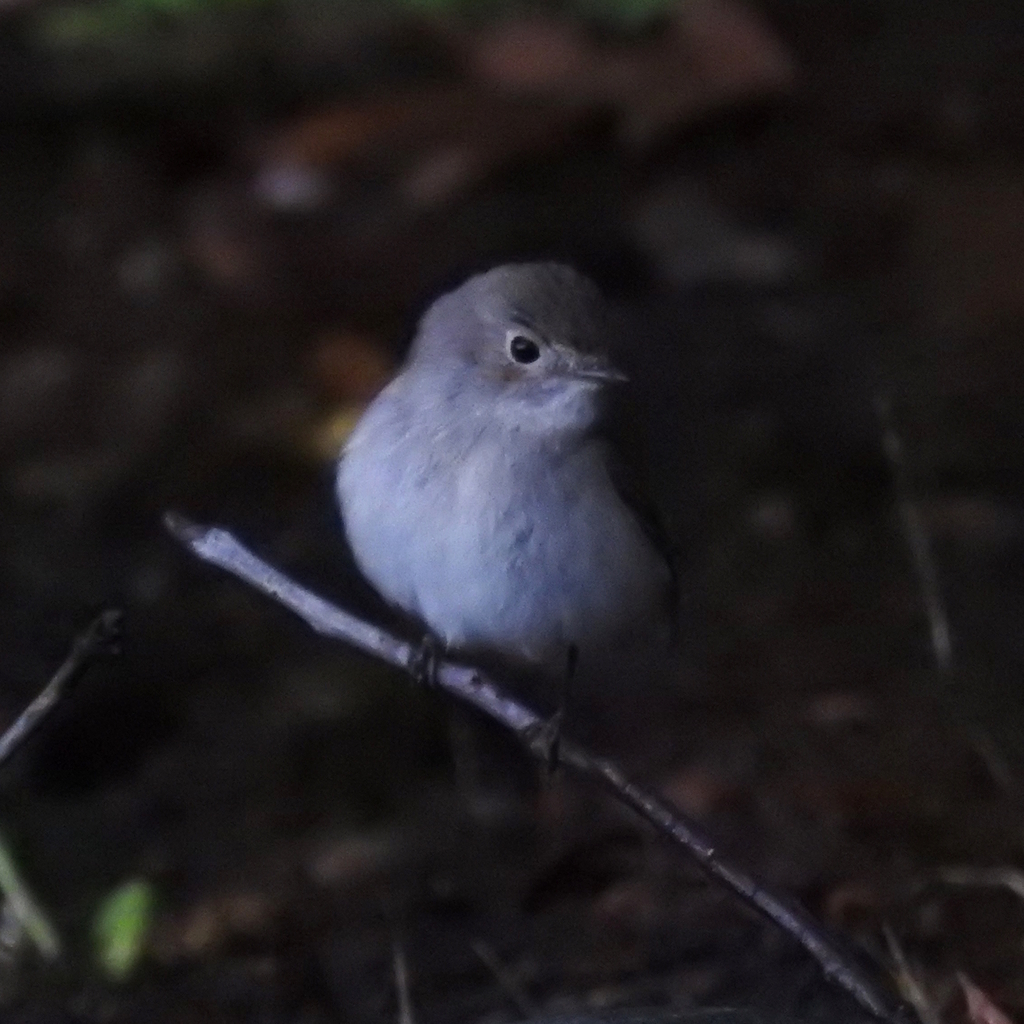
Taiga Flycatcher
Photo © Quillipede
Photo © Quillipede — CC0 1.0 — Source: iNaturalist #332175524Identification
The Taiga Flycatcher is a small, elegant songbird easily distinguished by its striking plumage differences between males and females. Males display ear coverts and sides of the neck tinged blue-grey, with breeding males sporting distinctive orange-red coloration on the throat—a feature that earned this species its alternative common name, the Red-throated Flycatcher. Females are more subdued, with brown upper parts, a blackish tail dramatically flanked by white patches, a buffish breast, and mostly white underparts.
When identifying this species, note its key distinction from the closely related red-breasted flycatcher: females of that species have a brown tail rather than the white-flanked blackish tail seen here, and breeding males of the red-breasted flycatcher display red coloration extending down to the breast, whereas the Taiga Flycatcher's red is confined to the throat. This species was once considered merely a subspecies of its red-breasted cousin but is now recognized as a distinct species.
Range & Habitat
The Taiga Flycatcher breeds across northern Eurasia, with its range extending from eastern Russia through Siberia and into Mongolia. This migratory species abandons its breeding grounds seasonally, becoming a winter visitor throughout South and South-east Asia, appearing in Bangladesh, Bhutan, India, Cambodia, Laos, Myanmar, Nepal, Malaysia, Thailand, China, Vietnam, and Japan. The species is a rare vagrant to western Europe, making sightings there noteworthy for birders.
Its natural habitat is taiga forest, the boreal woodland that characterizes much of the species' breeding range. During winter migration, it adapts to various forested habitats across its wintering range.
Behaviour & Diet
As befits its family name, the Taiga Flycatcher is an insectivore that hunts flying insects with the characteristic darting, acrobatic behavior typical of Old World flycatchers. The species is migratory, undertaking long journeys between its northern breeding grounds and Asian wintering quarters—a testament to its remarkable navigational abilities and physiological endurance.
Best Time & Places to See It
Timing is crucial for encountering this species. Winter visitors to South and South-east Asia should search appropriate forest habitats in Bangladesh, Bhutan, India, Cambodia, Laos, Myanmar, Nepal, Malaysia, Thailand, China, Vietnam, and Japan during the winter months. For those traveling to the breeding range in eastern Russia, Siberia, or Mongolia, the breeding season offers the best opportunity to observe this species in its natural taiga forest habitat.
Photography Tips
The Taiga Flycatcher's small size and active hunting behavior present both challenges and rewards for photographers. The striking contrast between the orange-red throat of breeding males and their blue-grey ear coverts makes them rewarding subjects, while the white-flanked tail of females offers distinctive compositional elements. Position yourself near flowering trees or forest edges where insects concentrate, and be prepared for rapid movements as this flycatcher pursues its aerial prey. Early morning light will best illuminate the subtle coloration of both sexes.
Kanha Tiger Reserve
Alaska Maritime National Wildlife Refuge
Baikal National Park
Bandhavgarh National Park
Bandipur National Park
Banke National Park
Bardiya National Park
Chitwan National Park
Doi Inthanon National Park
Nothing matches these filters.
No community photos yet. Log in to add the first one.
No community observations of this species yet.