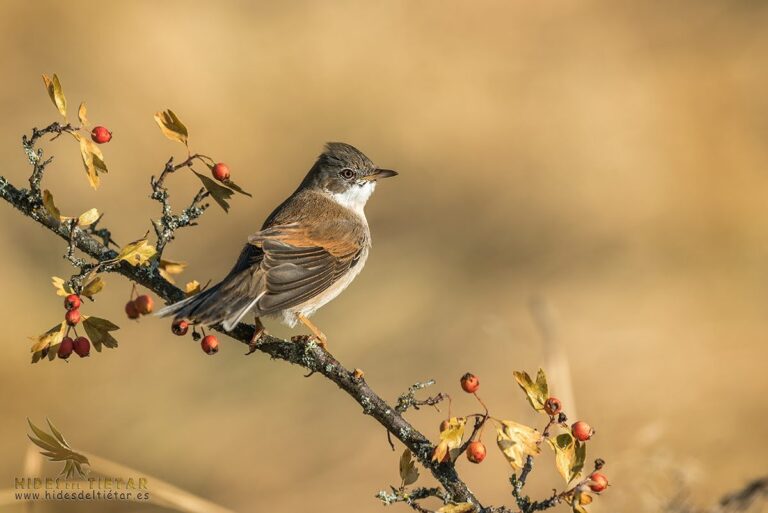
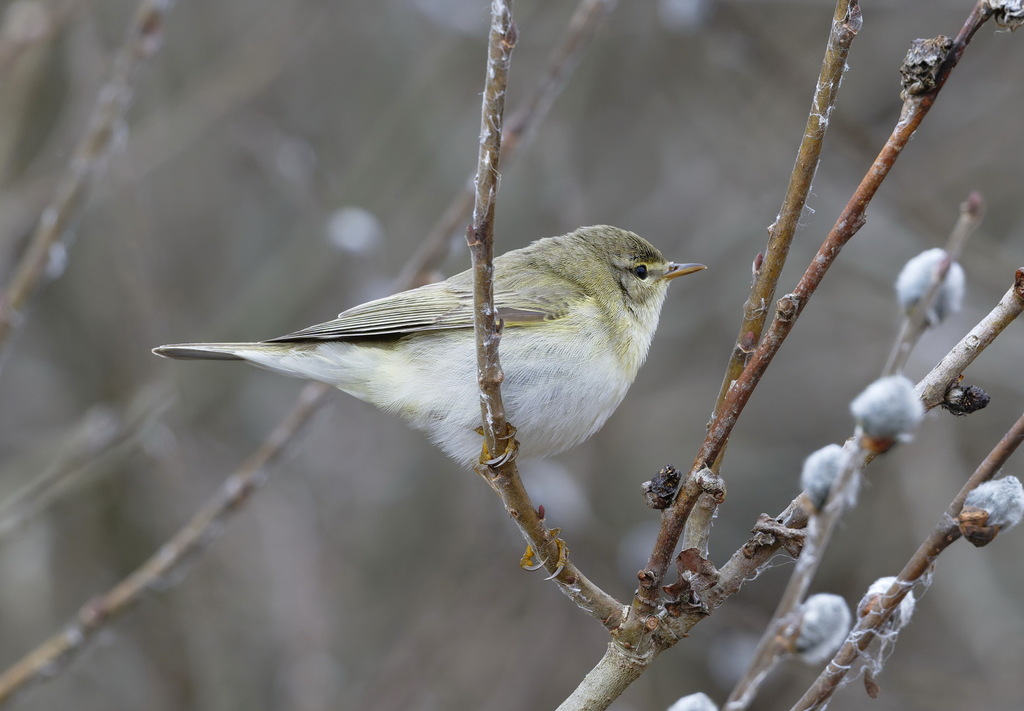
Willow Warbler
Phylloscopus trochilus
Photo © Лариса Артемьева
Photo © Лариса Артемьева — CC0 1.0 — Source: iNaturalist photo #645544411ABOUT
Subspecies of Willow Warbler
Common willow warblerNorthern willow warblerSiberian willow warbler
Identification
The willow warbler is a tiny leaf warbler measuring just 11–12.5 cm long and weighing only 7–15 g—small enough to fit in your palm. It presents as greenish-brown above with off-white to yellowish underparts, and its plain greenish-brown wings lack any wingbars. Juveniles are noticeably yellower below than adults. Though superficially similar to the closely related chiffchaff, several field marks distinguish them: willow warblers have paler pinkish-yellow legs (versus dark brown or blackish in chiffchaffs), a longer and paler bill, a more elegant overall shape, and a longer primary projection visible at the wingtip.
Aurally, willow warblers are equally diagnostic. Their song is a simple, repetitive descending whistle, while their contact call is a disyllabic 'hoo-eet'—distinctly different from the chiffchaff's more monosyllabic 'hweet'. These vocal differences often provide the most reliable identification in the field, particularly for silent birds in autumn.
Range & Habitat
The willow warbler is among Europe's most widespread breeding warblers, occurring from Ireland east to the Anadyr River basin in eastern Siberia. Despite this vast breeding range across northern and temperate Europe and the Palearctic, it is strongly migratory, with almost the entire population wintering in sub-Saharan Africa—a remarkable commitment for such a diminutive bird. Three subspecies are recognised, showing a west-to-east colour cline from greenish-yellow to predominantly greyish plumage.
Breeding birds favour open woodlands with trees and ground cover, particularly habitats dominated by birch, alder, and willow. They prefer young, scrubby woodland including human-altered landscapes such as coppice and young plantations up to 10–20 years old. Damp woodland areas with good lichen coverage, water features like streams, and low bramble patches for nesting are especially attractive. They will also utilise young or open coniferous forests and benefit from woodland ride edges with varying vegetation structure. Scandinavia hosts the highest densities, with up to 1,100 pairs per square kilometre, making it the commonest bird across much of the region.
Behaviour & Diet
All willow warbler populations are highly migratory. The subspecies breeding in eastern Siberia undertakes one of the longest migrations of any small bird, travelling up to 12,000 km from their breeding grounds to southern Africa along the Asian–East African Flyway. In northern Europe, willow warblers are among the first warblers to return in spring, though still later than the chiffchaff. Typical annual timings see birds wintering in sub-Saharan Africa from October to March, arriving on breeding grounds between mid-March and mid-May, and breeding from late April through August before departing again by October.
Like all Old World warblers, willow warblers are strictly insectivorous, gleaning small insects and invertebrates from foliage and low vegetation. They typically raise only one brood per season, though two broods occasionally occur. Nests are built in close contact with the ground in low vegetation, well-concealed among brambles and dense scrub. The species is a very rare vagrant to Alaska, with only occasional sightings recorded on St. Lawrence Island.
Best Time & Places to See It
Spring migration offers excellent viewing opportunities across northern Europe from mid-March to mid-May, when freshly arrived birds are vocal and actively establishing territories. Summer breeding season (late April to August) is ideal for observing birds in their preferred habitats: look for them in open birch and alder woodlands, coppiced areas, and young plantations, particularly in Scandinavia where population densities are highest. Scottish locations show increasing populations, while English populations have declined significantly in recent decades, particularly in the southeast.
Autumn migration (August to October) provides another window for observation, though birds are generally quieter and harder to locate. Damp woodland with good ground cover, streams, and patches of bramble and bracken offer the best chances of encountering this elusive warbler. Early morning visits when birds are most active and vocal will maximize your chances of detection.
Photography Tips
The willow warbler's small size and preference for dense, low vegetation present significant photographic challenges. Position yourself near known breeding territories during spring arrival and early summer, when birds are more vocal and active. Early morning light is essential for capturing the subtle green and yellow tones that distinguish this species. A tripod and patient waiting near preferred habitat—particularly bramble thickets and low woodland edge—will reward persistent photographers.
Focus on capturing diagnostic features: the paler pinkish-yellow legs, longer pale bill, and elegant proportions compared to chiffchaffs. Since the bird is so small and often moves through vegetation, a high shutter speed and fast autofocus will be necessary. Recording the distinctive descending whistle song alongside photographs provides valuable documentation of this common but easily overlooked warbler.
HIDES
HOTSPOTS
Country
Type
Sort by
5,0 (1)
National Park
Bwindi Impenetrable National Park
Kanyashogi·Uganda
+603 birds+26 mammals
5,0 (1)
National Park
Lake Mburo National Park
Uganda
+505 birds+24 mammals
5,0 (1)
Nature Reserve
Mabamba Swamp
Memere·Uganda
+464 birds+2 mammals
5,0 (1)
National Park
Murchison Falls National Park
Uganda
+608 birds+33 mammals
5,0 (1)
National Park
Queen Elizabeth National Park
Uganda
+672 birds+30 mammals
National Park
Aberdare National Park
Mweiga ward·Kenya
+394 birds+30 mammals
National Park
Abijata-Shalla Lakes National Park
Ethiopia
+438 birds+7 mammals
National Park
Abruzzo, Lazio and Molise National Park
Pescasseroli·Italy
+139 birds+18 mammals
National Park
Addo Elephant National Park
Sundays River Valley Local Municipality·South Africa
+388 birds+55 mammals
Nothing matches these filters.
COMMUNITY
Share your photo of this species
Sort by
No community photos yet. Log in to add the first one.
0
Observed by
0
Hotspots reported
0
Countries
No community observations of this species yet.