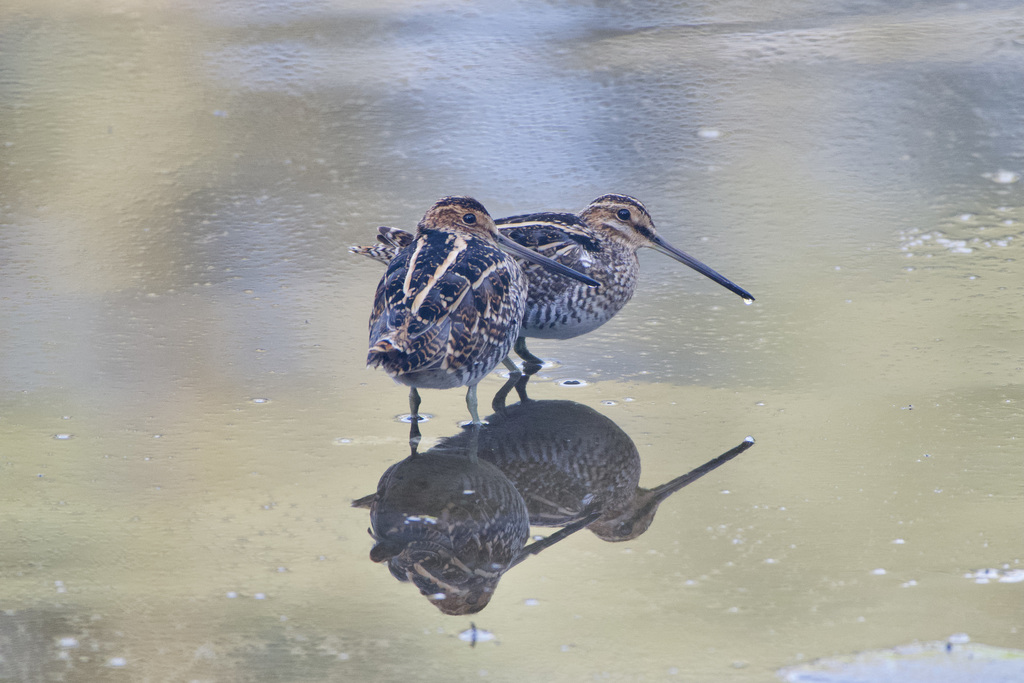
Wilson’s Snipe
Photo © Dario Taraborelli
Photo © Dario Taraborelli — CC0 1.0 — Source: iNaturalist photo #119695361Identification
Wilson's snipe is a small, stocky shorebird measuring 23–28 cm in length with a wingspan of 39–45 cm, weighing 79–147 g. The most distinctive feature is its very long, straight dark bill. Adults are mottled brown above and pale underneath, with short greenish-grey legs and pointed wings. A dark stripe runs through the eye, bordered by lighter stripes above and below. This species differs from the closely related common snipe by its narrower white trailing edge on the wings and eight pairs of tail feathers rather than seven.
Range & Habitat
Wilson's snipe breeds in marshes, bogs, tundra, and wet meadows across Canada, the northern United States, and the Chukchi Peninsula in Russia. The western population remains year-round on the U.S. Pacific coast, while the eastern population migrates to the southern United States, Caribbean, and northern South America. There is evidence that climate change has altered migration timing, with birds arriving at breeding grounds earlier and departing later than a century ago.
Behaviour & Diet
These snipes forage in soft mud, probing and picking at food by sight. Their diet consists of insects, earthworms, and plant material. Exceptionally well-camouflaged, they are shy birds that remain hidden in low vegetation and flush only when approached closely. When disturbed, they fly off in distinctive aerial zig-zags designed to confuse predators. During courtship, males perform a remarkable "winnowing" display, flying in high circles before executing shallow dives that produce a distinctive sound similar to a boreal owl's call. This display may continue throughout the day and well into the night. They nest in well-hidden ground locations.
Best Time & Places to See It
Timing varies by region due to migratory patterns. On the Pacific coast, Wilson's snipe can be found year-round. Spring and fall migration periods offer the best viewing opportunities in eastern regions, with changing migration dates reflecting climate patterns. Look for them in their preferred habitats of marshes, bogs, and wet meadows, particularly in areas with soft mud and dense ground vegetation. Patience and careful scanning are essential, as their excellent camouflage makes them difficult to spot.
Photography Tips
Photographing Wilson's snipe requires patience and a cautious approach due to their shy nature. Early morning light in boggy or marshy habitats offers the best opportunities. Use a telephoto lens to maintain distance and avoid flushing the bird. Focus on the distinctive long bill and facial stripe pattern as key identifying features. During breeding season, listening for the male's winnowing display at dusk can lead you to productive areas. Move slowly through wetland habitats and stop frequently to scan the ground vegetation carefully.
Tombstone Territorial Park
Acadia National Park
Alaska Maritime National Wildlife Refuge
Algonquin Provincial Park
Alligator River National Wildlife Refuge
Arches National Park
Arctic National Wildlife Refuge
Arenal Volcano National Park
Badlands National Park
Nothing matches these filters.
No community photos yet. Log in to add the first one.
No community observations of this species yet.