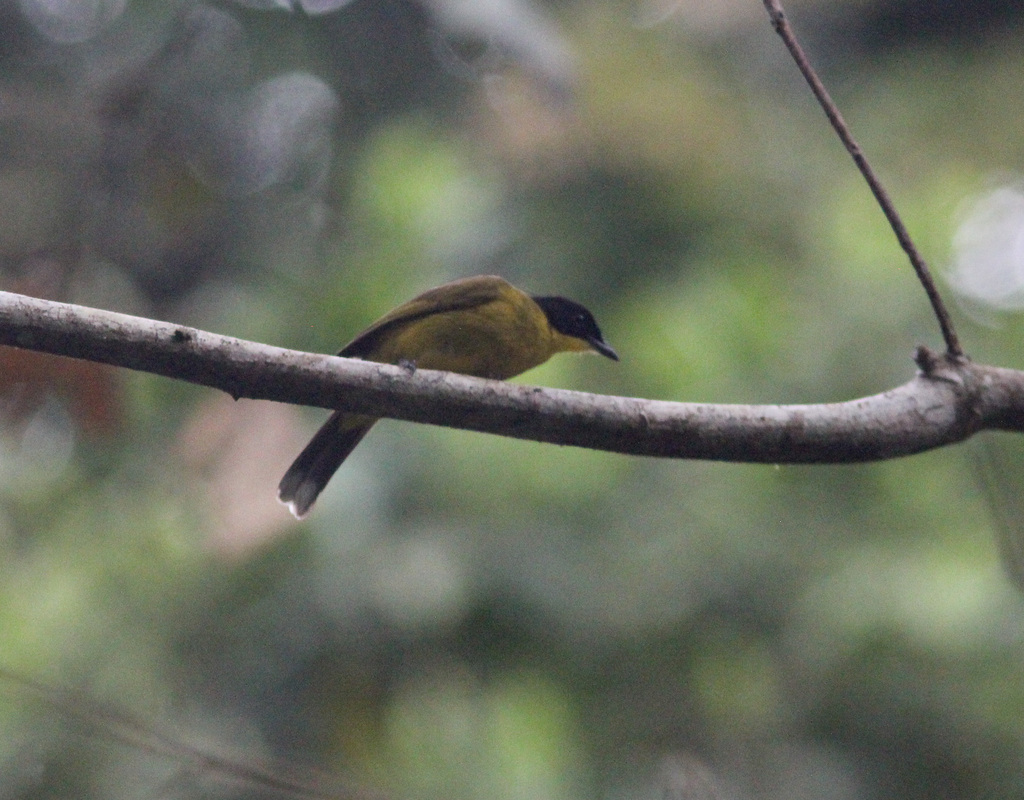
Bulbul Carinegro
Photo © Tero Linjama
Photo © Tero Linjama — CC0 1.0 — Source: iNaturalist #250279061Identification
The black-capped bulbul is a small passerine with distinctive plumage that makes it relatively easy to identify in the field. It is virtually crestless, featuring a yellowish-green back and bright yellow underparts that give it a warm, attractive appearance. The throat is notably yellow, and the tail is brownish with a characteristic white tip. One of the most useful identifying features is the eye colour, which differs between sexes: males display striking red irides, while females have brown irides. The bird has brownish eyes overall, adding to its subtle charm.
Range & Habitat
The black-capped bulbul is endemic to Sri Lanka, making it a species of particular interest to birdwatchers visiting the island. This bird favours forest and dense scrub habitats, but is adaptable and can also be found in wooded areas and gardens, demonstrating a degree of tolerance for human-modified landscapes. It typically occurs in pairs rather than large flocks, and usually nests in bushes, with clutches typically comprising two to four eggs. The breeding season extends from March through September.
Behaviour & Diet
The black-capped bulbul is an omnivorous feeder, sustaining itself on both fruit and insects depending on seasonal availability. Like many bulbuls, it is an active forager, moving through vegetation with purposeful hops and flutters. The species possesses a broad vocal repertoire, producing sweet, mellow calls characterised by minor-key piping whistles alongside sharper, more emphatic calls that punctuate the forest soundscape. These varied vocalizations serve important functions in territorial maintenance and pair bonding.
Best Time & Places to See It
Travellers hoping to encounter the black-capped bulbul should focus their efforts on forested and wooded areas throughout Sri Lanka. The species' preference for dense vegetation means it is more easily located by listening for its distinctive calls than by visual searching alone. The breeding season from March to September may offer particularly good opportunities, as birds are more vocal during this period. Since the species typically occurs in pairs, patience and careful observation of bush and scrub habitats will yield the best results.
Photography Tips
Photographing the black-capped bulbul presents moderate challenges due to its preference for dense vegetation. The species' relatively small size and active movements require a reasonable telephoto lens and reasonably fast shutter speeds. The yellow and yellowish-green plumage can create exposure metering challenges; take care to preserve detail in the bright yellow underparts while maintaining contrast with the darker back. Dawn and early morning hours typically offer the best light in forest habitats and coincide with increased vocal activity, making these ideal times for both location and photography.
Minneriya National Park
Sri Lanka
+123 aves+30 mamíferos
Dawn breaks over a sprawling tapestry of dry deciduous woodland and freshwater marshland where ancient granite outcrops punctuate the landscape […]
VER PARQUE NACIONALWasgamuwa National Park
Sri Lanka
+122 aves+30 mamíferos
Dawn breaks over a landscape where ancient riverine forests meet sprawling grasslands, carved through by the Mahaweli River’s serpentine passage […]
VER PARQUE NACIONALAngamedilla National Park
Polonnaruwa, Sri Lanka
+122 aves+30 mamíferos
Where granite outcrops rise dramatically from dry deciduous forest, Sri Lanka’s central highlands reveal one of the island’s most rugged […]
VER PARQUE NACIONALMaduru Oya National Park
Sri Lanka
+123 aves+30 mamíferos
Granite monoliths rise abruptly from dense dry lowland forest in Sri Lanka’s eastern interior, creating a mosaic of rocky outcrops, […]
VER PARQUE NACIONALAún no hay fotos de la comunidad. Inicia sesión para añadir la primera.
Aún no hay observaciones de la comunidad de esta especie.