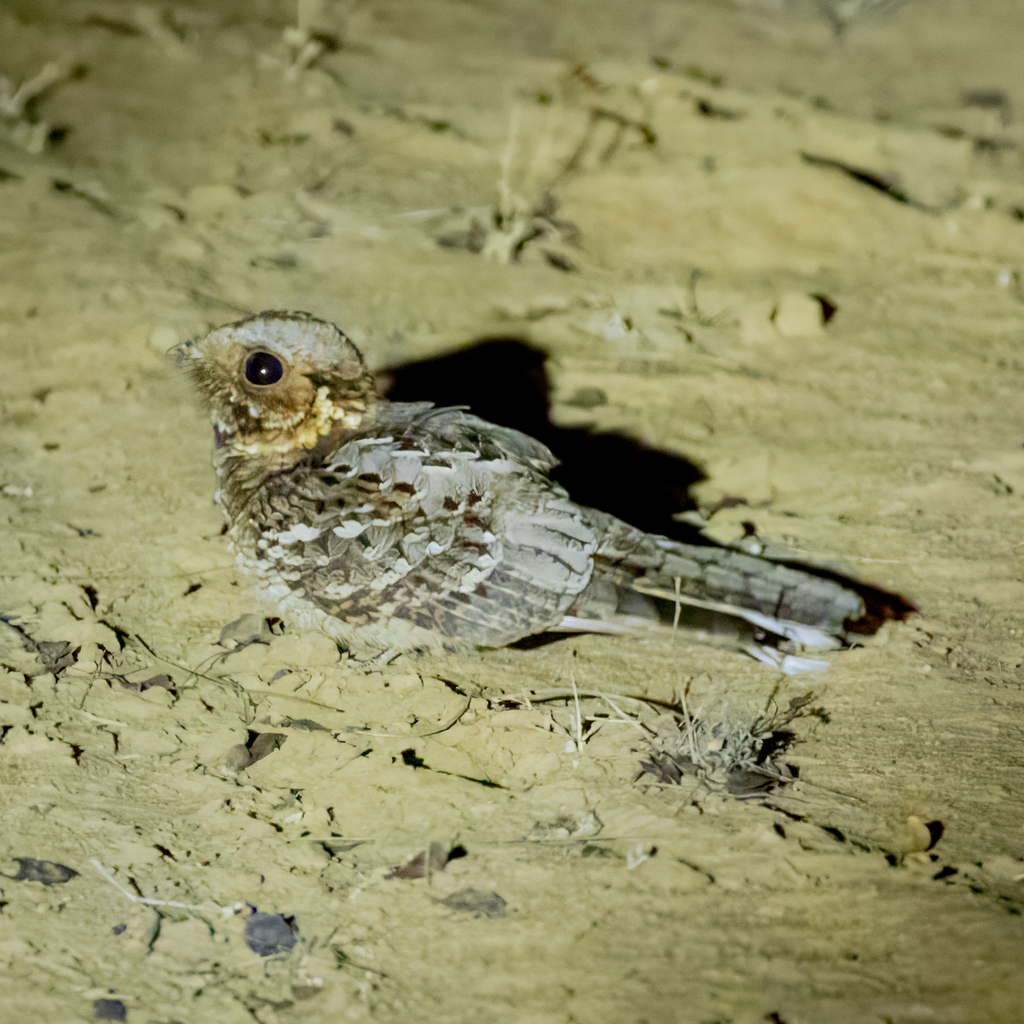
Chotacabras músico
Photo © Dan Vickers
Photo © Dan Vickers — CC BY 4.0 — Source: iNaturalist #335740672The fiery-necked nightjar (Caprimulgus pectoralis) is a species of nightjar in the family Caprimulgidae, which is found mostly in Africa south of the equator, though it has been spotted in a few countries north of the equator. It is most often found in woodland savannas or other deciduous woodlands. It is usually distinguished by its tawny coloured collar which gives the species its common name. It has a distinctive call that many have rendered as 'good-lord-deliver-us'. The fiery-necked nightjar is an insectivorous species that mostly eats butterflies, moths and other insects. The fiery-necked nightjar breeds after the dry season and typically produce two clutches with two eggs per clutch. == Taxonomy == The fiery-necked nightjar belongs to the family Caprimulgidae which includes roughly 90 species of nightjars, nighthawks and their relatives. These birds are all insectivorous and most active at dawn, dusk and over night. In addition, a distinguishing feature of this family is the pectinate claw, which these birds use for preening. The fiery-necked nightjar is part of the Caprimulgus genus which contains the majority of the nightjar species. The fiery-necked nightjar is most closely related to Caprimulgus poliocephalus or the Montane nightjar. Five subspecies are recognised: C. p.…
Marakele National Park
Modimolle Local Municipality, Sudáfrica
+122 aves+30 mamíferos
Where granite gorges slice through the bushveld and ancient mountains rise in weathered majesty, southern Africa’s most underrated wilderness unfolds […]
VER PARQUE NACIONALTable Mountains National Park
Karłów, Polonia
150+ aves+30 mamíferos
Where sandstone plateaus rise like ancient fortresses above forested valleys, Poland’s 108-square-kilometre wilderness unfolds across the Table Mountains. Vertical rock […]
VER PARQUE NACIONALAún no hay fotos de la comunidad. Inicia sesión para añadir la primera.
Aún no hay observaciones de la comunidad de esta especie.