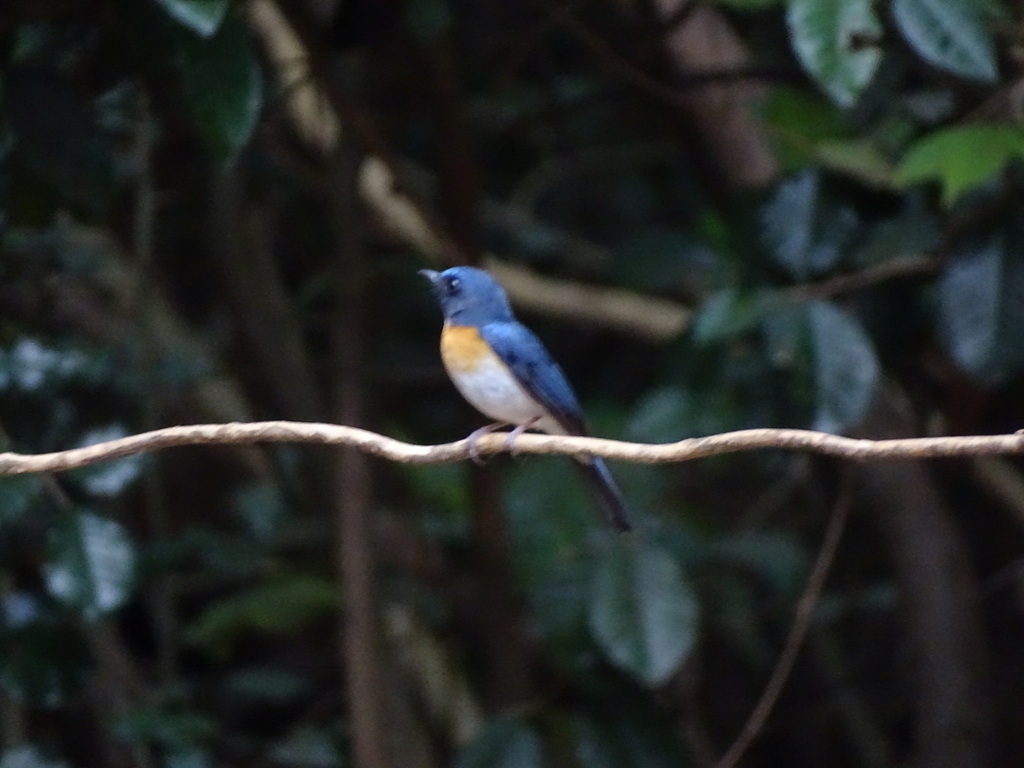
Papamoscas Indochino
Photo © Sandra Keller
Photo © Sandra Keller — CC BY 4.0 — Source: iNaturalist #352146098The Indochinese blue flycatcher (Cyornis sumatrensis) is a species of bird in the family Muscicapidae. It is found from southern Myanmar and the Malay Peninsula to Indochina and northeastern Sumatra. It was previously considered conspecific with Tickell's blue flycatcher. The species shows regional variations in plumage and size and several of these populations have been designated with subspecies names. The population in Thailand and southern Myanmar is named as indochina. Further south is the form sumatrensis (Sumatra Island, Malay Peninsula) and lamprus on Anamba Islands. A species of feather mite Proterothrix cyornis has been described from an Indochinese blue flycatcher from Vietnam.
Mu Ko Ang Thong National Park
Tailandia
+105 aves+18 mamíferos
Forty-two limestone islands rise from the Gulf of Thailand, their weathered karst peaks piercing emerald waters in a landscape of […]
VER PARQUE NACIONALHat Noppharat Thara-Mu Ko Phi Phi National Park
Ao Nang, Tailandia
+127 aves+21 mamíferos
Where limestone karsts rise dramatically from turquoise waters, Hat Noppharat Thara-Mu Ko Phi Phi National Park unfolds across a mosaic […]
VER PARQUE NACIONALKhao Laem Ya-Mu Ko Samet National Park
Mueang Rayong District, Tailandia
+132 aves+30 mamíferos
Where limestone hills meet the Gulf of Thailand, Khao Laem Ya–Mu Ko Samet National Park stitches together a mosaic of […]
VER PARQUE NACIONALKhao Laem National Park
Sangkhla Buri District, Tailandia
+137 aves+25 mamíferos
Where the Vajiralongkorn Reservoir sprawls across the forested valleys of Kanchanaburi’s northern borderlands, Khao Laem National Park protects a landscape […]
VER PARQUE NACIONALPenang National Park
Balik Pulau, Malasia
+125 aves+30 mamíferos
Granite peaks rise abruptly from the Andaman Sea where tropical rainforest clings to steep slopes in one of Malaysia’s oldest […]
VER PARQUE NACIONALAún no hay fotos de la comunidad. Inicia sesión para añadir la primera.
Aún no hay observaciones de la comunidad de esta especie.