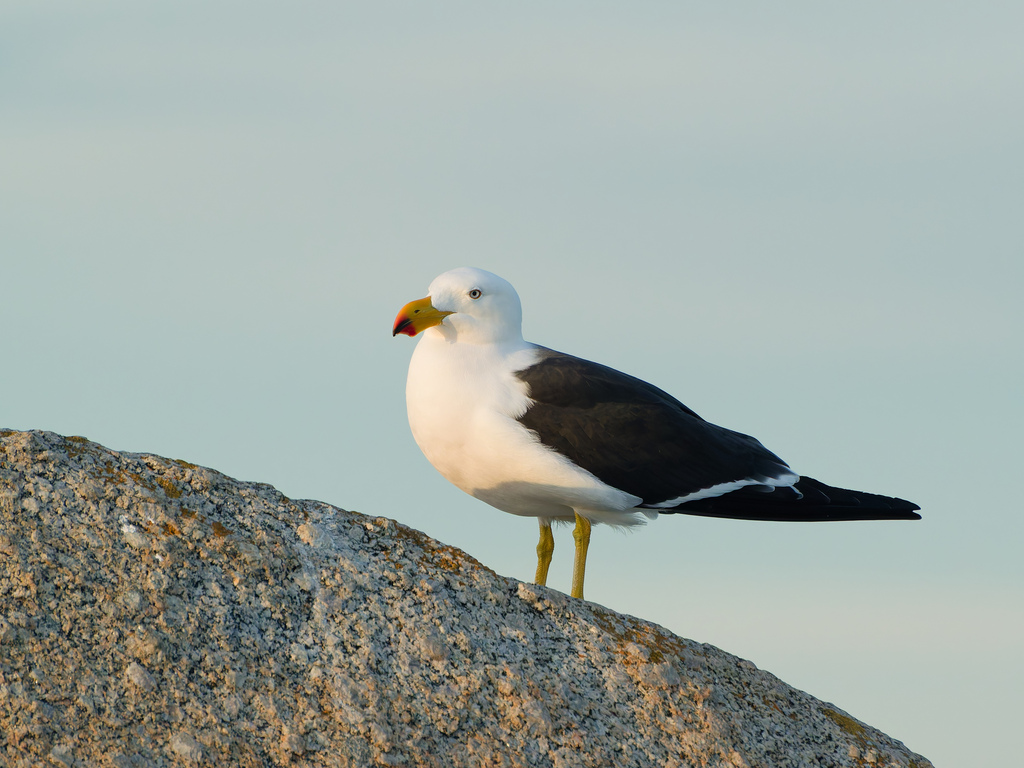
Gaviota de Tasmania
Photo © Donald Davesne
Photo © Donald Davesne — CC BY 4.0 — Source: iNaturalist #345165609La gaviota del Pacífico, gaviota de Tasmania o gaviota tasmania (Larus pacificus) es una especie de ave Charadriiforme de la familia Laridae. Es una gaviota grande, de dorso y alas negros, tiene el pico más grande de todos los miembros de su familia.
Belair National Park
Adelaide, Australia
+132 aves+19 mamíferos
Where the Adelaide Hills rise dramatically from the surrounding plains, eucalyptus woodlands of remarkable diversity cloak a landscape sculpted by […]
VER PARQUE NACIONALLincoln National Park
Australia
+103 aves+4 mamíferos
Where windswept coastlines meet ochre cliffs along South Australia’s Eyre Peninsula, nearly 2,700 square kilometers of wild country unfold in […]
VER PARQUE NACIONALCoffin Bay National Park
Australia
+82 aves+6 mamíferos
Where the Eyre Peninsula reaches toward the Southern Ocean, windswept dunes and sheltered inlets create a landscape of remarkable ecological […]
VER PARQUE NACIONALDhilba Guuranda-Innes National Park
Australia
+77 aves+6 mamíferos
Where granite outcrops pierce the red earth of South Australia’s Mid Murray region, a mosaic of mallee scrub and open […]
VER PARQUE NACIONALFlinders Chase National Park
Australia
+86 aves+11 mamíferos
Where granite tors pierce the windswept landscape of South Australia’s Kangaroo Island, ancient mallee scrub and eucalypt woodland create a […]
VER PARQUE NACIONALWilsons Promontory National Park
Australia
+125 aves+20 mamíferos
Granite peaks thrust skyward from Victoria’s southeastern tip, where windswept heathlands roll toward pristine coastlines carved by relentless Southern Ocean […]
VER PARQUE NACIONALFitzgerald River National Park
Fitzgerald River National Park, Australia
+98 aves+6 mamíferos
Where granite peaks rise above windswept heathlands and pristine river systems carve through untamed wilderness, one of Australia’s most biodiverse […]
VER PARQUE NACIONALAún no hay fotos de la comunidad. Inicia sesión para añadir la primera.
Aún no hay observaciones de la comunidad de esta especie.