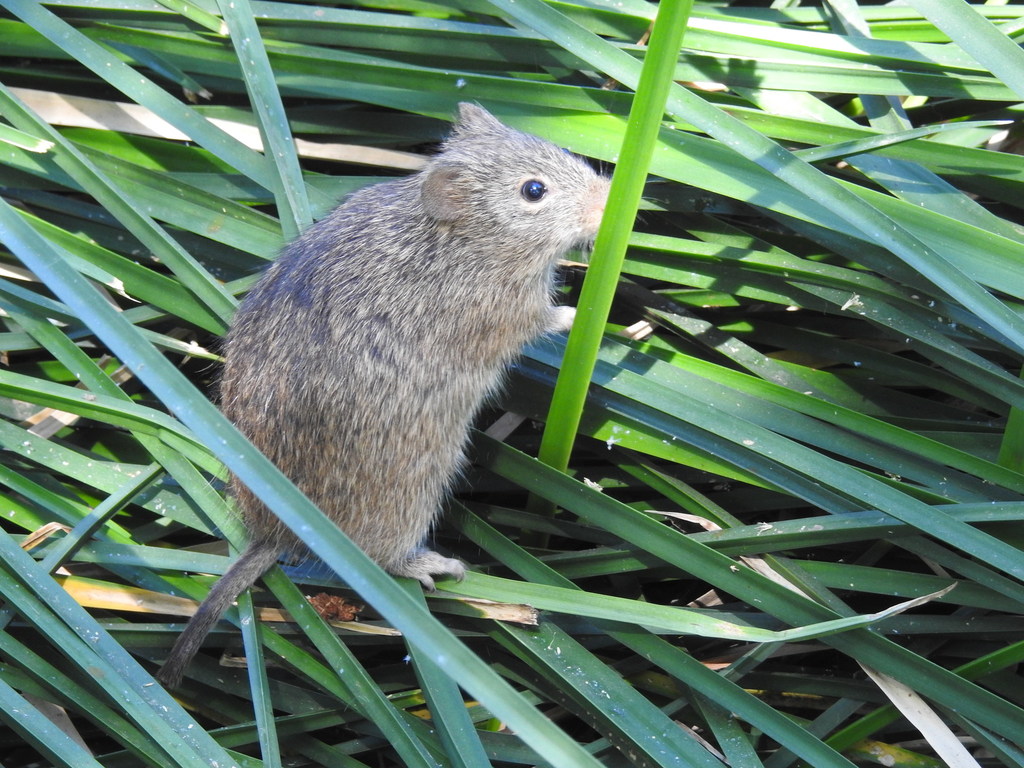
Arizona Cotton Rat
Photo © Rachel Stringham
Photo © Rachel Stringham — CC BY 4.0 — Source: iNaturalist photo #74436483Identification
The Arizona cotton rat is a medium-sized rodent with a distinctly rat-like appearance, featuring bristly brownish fur covering most of its body contrasted by whitish underparts and grey feet. Its most characteristic feature is a scaly, dark-colored tail with very sparse hair. Adults measure 9.8 to 14.2 inches in total length, with tails comprising 3.9 to 5.9 inches of that span, and typically weigh between 2.9 and 10.6 ounces. Males are noticeably larger than females, though otherwise the sexes are similar. Until 1970, this species was considered identical to the hispid cotton rat; genetic analysis revealed them as distinct species despite their close resemblance.
Range & Habitat
The Arizona cotton rat inhabits southern and central Arizona, the extreme southwestern corner of New Mexico, and western Mexico from Sonora through Nayarit. This species is strictly associated with freshwater sources, favoring areas near rivers, streams, and other water bodies. They thrive in semidesert, open grassland, and swampy environments, with a strong preference for dense grassy vegetation that provides both shelter and foraging opportunities. Three subspecies currently remain after two populations, including the nominate subspecies, went extinct during the twentieth century.
Behaviour & Diet
Arizona cotton rats are believed to breed year-round, with females producing litters suggesting a maximum size of ten to twelve young based on their teat count. The species is adapted to wetland and riparian corridors in arid regions, where they depend on the vegetation that develops around water sources. Their nocturnal and crepuscular activity patterns, typical of cotton rats, allow them to exploit grassland and desert-edge habitats while avoiding daytime heat.
Best Time & Places to See It
Your best opportunities occur in riparian zones and grasslands of southern Arizona and southwestern New Mexico, particularly in areas with permanent or semi-permanent water sources supporting dense vegetation. Early morning and dusk hours offer the highest activity levels. Focus on marshy areas, streamside vegetation, and dense grass patches throughout the year, as reproduction occurs continuously.
Photography Tips
Capture this elusive rodent during low-light periods when activity peaks. Use a macro lens or close-focus capability to reveal the texture of its bristly coat and distinctive scaly tail. Position yourself near water-adjacent grasslands and use patient stalking or remote camera traps set in dense vegetation. The contrast between the brownish upperparts and pale underparts provides good photographic composition when properly lit. Capture behavioral shots showing the animal moving through or feeding in dense grass to convey its preferred habitat.
Cave Creek Canyon
Chiricahua Mountains
Madera Canyon
Saguaro National Park
Santa Rita Mountains
Nothing matches these filters.
No community photos yet. Log in to add the first one.
No community observations of this species yet.