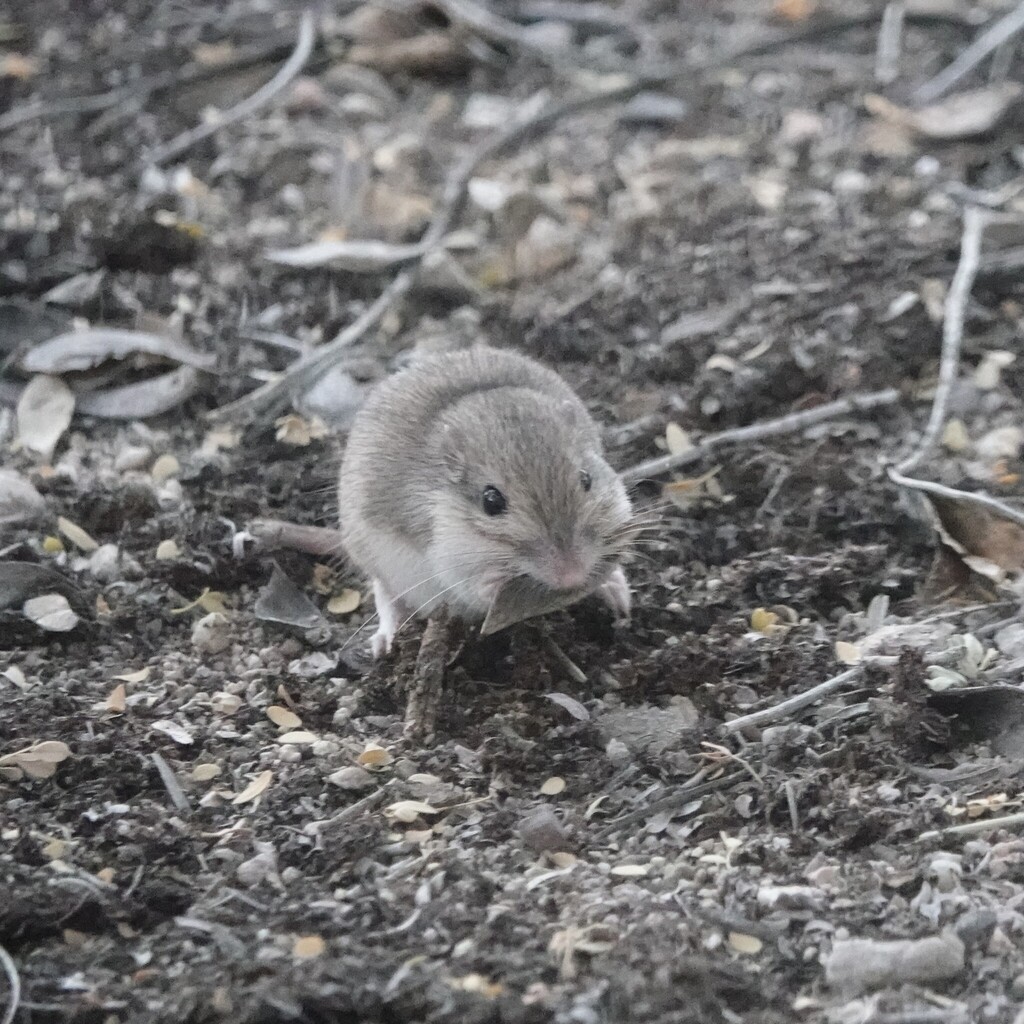
Desert Pocket Mouse
Photo © Scott Crabtree
Photo © Scott Crabtree — CC BY 4.0 — Source: iNaturalist #331101997The desert pocket mouse (Chaetodipus penicillatus) is a North American species of heteromyid rodent found in the southwestern United States and Mexico. True to its common name, the medium-sized desert pocket mouse prefers sandy, sparsely vegetated desert environments. == Description == Chaetodipus penicillatus is a medium-sized pocket mouse. The total length of adults usually does not exceed 180 mm. Coloration is grayish brown to yellowish gray and may be sprinkled with black. The pelage is coarse. This species lacks rump spines but has numerous, elongate rump hairs which are darker dorsally and lighter laterally. There is no lateral line. The underparts of the body and tail are whitish. The tail is heavily crested and is longer than the head and body, with average tail length being 109 mm. The soles of the hind feet are whitish and average hind foot length is 25 mm. == Geographic range and habitat == Chaetodipus penicillatus occurs in the southwestern United States and northern Mexico. The northern limit of its range is southern Nevada. It extends southwest into California and the northern Baja Peninsula and northwestern Mexico. Eastward it stretches into the southwesternmost parts of Colorado. From southern Nevada and southwestern Colorado the range…
Saguaro National Park
Rincon Valley, United States
+354 birds+40 mammals
Where the Sonoran Desert meets sky-island mountains, two geographically separated districts of Saguaro National Park sprawl across nearly two thousand square kilometers of Arizona's most iconic…
VIEW NATIONAL PARKJoshua Tree National Park
Riverside County, United States
+221 birds+23 mammals
Across 5,610 square kilometers of Riverside County's high desert, a landscape of geological drama unfolds where granite monoliths pierce through bajadas of creosote scrub and Joshua…
VIEW NATIONAL PARKNo community photos yet. Log in to add the first one.
No community observations of this species yet.