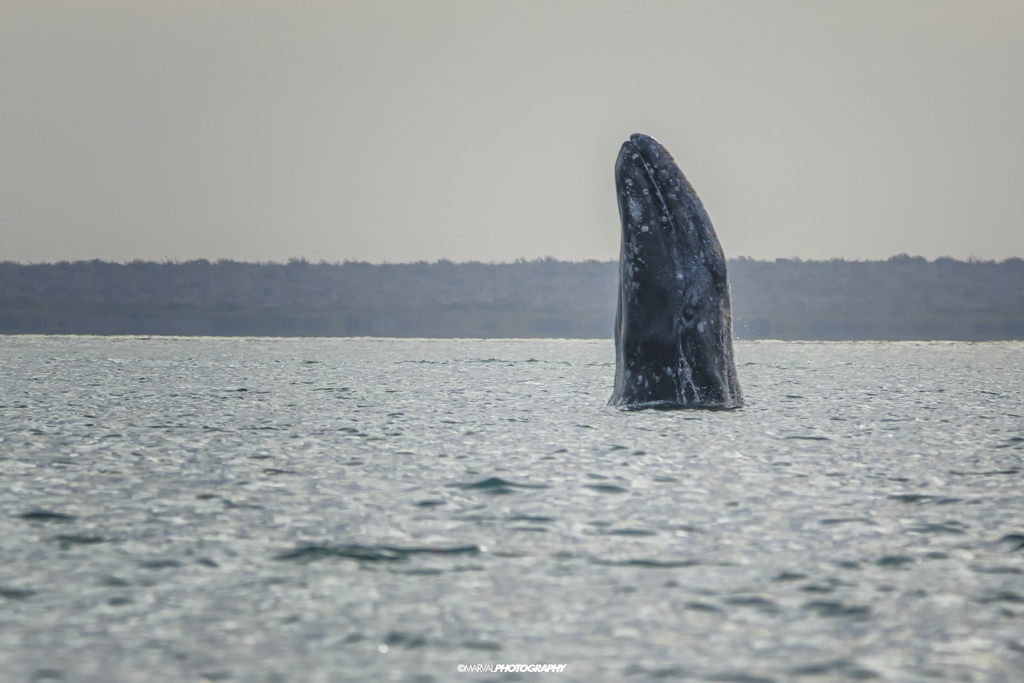
Gray Whale
Photo © MarvalPhotography19
Photo © MarvalPhotography19 — CC BY 4.0 — Source: iNaturalist photo #257754910Identification
The gray whale is a robust baleen whale reaching 14.9–15.2 meters (49–50 feet) in length and weighing up to 41–45 tonnes. It lives 55–70 years, with some individuals reaching 75–80 years. The species gets its name from its dark slate-gray coloration mottled with distinctive gray-white patterns—scars left by parasites that drop off during feeding in cold waters. These markings make individual whales recognizable to observers. Historically called "devil fish" by whalers due to their fierce protective behavior when attacked, gray whales are the sole living species in the genus Eschrichtius, making them taxonomically unique among cetaceans.
Range & Habitat
Gray whales are found in two populations: the Northeast Pacific (North American) and an endangered Northwest Pacific (Asian) population. The species undertakes one of nature's longest migrations, traveling yearly between cold feeding grounds and warm breeding areas. Historically, Atlantic populations thrived along European coasts until the 12th–14th centuries, and along American and African Atlantic coasts until the late 17th–early 18th centuries. Recent decades have brought rare sightings in the North Atlantic, Mediterranean, and even off South Atlantic coasts—a surprising development for this Pacific-adapted species.
Behaviour & Diet
Gray whales are baleen whales that feed by filtering prey from water in their cold feeding grounds. They are notably migratory, undertaking extensive seasonal movements between feeding and breeding areas. Known for their protective nature, mothers fiercely defend calves from predators and threats. The species has earned nicknames reflecting their behavior and ecology, including "desert whale" and "mussel digger," highlighting their bottom-feeding habits and their association with specific coastal environments.
Best Time & Places to See It
Gray whales migrate between their Northeast Pacific feeding grounds and breeding areas on a predictable yearly cycle, making them relatively reliable for observation during migration seasons. The Northwest Pacific population remains endangered and offers fewer viewing opportunities. Travelers interested in observing gray whales should time their visits to coincide with migration periods and visit established whale-watching destinations in North American Pacific waters, particularly along coastal regions known as traditional migration routes.
Photography Tips
The gray whale's distinctive gray-white mottled patterns created by parasite scars make individual identification possible—these markings provide excellent detail for photography. Look for the characteristic dark slate-gray body with contrasting lighter patches. The species' migratory behavior and coastal routes offer photographers predictable opportunities to capture both surfacing behaviors and the dramatic moments when protective mothers interact with calves. Pre-research of migration timing and locations will maximize your chances of quality encounters with this iconic whale.
Alaska Maritime National Wildlife Refuge
Channel Islands National Park
El Vizcaíno
Farallon National Wildlife Refuge
Gulf Islands National Park Reserve
Kodiak National Wildlife Refuge
Olympic National Park
Redwood National Park
St. Paul Island
Nothing matches these filters.
No community photos yet. Log in to add the first one.
No community observations of this species yet.