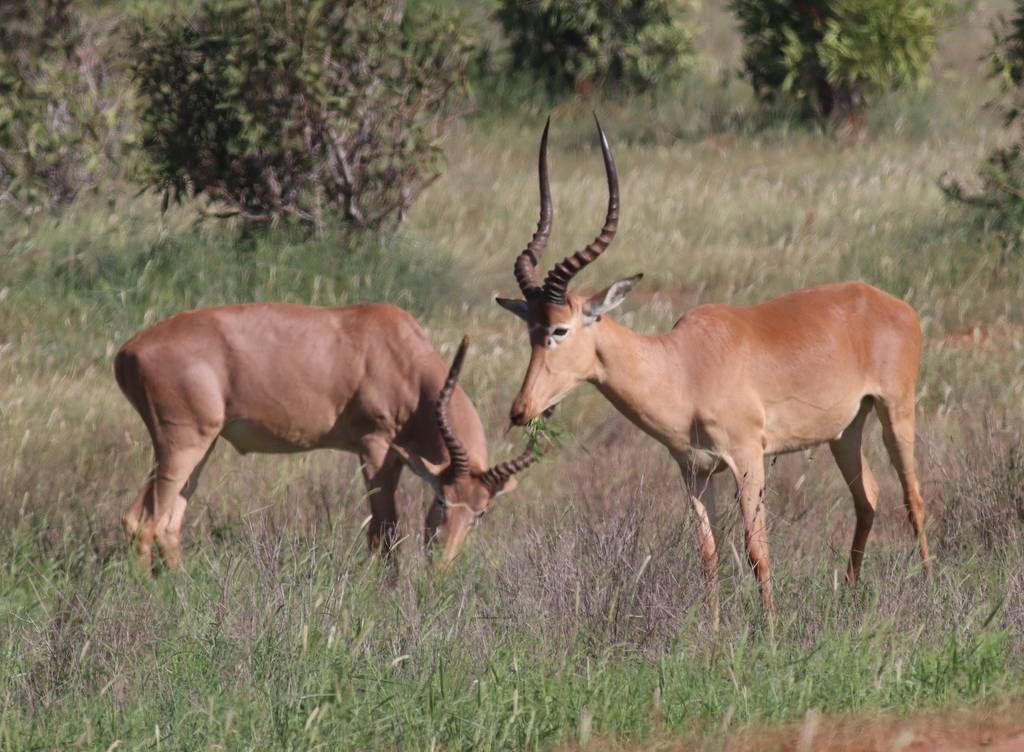
Hirola
Photo © Jan Ebr & Ivana Ebrová
Photo © Jan Ebr & Ivana Ebrová — CC BY 4.0 — Source: iNaturalist #104985911The hirola (Beatragus hunteri), also called Hunter's hartebeest or Hunter's antelope, is a critically endangered antelope species found as of now, only in Kenya along the border of Somalia. It was first described by the big game hunter and zoologist H.C.V. Hunter in 1888. It is the only living member of the genus Beatragus, though other species are known from the fossil record. The global hirola population is estimated at 300–500 animals and there are none in captivity. According to a document produced by the International Union for Conservation of Nature "the loss of the hirola would be the first extinction of a mammalian genus on mainland Africa in modern human history". == Description == The hirola is a medium-sized antelope, tan to rufous-tawny in colour with slightly lighter under parts, predominantly white inner ears and a white tail which extends down to the hocks. It has very sharp, lyrate horns which lack a basal pedicle and are ridged along three quarters of their length. As hirola age their coat darkens towards a slate grey and the number of ridges along their horns increases. Hirola have large, dark sub-orbital glands used for marking their territories and give them the name…
No community photos yet. Log in to add the first one.
No community observations of this species yet.