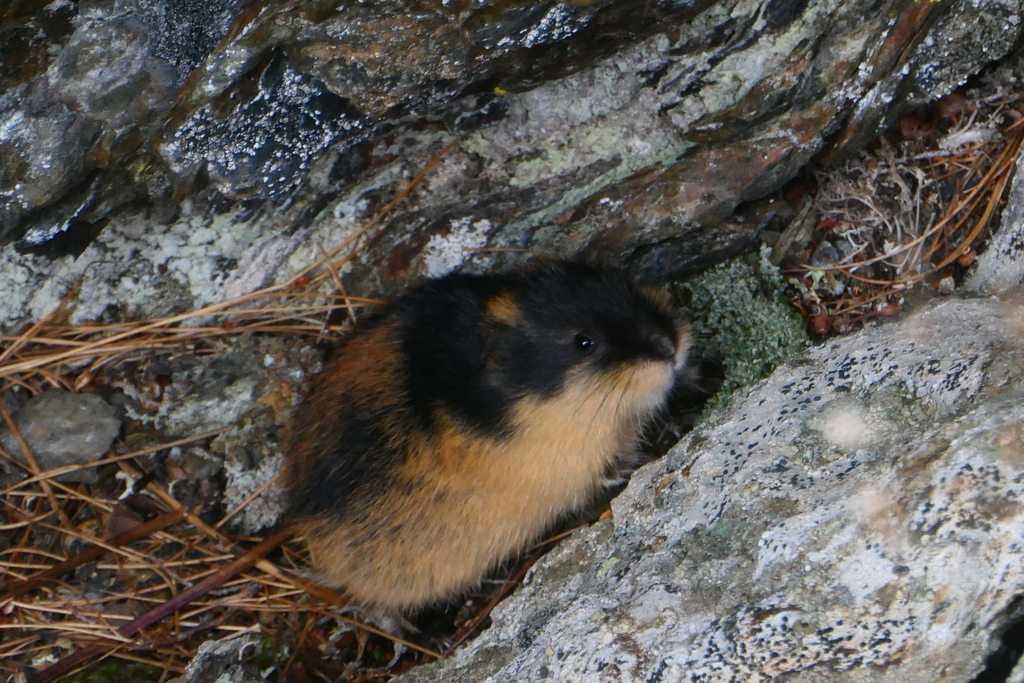
Norway Brown Lemming
Photo © Felix Puff
Photo © Felix Puff — CC0 1.0 — Source: iNaturalist photo #244515741Identification
The Norway lemming is a small rodent, reaching just 155 mm in body length with a characteristically short tail of 10–19 mm and weighing up to 130 g. The mainland population displays a bold and variable pattern of black and yellow-brown coloration that serves as a visual warning to predators. In contrast, lemmings from Novaya Zemlya possess cryptic gray fur, reflecting their different evolutionary history and lack of the aggressive antipredator behavior seen in their Fennoscandian cousins.
Range & Habitat
The Norway lemming is endemic to northern Fennoscandia, with its range extending from western Norway eastward to the Kola Peninsula. Recent genetic research suggests that populations on Novaya Zemlya may also belong to this species, potentially extending the range further east. These lemmings are inhabitants of tundra and fell ecosystems, preferring locations near water sources where sedges, grasses, and mosses are abundant.
Behaviour & Diet
Norway lemmings are primarily herbivorous, feeding on sedges, grasses, and moss throughout the year. They are active both day and night, alternating between periods of foraging and rest. The species undergoes a dramatic three- to four-year population cycle, with populations periodically spiking to unsustainable levels before crashing. During winter, they nest beneath the snow, then migrate seasonally—typically to lower ground in spring and back to higher elevations in autumn as snow conditions change. Despite their small size, mainland lemmings are notably aggressive when threatened, using loud calls and bold coloration to deter predators. They are solitary by nature, though during population peaks, dispersing young may concentrate in certain corridors, occasionally leading to mass movements in random directions.
Best Time & Places to See It
The Norway lemming's visibility is largely determined by its population cycle, making sightings most rewarding during peak years when populations surge. The species occurs throughout Fennoscandia's tundra and fell regions, particularly in areas near water. Summer months offer the best conditions for observation, when lemmings are active in lowland habitats before their autumn migration back to higher ground.
Photography Tips
The bold black and yellow-brown patterning of mainland Norway lemmings makes them visually striking subjects, particularly during peak population years. Their small size and active, day-and-night behavior require patience and careful fieldcraft. The aggressive nature of these lemmings means they may stand their ground rather than flee, offering opportunities for close-range photography—though caution is advised, as they are known to attack when cornered. Photographing individuals during their seasonal migrations or in their favored habitats near water will provide the best context for compelling field-guide images.
Dovrefjell-Sunndalsfjella National Park
Junkerdal National Park
Padjelanta
Pallas-Yllästunturi National Park
Sarek
Stora Sjöfallet
Urho Kekkonen National Park
Vadvetjåkka National Park
Nothing matches these filters.
No community photos yet. Log in to add the first one.
No community observations of this species yet.