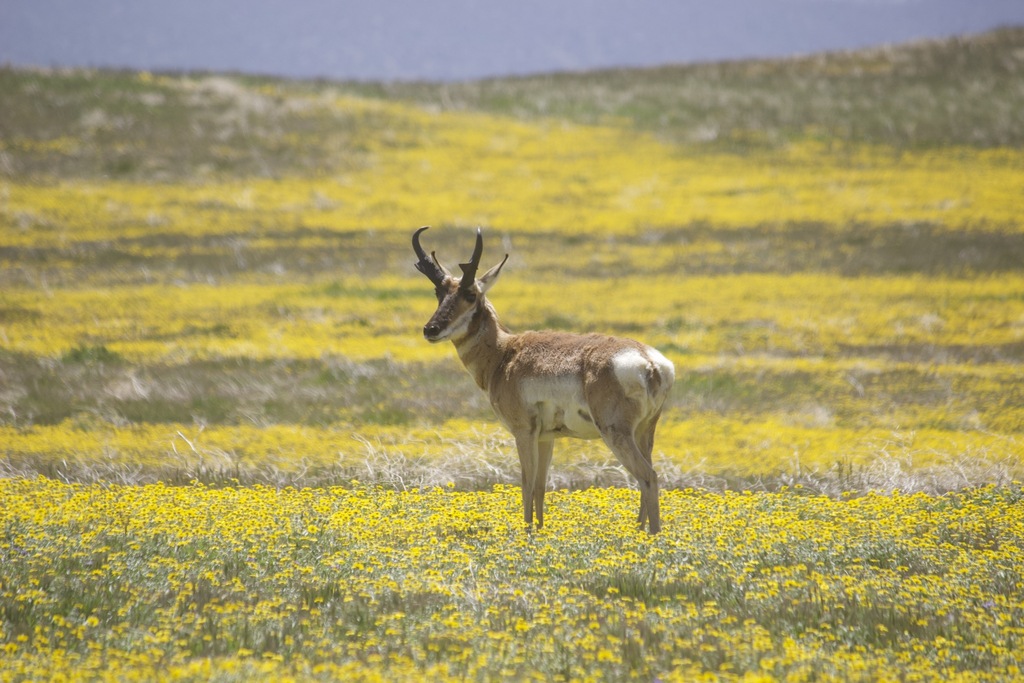
Pronghorn
Photo © Diego Blanco
Photo © Diego Blanco — CC0 1.0 — Source: iNaturalist photo #268596217Identification
The pronghorn is a distinctive hoofed mammal with a compact, muscular build. Adults measure 4.3–4.9 feet long and stand 2.7–3.4 feet high at the shoulder, with males weighing 88–143 pounds and females slightly lighter at 75–106 pounds. Both sexes share striking white fur on the rump, sides, belly, breast, and throat, contrasting with tan or gray upper parts. The most notable feature is the horn, which branches with a forward-pointing prong—males sport longer horns averaging 9.8 inches with a pronounced prong, while females have much smaller, rarely-pronged horns of 4.7 inches on average. Pronghorns have exceptionally large eyes set high on the skull, providing a 320-degree field of vision ideal for spotting distant threats across open terrain.
Range & Habitat
The pronghorn is indigenous to the interior western and central regions of North America, inhabiting open grasslands, prairies, and semi-arid landscapes where visibility is excellent. This is the sole surviving member of the family Antilocapridae; during the Pleistocene, about 11 other antilocaprid species roamed the continent, but the pronghorn alone persists today.
Behaviour & Diet
The pronghorn is the fastest land mammal in the Americas, capable of sustaining remarkable speeds: it can run 35 mph for 4 miles, 42 mph for 1 mile, and reach 55 mph in short bursts of 800 metres. This extraordinary running ability likely evolved to escape now-extinct American cheetahs and lions, since its speed far exceeds all modern North American predators. Pronghorns communicate through scent marking via preorbital glands on the sides of the head, and possess a distinctive musky odor. When alarmed, the white hair on their rump stands erect, releasing a buttered-popcorn-scented compound that alerts nearby herd members to danger.
Best Time & Places to See It
Pronghorns are most visible in open prairie and grassland habitats throughout the interior western and central United States, where their preference for expansive, treeless terrain makes them easier to spot. Early morning and late afternoon are typically the best times for observation when wildlife activity is highest.
Photography Tips
The pronghorn's natural habitat of wide-open grasslands provides excellent light and minimal obstruction for photography. Their large eyes and distinctive white markings photograph well in golden hour light. A telephoto lens is essential, as pronghorns are wary and fleet-footed. Position yourself downwind when possible, and move slowly to avoid triggering their legendary speed. The contrast between their tan body and white rump makes them visually striking subjects, particularly when photographing groups in motion across prairie landscapes.
Arches National Park
Badlands National Park
Bitter Lake National Wildlife Refuge
Bryce Canyon National Park
Canyonlands National Park
Capitol Reef National Park
Carlsbad Caverns National Park
Cave Creek Canyon
Chiricahua Mountains
Nothing matches these filters.
No community photos yet. Log in to add the first one.
No community observations of this species yet.