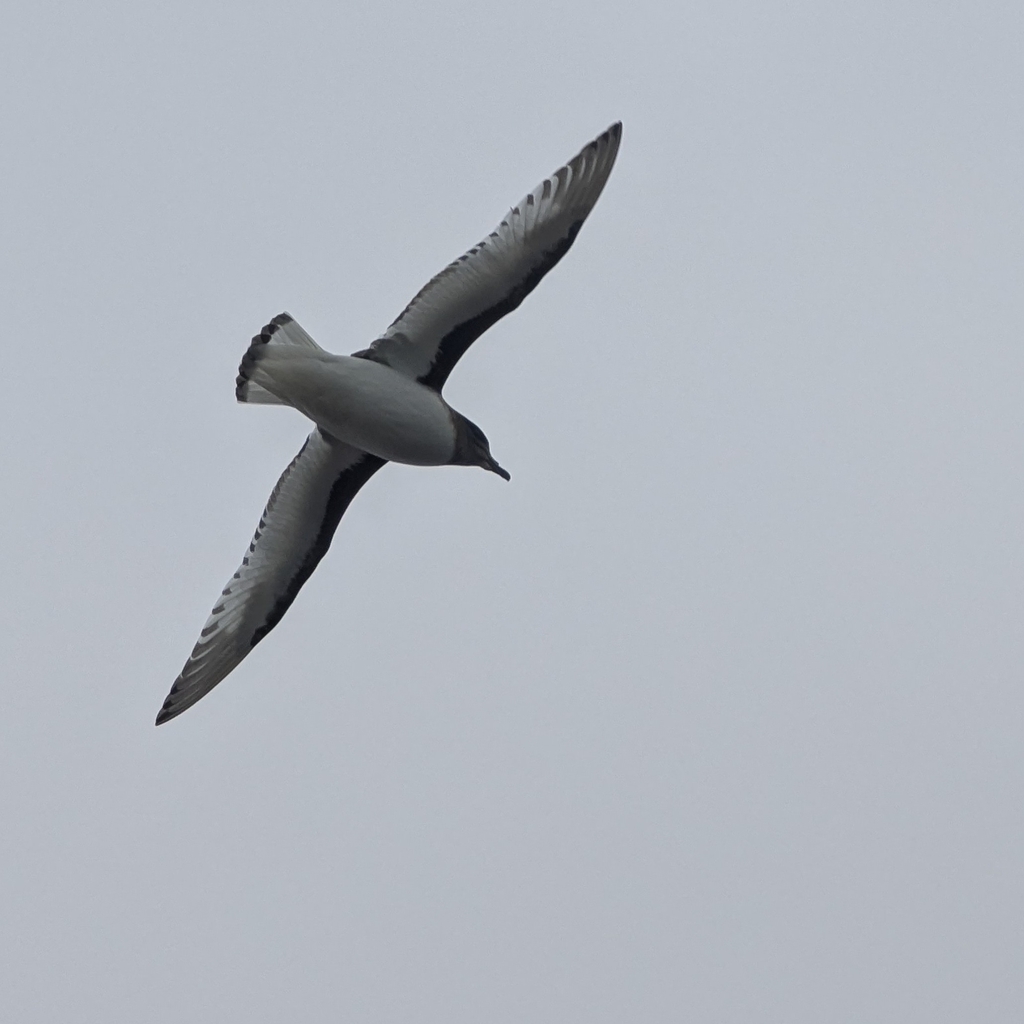
Antarctic Petrel
Photo © Peter Shanks
Photo © Peter Shanks — CC0 1.0 — Source: iNaturalist #250773621Identification
The Antarctic petrel is a boldly marked medium-sized petrel with distinctive dark and light plumage. Adults display a brown head, sides, throat, and back contrasted sharply with white underparts. The tail and secondary wing feathers are white with brown tips, and a large white spot adorns the wings. The bill is dark brown and the feet are grey. These birds measure 40–45 cm in length with a wingspan of 100–110 cm and weigh approximately 675 g on average, making them medium-sized relative to other petrels.
Range & Habitat
The Antarctic petrel inhabits the Southern Ocean and Antarctic islands, with populations most commonly found in the Ross and Weddell Seas. They nest on snow-free cliffs and rock faces along coasts and offshore islands, though individuals have been recorded up to 250 km inland. Icebergs serve as common roosting sites. During the October–November breeding season, colonies can reach enormous proportions, with the largest known colony at Mühlig-Hofmann Mountains estimated at approximately one million birds including non-breeders and chicks. Occasionally, Antarctic petrels migrate to Australia or New Zealand during late winter, typically when driven by severe storms.
Behaviour & Diet
Antarctic petrels primarily feed on krill, supplemented with small squid and fish. They typically seize food while swimming at the surface but are capable hunters that plunge-dive to depths of up to 1.5 m to obtain prey. Breeding occurs during October and November, when pairs lay a single egg and both parents share incubation duties for 45–48 days, followed by a 42–47 day nestling period. Notably, approximately 4% of breeding pairs are female-female partnerships. Hatching rates are high at 70–90%, though eggs can be lost to predation by South polar skuas or by rolling from nests and freezing.
Best Time & Places to See It
The Antarctic petrel's breeding season of October–November offers the best opportunity to observe these birds in large concentrations at their nesting colonies. The Ross and Weddell Seas are prime locations for encounters. Given their immense range spanning 77,500,000 km² and estimated population of 10–20 million adults, Antarctic petrels are relatively abundant throughout Antarctic waters and nearby regions, though accessing their remote habitat requires dedicated polar travel.
Photography Tips
The Antarctic petrel's striking contrast between brown upperparts and white underparts makes it visually distinctive and photogenic, particularly when captured in flight against Antarctic seascapes. The large white wing patches and tail are key identifying features worth emphasizing in photographs. Photographers should be prepared for the challenging conditions of polar regions, including variable lighting, harsh weather, and the need for stable platforms—either ships or aircraft—to capture these ocean-dwelling birds in their natural habitat.
Deception Island
Gabriel de Castilla Base, Antarctica
+26 birds+10 mammals
Steaming geothermal vents pierce a landscape of blackened volcanic sand and ice, where the earth's raw power still trembles beneath your feet. This horseshoe-shaped caldera, flooded…
VIEW ISLAND & ARCHIPELAGOCuverville Island
Cuverville Island, Antarctica
+19 birds+10 mammals
Granite peaks and sculpted ice define this windswept archipelago off the Antarctic Peninsula, where steep rocky shores plunge into waters thick with drifting brash ice. Cuverville…
VIEW ISLAND & ARCHIPELAGONeko Harbour
Neko Harbour, Antarctica
+18 birds+10 mammals
Towering peaks of fractured ice rise abruptly from gunmetal waters, their faces scarred by millennia of glacial advance and retreat. This pocket of the Antarctic Peninsula…
VIEW PROTECTED LANDSCAPEParadise Bay
Brown Station, Antarctica
+18 birds+9 mammals
Where the Antarctic Peninsula's rugged coastline meets the Southern Ocean, Brown Station stands sentinel over Paradise Bay—a protected landscape of ice-carved inlets, towering glacial faces, and…
VIEW PROTECTED LANDSCAPEBrown Bluff
Brown Bluff, Antarctica
+23 birds+9 mammals
Where rust-colored volcanic peaks pierce the Antarctic Peninsula's icy realm, a geologist's dreamscape unfolds beneath towering cliffs of iron oxide and ancient lava. Brown Bluff rises…
VIEW PROTECTED LANDSCAPEPort Lockroy
Port Lockroy, Antarctica
+19 birds+9 mammals
Towering peaks of black rock pierce through Antarctic pack ice on the Gerlache Strait, where one of the continent's most accessible harbors cradles a living microcosm…
VIEW PROTECTED LANDSCAPEHalf Moon Island
Cámara Base, Antarctica
+25 birds+8 mammals
Jagged volcanic peaks rise from the cobalt waters of the South Shetland Islands, their slopes carpeted in moss and lichen where hardy vegetation clings to windswept…
VIEW ISLAND & ARCHIPELAGOPetermann Island
Petermann Island, Antarctica
+16 birds+9 mammals
Icebound cliffs rise dramatically from the Bellingshausen Sea, their weathered faces sculpted by millennia of Antarctic wind and tide. This slender wedge of rock and ice,…
VIEW ISLAND & ARCHIPELAGOPaulet Island
Paulet Island, Antarctica
+20 birds+6 mammals
Windswept ice and weathered rock converge at this remote Antarctic outcrop, where jagged peaks pierce through perpetual pack ice and glacial moraines descend toward cobalt waters.…
VIEW ISLAND & ARCHIPELAGODanco Island
Danco Island, Antarctica
+17 birds+10 mammals
Dramatic black rock pierces the Antarctic Peninsula's icy waters, crowned with permanent snow and ringed by calving glaciers that thunder into the sea. This volcanic outcrop…
VIEW ISLAND & ARCHIPELAGOWilhelmina Bay
Wilhelmina Bay, Antarctica
+20 birds+10 mammals
Sheer cliffs of black volcanic rock plunge into waters so pristine they reflect the Antarctic sky like polished obsidian. This remote western Antarctic inlet, ringed by…
VIEW PROTECTED LANDSCAPELemaire Channel
Orne Harbour, Antarctica
+25 birds+13 mammals
Where granite peaks plunge into steel-grey waters, the Lemaire Channel carves one of Antarctica's most dramatic passages. This narrow strait, squeezed between the Antarctic Peninsula and…
VIEW PROTECTED LANDSCAPENo community photos yet. Log in to add the first one.
No community observations of this species yet.