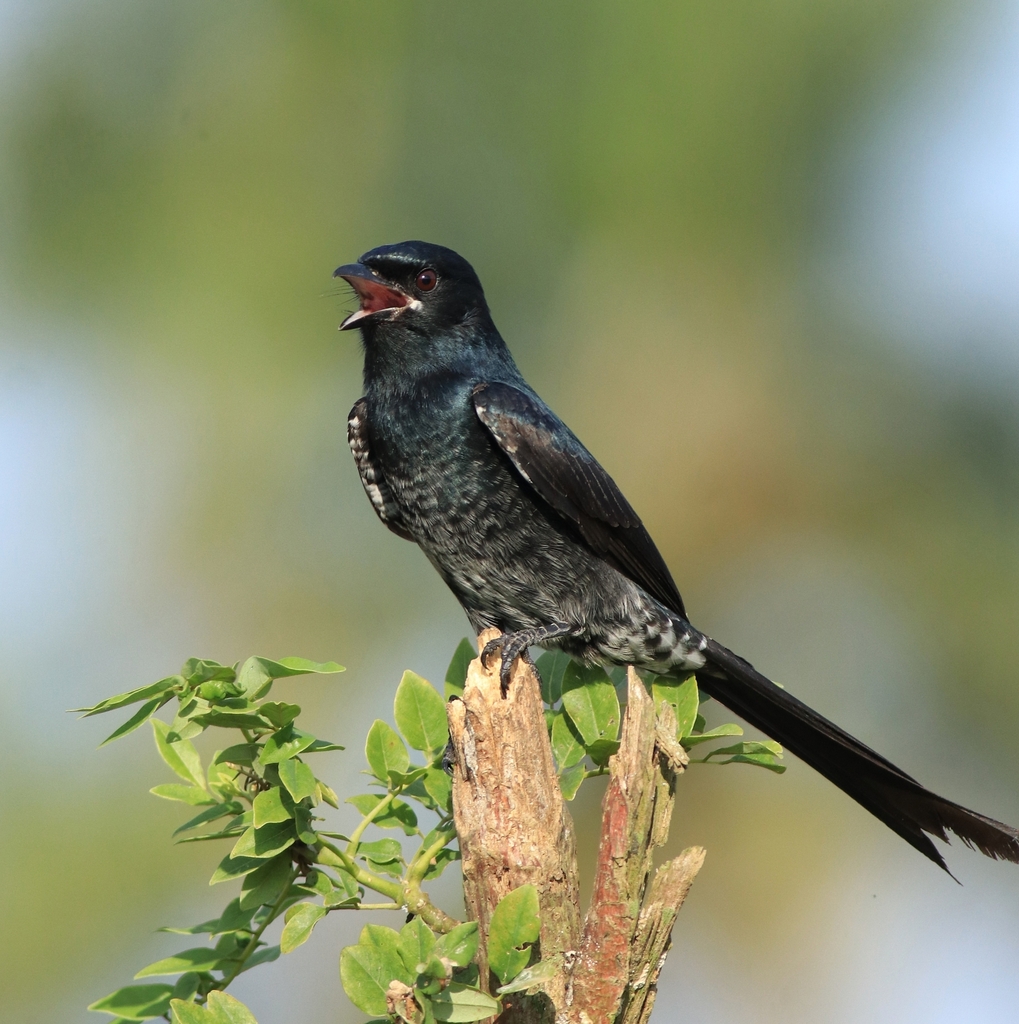
Black Drongo
Photo © Afsar Nayakkan
Photo © Afsar Nayakkan — CC BY 4.0 — Source: iNaturalist #259525489Identification
The black drongo is a small passerine measuring 28 cm (11 in) in length, instantly recognizable by its glossy black plumage and distinctive wide forked tail. Adults typically display a small white spot at the base of the gape, and their dark brown iris distinguishes them from the similar ashy drongo, which has crimson eyes. Males and females are indistinguishable in the field. Juveniles are brownish and may show white barring or speckling towards the belly and vent, potentially causing confusion with the white-bellied drongo. First-year birds display white tips on their belly feathers, while second-year birds retain these white-tipped feathers only at the vent.
Range & Habitat
The black drongo is a common resident breeder across much of tropical southern Asia, ranging from southwest Iran through Pakistan, India, Bangladesh and Sri Lanka east to southern China and Indonesia, with accidental visits to Japan. Seven subspecies are recognized across this range, showing clinal variation in size and plumage characteristics, with populations from northern India being larger than those from Sri Lanka. This bird favours open agricultural areas and light forest, commonly found in savanna, fields, and increasingly in urban habitats. It typically hunts close to the ground and perches conspicuously on bare branches, thorny bushes, electricity wires, and even grazing animals.
Behaviour & Diet
The black drongo is renowned for its fearless and aggressive temperament. Despite its modest size, it boldly dive-bombs much larger birds, including crows and raptors, that enter its nesting territory—behaviour that earned it the informal name "king crow." This protective nature benefits smaller birds, which often nest in the vicinity of a nesting black drongo's well-guarded territory. The species becomes active very early at dawn and roosts later than many other birds, feeding primarily on flying insects including grasshoppers, cicadas, termites, wasps, bees, ants, moths, beetles and dragonflies. Birds congregate in freshly ploughed fields to glean caterpillars and beetle grubs, with groups of up to 35 recorded together. They are also attracted to fires in scrub and grassland habitats. Black drongos associate with common mynas and cattle egrets, benefiting from shared foraging opportunities, and have been observed imitating the shikra's call to startle mynas into flight and steal their prey.
Best Time & Places to See It
The black drongo is a common resident across its range, making it a reliable species to encounter. Summer visitors appear in northeastern Afghanistan and northern Pakistan, while populations elsewhere are year-round residents, though some show poorly understood seasonal movements. Look for them in open country—agricultural fields, savanna, and grasslands—where they perch prominently on bare perches, wires and exposed branches. Dawn and dusk hours offer the best viewing opportunities, as the species is active very early in the morning and remains active later into the evening than most birds.
Photography Tips
The black drongo's conspicuous perching habits and glossy black plumage make it an excellent photography subject. Position yourself to capture the bird against clear sky to highlight its glossy black finish and forked tail structure. The white gape spot provides a useful focal point for sharp focusing. Photograph birds in open habitats where they're unobstructed, and exploit their early morning and late evening activity for softer, more atmospheric lighting. Their acrobatic aerial manoeuvres hunting insects offer dynamic shooting opportunities, so a faster shutter speed will freeze their rapid wing movements and diving behaviour.
Kanha Tiger Reserve
Minneriya National Park
Bandhavgarh National Park
Bandipur National Park
Banke National Park
Bardiya National Park
Caohai National Nature Reserve
Chitwan National Park
Doi Inthanon National Park
Nothing matches these filters.
No community photos yet. Log in to add the first one.
No community observations of this species yet.