Identification
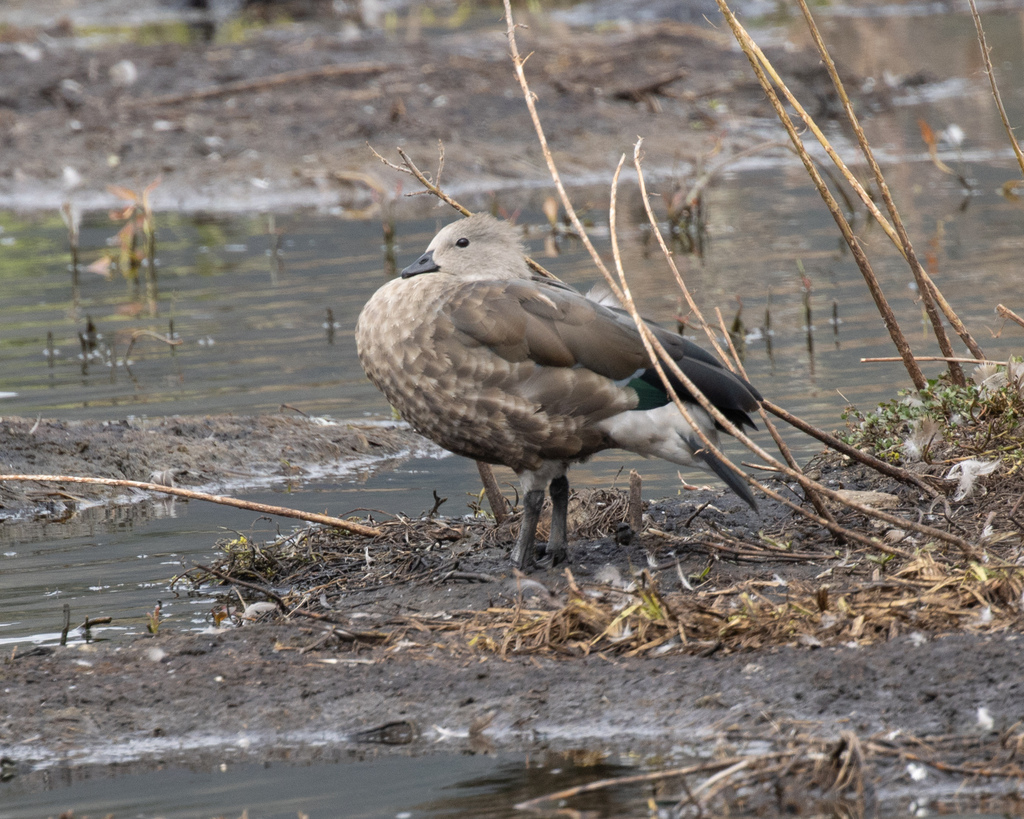
The blue-winged goose is a stocky, goose-like waterfowl measuring 60–75 centimetres in length. At rest, it appears fairly dull, with grey-brown plumage, a slightly paler head and upper neck, a small black bill, and black legs. The thick, loose plumage is an adaptation to the cold of the Ethiopian highlands. The sexes are similar in appearance, though immature birds are noticeably duller. In flight, this species reveals its most distinctive feature: a conspicuous pale blue upper forewing, contrasting with black primary feathers and black secondaries glossed green. The underwing shows black flight feathers with a striking white inner forewing.
Range & Habitat
The blue-winged goose is endemic to Ethiopia and is the only member of its genus. It inhabits grasslands close to rivers, freshwater lakes, swamps, and freshwater marshes at high altitudes of 2,500–4,000 metres, typically in subtropical or tropical shrubland or grassland environments. This preference for highland wetland habitats reflects its adaptation to Ethiopia's mountainous terrain.
Behaviour & Diet
This is a quiet species compared to true geese—it does not honk or cackle, but both sexes may give a high-pitched whistle, and it produces a barking alarm call when flushed. The blue-winged goose feeds by grazing and is apparently largely nocturnal, spending daylight hours loafing. Despite being capable swimmers and strong fliers, these are terrestrial birds that are reluctant to take to water or air, making them quite approachable. Outside the breeding season, they form flocks of up to 100 individuals. They breed at mountain lakes and streams; in captivity, they build lined nests amongst grass tussocks and lay 6–7 eggs.
Best Time & Places to See It
Birdwatchers seeking the blue-winged goose must travel to Ethiopia's highland regions, particularly to areas with suitable grassland and freshwater wetland habitats between 2,500–4,000 metres altitude. The species forms larger flocks outside the breeding season, which may offer better opportunities for viewing. Its nocturnal feeding habits mean that early mornings or late afternoons may yield the best sightings when birds are more active.
Photography Tips
Photographers should capitalize on this species' approachable nature, though patience is essential given its preference for loafing during daylight hours. The pale blue upper forewing is the most striking field mark and is only visible in flight, so anticipating takeoffs will be crucial for capturing the most distinctive images. The bird's stocky silhouette and subtle grey-brown plumage require careful exposure metering to avoid underexposure. The high-altitude habitat may present challenging lighting conditions, so early morning or late afternoon light will provide the most flattering photography opportunities.
Ethiopian Bird Watching
Abijata-Shalla Lakes National Park
Ethiopia
+438 birds+7 mammals
Two crater lakes of contrasting chemistry define this remote corner of Ethiopia's Rift Valley, where soda lakes and freshwater basins create a mosaic of distinct aquatic…
VIEW NATIONAL PARKBale Mountains National Park
Ethiopia
+397 birds+20 mammals
Where the Ethiopian highlands rise above 4,000 metres, the Bale Mountains create a landscape of stunning ecological extremes—from afroalpine grasslands swept by wind and mist to…
VIEW NATIONAL PARKAwash National Park
Didiga, Ethiopia
+473 birds+23 mammals
Where the Ethiopian Rift Valley carves through volcanic plateaus, a ribbon of riverine forest winds through acacia scrubland and grassland, creating a mosaic of habitats that…
VIEW NATURAL PARKNo community photos yet. Log in to add the first one.
No community observations of this species yet.