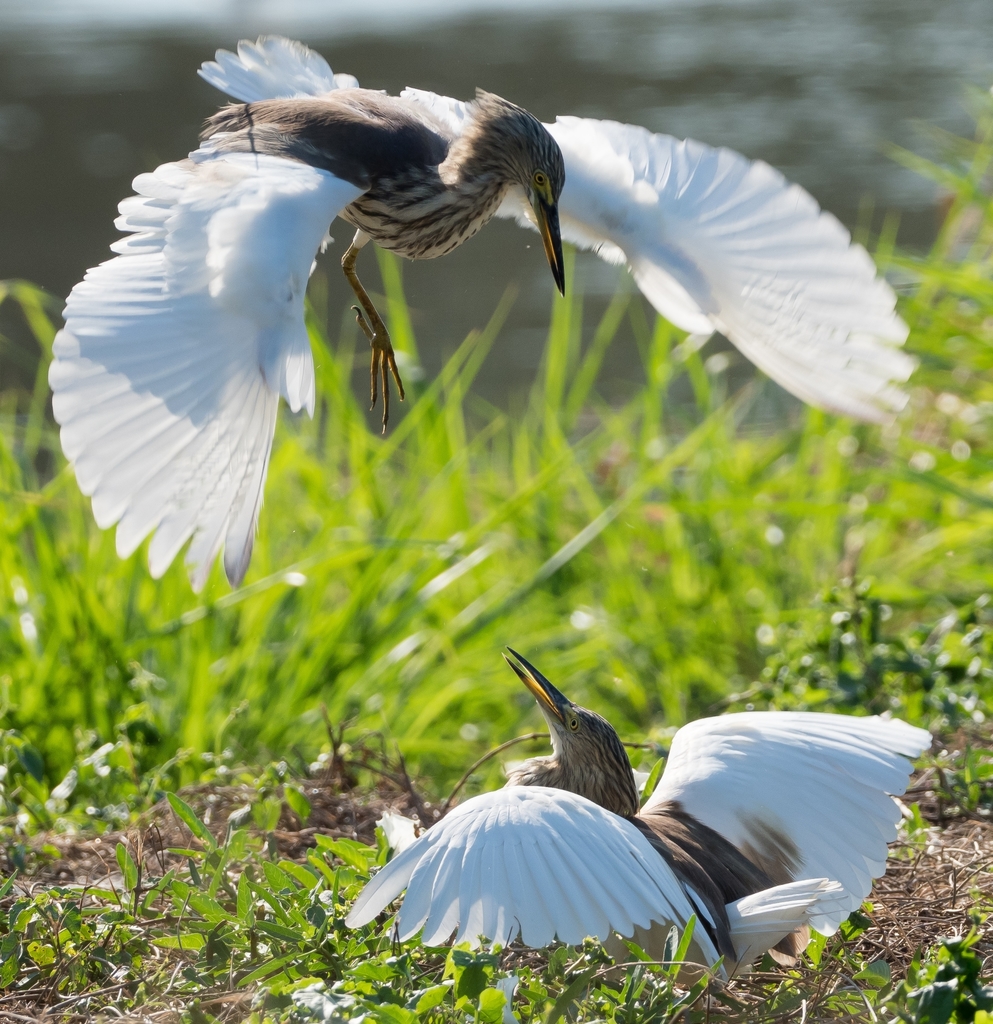
Chinese Pond Heron
Photo © Marco Chan
Photo © Marco Chan — CC BY 4.0 — Source: iNaturalist #101600110Identification
The Chinese pond heron is a small heron, typically measuring 47 centimetres (19 inches) in length. One of its most striking features is the dramatic seasonal change in plumage: during breeding season, the bird displays vibrant red, blue, and white colouration, while in non-breeding periods it adopts a much more subdued greyish-brown plumage flecked with white. This transformation makes the same individual look like entirely different species depending on the season.
Consistent year-round features include white wings, a yellow bill with a black tip, and yellow eyes and legs. These details, combined with its compact size, make it readily distinguishable from larger heron species within its range.
Range & Habitat
The Chinese pond heron is found across China and adjacent temperate and subtropical regions of East Asia. It is essentially a lowland bird, with its range limited by subarctic regions to the north and by mountain ranges to the west and south. The species is closely related to the Indian pond heron to the west and the Javan pond heron to the south, with these three species forming a superspecies group across Asia.
This species frequents shallow fresh and salt water wetlands and ponds. While rare vagrants have been recorded far from its typical range—including a breeding-plumaged bird in Burma in 1995 and remarkably, one individual in Alaska in 1997—the Chinese pond heron is primarily an East Asian species and remains uncommon outside its core range.
Behaviour & Diet
The Chinese pond heron feeds on insects, fish, and crustaceans, hunting in the shallow waters it favours. Like many herons, it is colonial during breeding season, often nesting in mixed-species heronries alongside other heron species. Females lay a clutch of 3–6 blue-green eggs, typical of the heron family.
Best Time & Places to See It
The species is fairly common throughout its East Asian range and is not considered threatened by the IUCN. Birdwatchers and nature travellers visiting shallow wetlands and ponds in China and surrounding lowland areas during breeding season have good chances of observing this heron, particularly when it displays its spectacular breeding plumage of red, blue, and white.
Photography Tips
The dramatic seasonal plumage change offers excellent photographic opportunities, especially during breeding season when the bird's vibrant colours are on full display. The contrast between breeding and non-breeding plumage makes this species particularly rewarding for documenting seasonal variation in herons. Patience in wetland habitats will be rewarded with opportunities to capture this elegant bird in its shallow-water hunting behaviour.
Caohai National Nature Reserve
Doi Inthanon National Park
Gaoligong Mountain National Nature Reserve
Giant Panda National Park
Gobi Gurvan Saikhan National Park
Hainan Tropical Rainforest National Park
Hat Noppharat Thara-Mu Ko Phi Phi National Park
Huanglong Scenic and Historic Interest Area
Jiuzhai Valley
Nothing matches these filters.
No community photos yet. Log in to add the first one.
No community observations of this species yet.