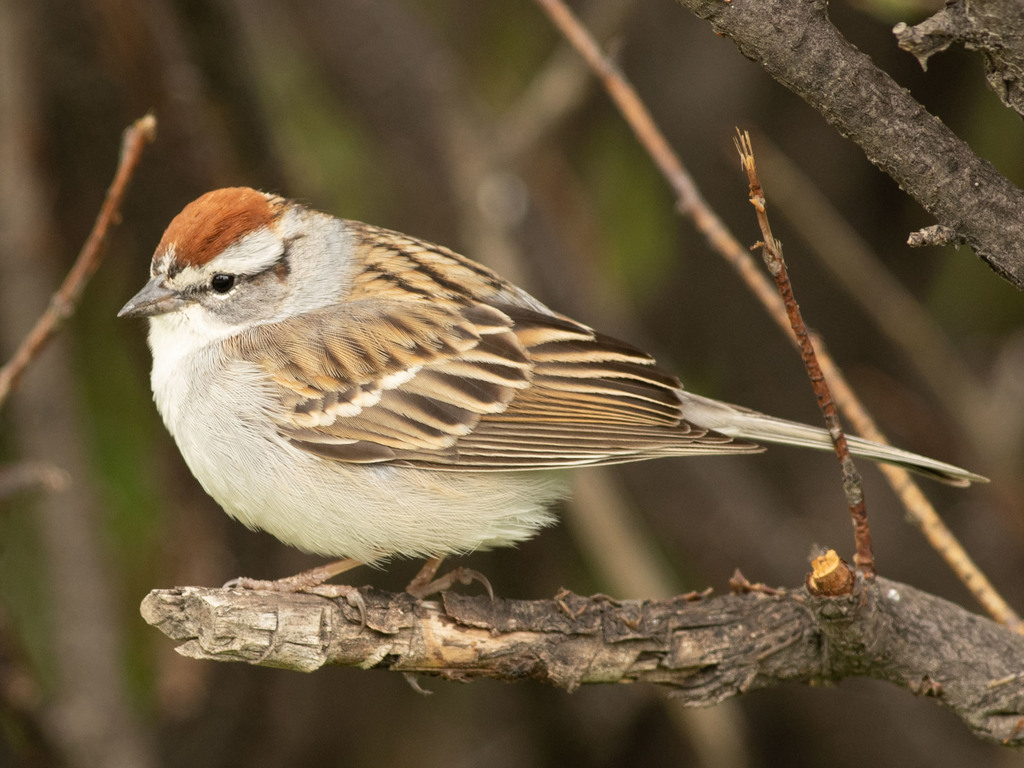
Chipping Sparrow
Photo © Kathlin Simpkins
Photo © Kathlin Simpkins — CC0 1.0 — Source: iNaturalist photo #198992636Identification
The chipping sparrow is a small, delicate sparrow measuring 4.7–5.9 inches in length with a wingspan of 8.3 inches and weighing just 0.4–0.6 oz. In breeding plumage, adults display distinctive features: a bright reddish cap, orangish-rust upperparts, gray head and underparts, a nearly white supercilium (eyebrow stripe), and a black line running through the eye. Non-breeding adults are considerably duller, with a brownish cap and less pronounced facial markings. Juveniles are prominently streaked below and show a dark eye-line extending both in front of and behind the eye, with generally obscure brownish caps and dusky eyebrows.
Range & Habitat
The chipping sparrow is widespread, fairly tame, and common across most of its North American range, with five recognized subspecies. This partial migrant sees northerly populations flying south in fall to overwinter in Mexico and the southern United States, returning north in spring. The species breeds in grassy, open woodland clearings and shrubby grass fields. In the western parts of their range, they prefer coniferous forests, while eastern populations favor woodland, farmland, parks, and gardens. Before the introduction of house sparrows, chipping sparrows filled a similar ecological niche and inhabited cities in large numbers; they remain associated with human habitations and are relatively unafraid of people in areas where house sparrows are not dominant.
Behaviour & Diet
Chipping sparrows molt twice yearly, transforming between their distinctive breeding and duller non-breeding plumages. Their song is a distinctive trill, and they produce a piercing flight call audible during nocturnal migration. In winter, they become gregarious, forming flocks that sometimes associate with other bird species. They forage primarily on the ground for seeds and other food items, and also clamber on plants and trees to feed on buds and small arthropods. Seeds form a year-round dietary staple, though insects comprise most of their diet during the breeding season; spiders are occasionally taken as well.
Best Time & Places to See It
Male chipping sparrows arrive at breeding grounds from March in southern areas such as Texas, through mid-May in locations like southern Alberta and northern Ontario. Females arrive one to two weeks later, and males begin singing shortly after to attract mates. Breeding occurs from late April through May. To find them, search grassy woodland clearings, shrubby fields, parks, and gardens, particularly near open areas. In winter, look for flocking birds in covered foraging areas near field edges. During migration periods, listen for their distinctive piercing flight calls at night.
Photography Tips
The dramatic seasonal plumage change makes spring an excellent time to photograph breeding birds in their vibrant reddish caps and clean gray underparts. Photograph ground-foraging birds in open, covered areas near field edges during daylight hours. Since nests are typically built low in trees—usually conifers between 1 and 6 meters (3.3–20 feet) high—patient observers may locate nest sites for breeding behavior documentation. Their small size and active foraging behavior reward photographers with patience; capture them clambering among vegetation or picking seeds from the ground for natural behavior shots.
Tombstone Territorial Park
Alaska Maritime National Wildlife Refuge
Algonquin Provincial Park
Alligator River National Wildlife Refuge
Arches National Park
Badlands National Park
Banff National Park
Bear River Migratory Bird Refuge
Bic National Park
Nothing matches these filters.
No community photos yet. Log in to add the first one.
No community observations of this species yet.