Hide 9 Pins
Iberian Green Woodpecker · Great Spotted Woodpecker+17
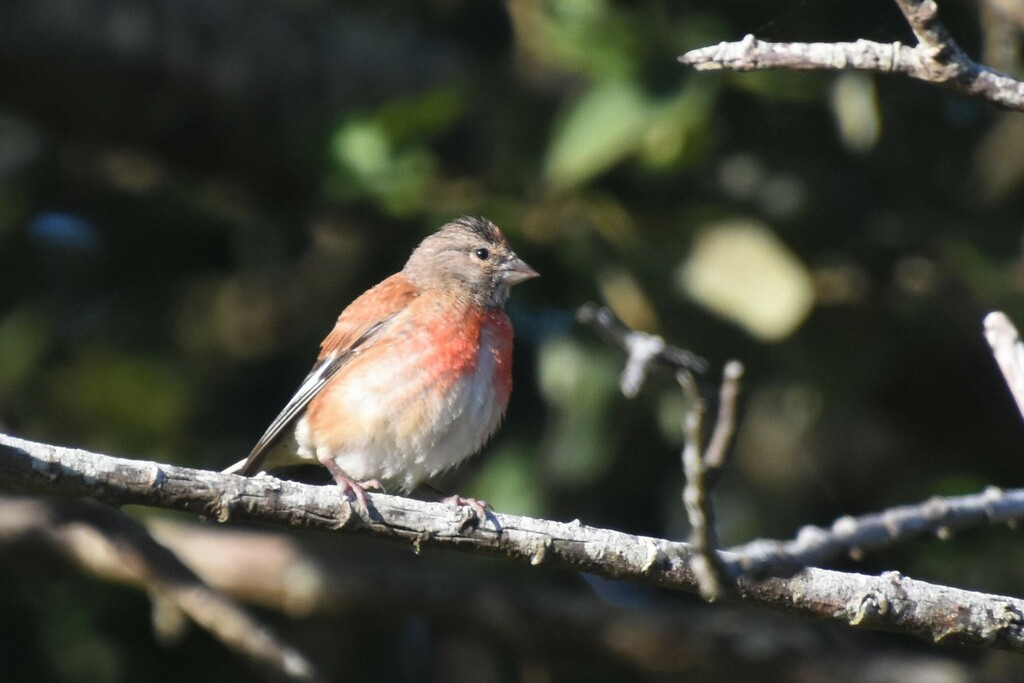
The common linnet is a slim, long-tailed finch with distinctive plumage that varies by sex and season. Both sexes share brown upper parts, a sullied white throat, and a grey bill. The key to identifying males in breeding plumage is their striking red head-patch and red breast, combined with a grey nape. Females and young birds lack this red coloration entirely, instead displaying white underparts with buff streaking on the breast, making them more subdued in appearance but no less elegant.
The common linnet breeds across Europe, the western Palearctic, and North Africa, with seven recognized subspecies distributed from Scotland to the Canary Islands and eastward to Mongolia and northwestern China. While partially resident throughout much of its range, many eastern and northern populations migrate southward during winter or relocate to coastal areas. Remarkably, linnets are sometimes encountered several hundred miles offshore, demonstrating their capacity for dispersal.
These birds favour open land dotted with thick bushes for breeding, thriving in heathland and gardens where suitable nesting sites are available. Outside the breeding season, they congregate in large flocks—often mixed with other finches such as twite—on coasts and salt marshes, where food is abundant.
Common linnets breed in loose colonies, building their nests in bushes and laying clutches of four to seven eggs. The species is vocal, with a pleasant song characterized by fast trills and twitters. They are highly gregarious outside the breeding season, forming impressive flocks that can include multiple finch species.
Linnets feed primarily on seeds, foraging on the ground and in low vegetation. They show a preference for small to medium-sized seeds from arable weeds, including knotgrass, dock, crucifers, chickweeds, dandelions, thistle, sow-thistle, mayweed, groundsel, hawthorn, and birch. Parents feed these seeds to their chicks, and the species supplements its diet with a small component of invertebrates.
Spring and summer are ideal for observing breeding birds in open heathland and gardens with suitable scrub. Winter offers excellent opportunities to witness the species' gregarious nature, particularly on coasts and salt marshes where large flocks congregate. Migration periods may bring unexpected sightings in unexpected locations. European birders should note that populations have declined significantly since the 1960s, making careful habitat selection important for successful viewing.
The linnet's slim profile and long tail make it an elegant photographic subject. Capture males in breeding plumage during spring and early summer to showcase their distinctive red head and breast against brown upperparts. Winter flocks on salt marshes provide opportunities for large gatherings, though individual birds can be challenging to isolate. Photograph foraging birds on the ground or in low bushes where they naturally spend much of their time. The bird's pleasant song makes audio recording a rewarding complement to visual documentation.
Nothing matches these filters.
Nothing matches these filters.
No community observations of this species yet.
We'd love to hear from you. We'll reply as soon as possible.
Found an error? Have a suggestion? We read every message.
A compact view of how this species lives, moves and responds to its environment.
Select a card to explore the details.
Please confirm the photo rights and credit terms first.
I'm the author of this photo or hold the rights to it, and I keep full ownership. I grant Wild Atlas Guide a free, non-exclusive licence to display it on the site and in Wild Atlas Guide's own channels, including social media, always credited to me by my display name or the Instagram handle I choose to provide. I confirm it does not reveal a sensitive wildlife location or a recognisable person without their permission. I can withdraw future social use for this photo or ask for it to be removed at any time.
Please accept the photo rights and credit terms to continue.
Uploading…
We use cookies to measure traffic and improve Wild Atlas Guide. You decide. Privacy policy