Hide 9 Pins
Iberian Green Woodpecker · Great Spotted Woodpecker+17
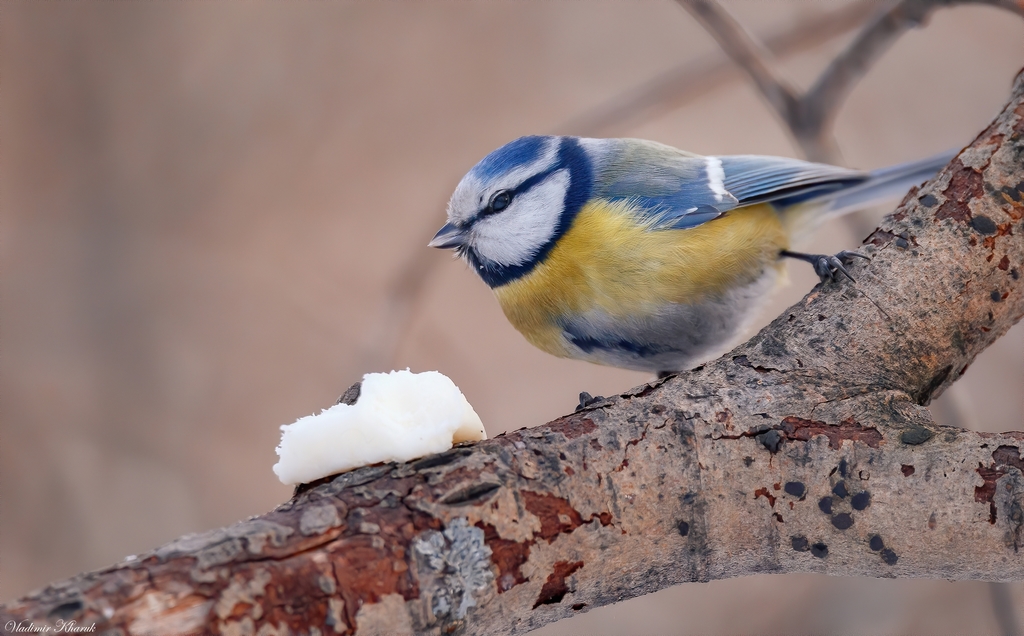
The Eurasian blue tit is instantly recognizable by its striking blue and yellow plumage and diminutive size. Measuring just 10.5–12 cm long with a wingspan of 17.5–20 cm, these birds are among Europe's tiniest passerines. A typical blue tit displays an intensely blue crown and a distinctive dark blue line running through the eye, encircling white cheeks and chin. The forehead and wing bar are white, while the nape, wings and tail are blue, and the back is yellowish green. The underparts are predominantly sulphur-yellow with a dark line running down the abdomen. The bill is black and the legs bluish grey. Juvenile birds are yellower with less contrasting colours, gradually resembling adults by September, though retaining some wing markings until the following spring.
Interestingly, the intensity of the yellow underparts indicates how many yellow-green caterpillars the bird has consumed, thanks to high carotene levels in their diet. While the sexes appear similar to human eyes, males can be distinguished from females and juveniles under ultraviolet light by their brighter blue crown—a distinction the birds themselves can perceive, as they possess the ability to see in ultraviolet.
The Eurasian blue tit is a widespread and common resident breeder throughout temperate and subarctic Europe and parts of western Asia, with populations currently estimated at around 20 to 44 million pairs across Europe. The species is native across most of the European continent with temperate or Mediterranean climates, including Ireland, the United Kingdom, and most of the European Union and EFTA countries, as well as parts of the Middle East including Turkey, Iran, and the Caucasus region. Nine recognized subspecies exist, differing mainly in subtle plumage variations across their respective ranges.
These birds typically inhabit deciduous or mixed woodlands, particularly those with a high proportion of oak, and are usually non-migratory. In Great Britain, they adapt to a variety of environments including parks, gardens, and even town centres. They readily exploit human-made resources, readily accepting nest boxes when natural tree holes are unavailable, though they face competition from the larger and somewhat more common great tit.
The Eurasian blue tit is renowned for its remarkable acrobatic abilities. These nimble birds can grip the outermost, most slender branches of trees and shrubs, often hanging upside down while foraging—a skill that gives them an advantage over their larger competitors. They ascend tree trunks in characteristic short, jerky hops and frequently join mixed winter flocks alongside great tits, where their superior balance on delicate twigs is particularly evident.
The diet of blue tits varies seasonally. During the breeding season, they feed primarily on insects and spiders, which provide essential protein for growing chicks. Outside the breeding season, their diet expands to include seeds and other plant-based foods, allowing them to survive winter months when invertebrates become scarce. The carotene pigments in the yellow-green caterpillars they consume are directly responsible for the brightness of their yellow underparts, making plumage coloration an honest signal of feeding success.
The Eurasian blue tit's year-round residency throughout most of its range means it can be observed in any season, making it an excellent subject for nature travellers visiting Europe. They are most conspicuous during winter months when they visit gardens and parks to feed at bird tables and feeders, and in spring when breeding activity increases their visibility and vocal output. Their small size and active behaviour make them rewarding subjects regardless of season.
Prime locations include deciduous and mixed woodlands with abundant oak, particularly across Britain and Continental Europe. However, blue tits are highly adaptable and readily visit parks, gardens, and even urban green spaces, making them accessible to travellers visiting cities and towns. Their widespread distribution across temperate Europe ensures that visitors exploring the continent in virtually any region have excellent opportunities to encounter this charismatic species.
Photographing blue tits presents wonderful opportunities thanks to their small size, colourful plumage, and acrobatic behaviour. The combination of intense blues, whites, and yellows makes them visually striking subjects, particularly in good natural light where their colours are most vivid. Their propensity for hanging upside down while foraging offers unique compositional possibilities and dynamic poses that go beyond typical perched-bird photography.
Garden feeding stations and nest boxes provide reliable, close-range opportunities for photography, particularly in winter when birds are most active at feeders. However, patience is essential—their quick, jerky movements and small size demand fast shutter speeds and careful focusing. Dawn and midday light generally provides the best conditions to capture the full brilliance of their plumage, while their acrobatic antics offer photographers chances to capture engaging behaviour that brings these tiny, charismatic birds to life.
Nothing matches these filters.
Nothing matches these filters.
No community photos yet. Log in to add the first one.
No community observations of this species yet.
We'd love to hear from you. We'll reply as soon as possible.
Found an error? Have a suggestion? We read every message.
A compact view of how this species lives, moves and responds to its environment.
Select a card to explore the details.
Please confirm the photo rights and credit terms first.
I'm the author of this photo or hold the rights to it, and I keep full ownership. I grant Wild Atlas Guide a free, non-exclusive licence to display it on the site and in Wild Atlas Guide's own channels, including social media, always credited to me by my display name or the Instagram handle I choose to provide. I confirm it does not reveal a sensitive wildlife location or a recognisable person without their permission. I can withdraw future social use for this photo or ask for it to be removed at any time.
Please accept the photo rights and credit terms to continue.
Uploading…
We use cookies to measure traffic and improve Wild Atlas Guide. You decide. Privacy policy