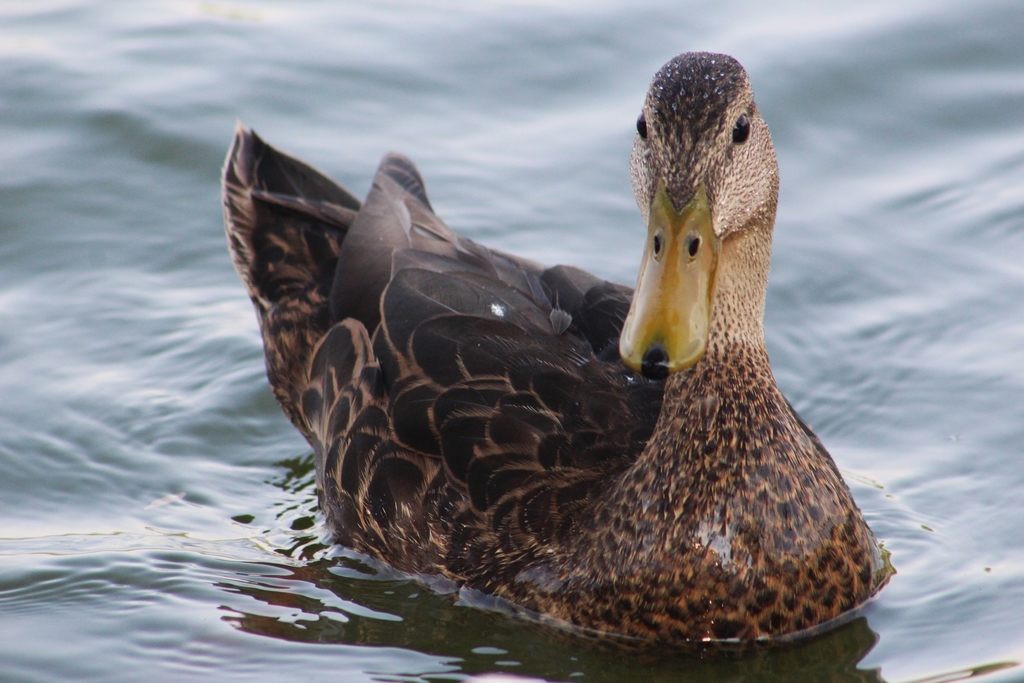
Mexican Duck
Photo © Rocio Reybal
Photo © Rocio Reybal — CC BY 4.0 — Source: iNaturalist photo #195495169Identification
The Mexican duck is a medium-sized dabbling duck measuring 45–55 cm in length and weighing 849–1,243 g. The species is mainly brown in plumage, with a distinctive blue speculum (wing patch) edged with white that becomes particularly obvious in flight or when the bird is at rest. Males display a brighter yellow bill than females, providing a useful field mark for distinguishing the sexes. The male produces a nasal call, while females utter the familiar "quack" commonly associated with ducks.
Range & Habitat
The Mexican duck breeds in Mexico and the southwestern United States, with most of the population being resident year-round. However, some northern populations migrate south into Mexico during winter months. The species occurs widely but in limited numbers throughout Colorado in all seasons, with photographic records also documenting birds from Utah, Wyoming, Nebraska, and Montana. Mexican ducks are highly adaptable and reside in almost all aquatic habitats, making them generalists in their habitat use.
Behaviour & Diet
These dabbling ducks primarily feed on various seeds and aquatic plants, typical of their foraging strategy. During breeding season, females lay two to ten eggs per clutch, with an incubation period of 26 days. The vocal differences between sexes—the male's nasal call contrasting with the female's loud quack—are important for species recognition and pair formation in natural conditions.
Best Time & Places to See It
Year-round residents can be found throughout most of the species' range in Mexico and the southwestern United States. Colorado offers reliable viewing opportunities in all seasons, while winter months may bring increased numbers as northern populations migrate south. The species' preference for diverse aquatic habitats means that wetlands, marshes, and water bodies throughout its range offer potential viewing opportunities. However, populations are currently undergoing decline, making sightings increasingly important to document.
Photography Tips
Photographers should look for the distinctive blue speculum edged with white, which is most visible when birds are in flight or when wings are partially raised. The sexual dimorphism in bill color provides an additional photographic detail worth capturing. Since Mexican ducks utilize almost all aquatic habitats, photographers should scout wetlands and water bodies across the southwestern region. Early morning light often enhances the visibility of plumage details and the bright yellow of males' bills, making this an ideal time for photography.
Big Bend National Park
Brewster County, United States
+345 birds+34 mammals
Where the Chisos Mountains rise abruptly from the Sonoran Desert floor, Big Bend National Park spans over 7,300 square kilometers of one of North America's most…
VIEW NATIONAL PARKSaguaro National Park
Rincon Valley, United States
+354 birds+40 mammals
Where the Sonoran Desert meets sky-island mountains, two geographically separated districts of Saguaro National Park sprawl across nearly two thousand square kilometers of Arizona's most iconic…
VIEW NATIONAL PARKCarlsbad Caverns National Park
Eddy County, United States
+309 birds+18 mammals
Beneath the Chihuahuan Desert floor of southern New Mexico lies one of North America's most spectacular subterranean landscapes. Carlsbad Caverns National Park encompasses over 518 square…
VIEW NATIONAL PARKTutuaca
Tosanachi, Mexico
+147 birds+13 mammals
Where copper canyons plunge deeper than the Grand Canyon itself, Mexico's remote Sierra Madre Occidental unfolds in dramatic vertical relief. Tutuaca anchors this wilderness realm, a…
VIEW PROTECTED LANDSCAPEGuadalupe Mountains National Park
Culberson County, United States
+262 birds+14 mammals
Where fossil-laden limestone ridges thrust skyward above the Chihuahuan Desert floor, Guadalupe Mountains National Park reveals a landscape sculpted by ancient seas and relentless aridity. These…
VIEW NATIONAL PARKBosque del Apache National Wildlife Refuge
Socorro County, United States
+345 birds+17 mammals
Where the Rio Grande emerges from its desert canyon in central New Mexico, a narrow ribbon of riparian woodland defies the arid landscape that surrounds it.…
VIEW WILDLIFE SANCTUARYLaguna Atascosa National Wildlife Refuge
Cameron County, United States
+365 birds+19 mammals
Where coastal prairie meets shallow lagoon along the southernmost tip of Texas, Laguna Atascosa National Wildlife Sanctuary sprawls across a landscape sculpted by salt spray and…
VIEW WILDLIFE SANCTUARYSanta Ana National Wildlife Refuge
Hidalgo County, United States
+349 birds+12 mammals
Where the Rio Grande delta meets the semi-arid scrublands of South Texas, Santa Ana National Wildlife Sanctuary preserves a rare mosaic of wetland and thornforest habitat…
VIEW WILDLIFE SANCTUARYHavasu National Wildlife Refuge
Lake Havasu City, United States
+291 birds+8 mammals
Where the Colorado River widens into a vast reservoir in the Sonoran Desert, Havasu National Wildlife Sanctuary protects one of the most critical wetland ecosystems in…
VIEW WILDLIFE SANCTUARYBitter Lake National Wildlife Refuge
Chaves County, United States
+284 birds+10 mammals
Across the high desert floor of southeastern New Mexico, where elevation and aridity shape every living thing, shallow alkaline lakes and marshes form an unexpected oasis…
VIEW WILDLIFE SANCTUARYNo community photos yet. Log in to add the first one.
No community observations of this species yet.