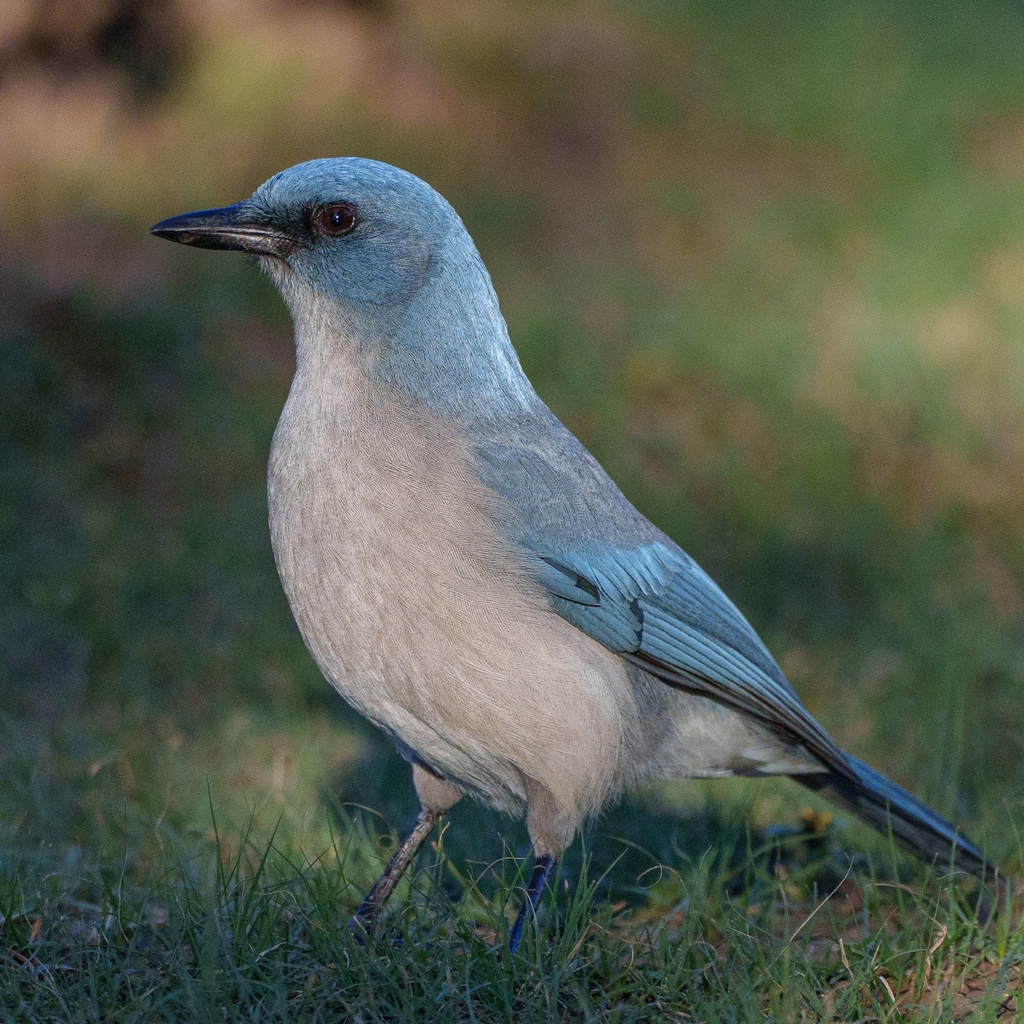
Mexican Jay
Photo © Pedro Guevara
Photo © Pedro Guevara — CC BY 4.0 — Source: iNaturalist #194260995Identification
The Mexican jay is a medium-sized passerine with striking blue upperparts contrasting against pale gray underparts. Its blue head, blue-gray mantle, blue wings and tail, and gray breast make it a distinctive presence in montane forests. The species is most readily distinguished from the similar Woodhouse's scrub-jay by its plain, unstreaked throat and breast, and by its mantle which contrasts less sharply with the head and wings. Both sexes are morphologically similar, though juveniles display less vibrant blue coloration. In some populations, young birds show a pale or pinkish bill that gradually darkens to black with age. The iris is brown and the legs are black.
Range & Habitat
The Mexican jay is native to the mountainous regions of Mexico and the southwestern United States, with populations distributed across the Sierra Madre Oriental, Sierra Madre Occidental, and Central Plateau of Mexico, as well as eastern Arizona, western New Mexico, and western Texas. The species shows considerable geographic variation, divided into three divergent regional groups with distinct differences in size, coloration, and vocalizations. Its preferred habitat is montane pine-oak forest, where it is adapted to the varied elevations and forest compositions of these mountain ranges.
Behaviour & Diet
The Mexican jay employs a cooperative breeding system in which parents receive assistance from other birds in raising their young—a relatively uncommon trait among jays. The species is notably social, forming large flocks and maintaining complex social structures. In winter, the diet consists primarily of acorns and pine nuts, which the birds store for later consumption. However, their diet is more diverse than these staple foods suggest, incorporating many other plant and animal foods throughout the year to supplement their nutritional needs.
Best Time & Places to See It
The Mexican jay is a common species throughout its range, making it a reliable sighting for nature travelers visiting montane pine-oak forests in the southwestern United States and Mexico. The best locations include the mountain ranges of Arizona, New Mexico, and western Texas in the United States, as well as the extensive Sierra Madre systems and Central Plateau of Mexico. The species is present year-round, though observing cooperative breeding behavior and large flocks may be particularly rewarding during the breeding and winter seasons respectively.
Photography Tips
The Mexican jay's striking blue and gray plumage photographs well in the dappled light of pine-oak forests. Position yourself with the sun behind or to the side to capture the vibrant blue of the head, wings, and tail while maintaining detail in the paler underparts. Patience will reward you with opportunities to photograph the species' social behavior—large flocks provide excellent compositional possibilities. In some populations, juvenile birds with their distinctive pale bills offer unique photographic subjects. Early morning light in montane forest habitat tends to be ideal for capturing the contrast between the blue upperparts and gray underparts.
Big Bend National Park
Brewster County, United States
+345 birds+34 mammals
Where the Chisos Mountains rise abruptly from the Sonoran Desert floor, Big Bend National Park spans over 7,300 square kilometers of one of North America's most…
VIEW NATIONAL PARKSaguaro National Park
Rincon Valley, United States
+354 birds+40 mammals
Where the Sonoran Desert meets sky-island mountains, two geographically separated districts of Saguaro National Park sprawl across nearly two thousand square kilometers of Arizona's most iconic…
VIEW NATIONAL PARKTutuaca
Tosanachi, Mexico
+147 birds+13 mammals
Where copper canyons plunge deeper than the Grand Canyon itself, Mexico's remote Sierra Madre Occidental unfolds in dramatic vertical relief. Tutuaca anchors this wilderness realm, a…
VIEW PROTECTED LANDSCAPENo community photos yet. Log in to add the first one.
No community observations of this species yet.