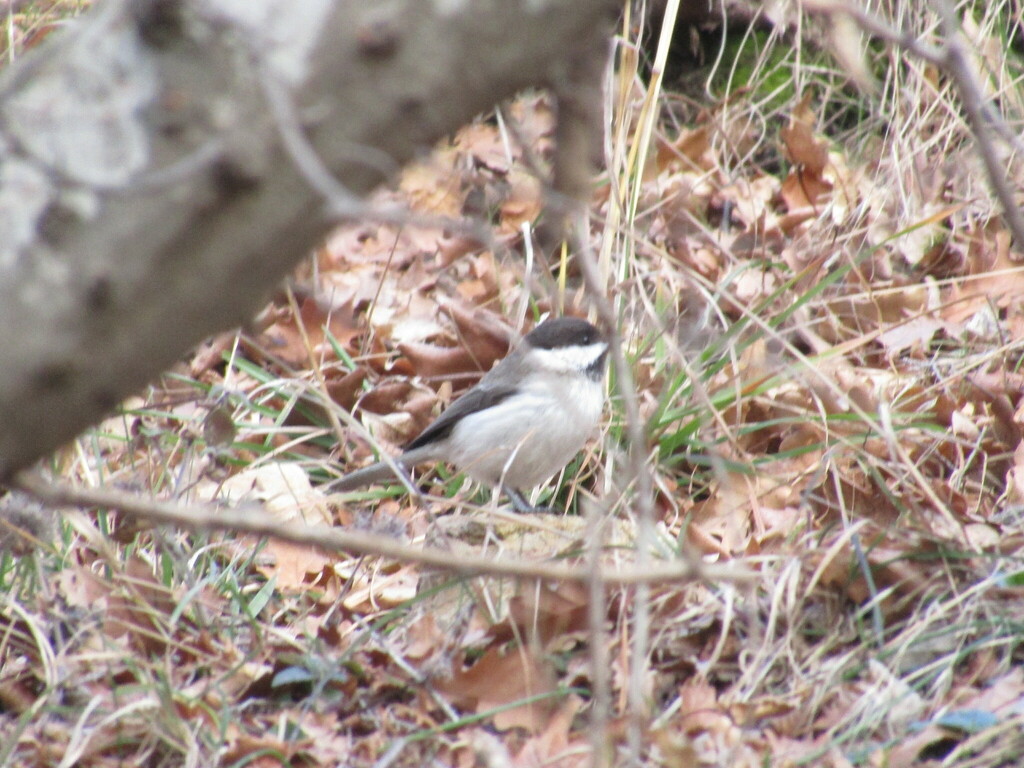
Sombre Tit
Photo © SteveM4560
Photo © SteveM4560 — CC BY 4.0 — Source: iNaturalist #260792644Identification
The sombre tit is a small passerine, slightly smaller than the great tit but with similar proportions. Its most distinctive feature is a brownish to grey-black cap that extends further down the sides of the head than in related species, combined with a narrow off-white cheek patch restricted by a relatively large bib. When alert, the bird often adopts an upright stance with a distinctly peaked head profile, which helps distinguish it from the similar willow tit. Compared to the marsh tit, which shares its range in some areas, the sombre tit has a proportionately longer tail. Juvenile birds are noticeably duller than adults, with brownish tinges to their plumage.
Range & Habitat
The sombre tit is found across southeastern Europe and southwest Asia, with a range extending from Slovenia and Romania in the north, southward through the Balkans to Crete, and eastward across Anatolia and the southern Caucasus into Iraq, Iran, Israel, and Lebanon. The species occurs in low densities in thin woodlands at elevations between 1000 and 1600 metres above sea level. It favours mosaic landscapes with moderate shrub and tree cover that receive relatively high levels of sunlight, creating a patchwork of open and wooded terrain.
Behaviour & Diet
Like other tit species, the sombre tit is a cavity nester, breeding in holes within juniper, willow, poplar, and similar trees. It will also nest in unconventional sites such as iron pipes used for orchard fencing and readily adopts artificial nest-boxes. Breeding occurs from early April through early August, with pairs typically raising two clutches per year, each containing 4 to 9 eggs. Birds breed on mountain slopes, in open deciduous forests, and among trees and bushes in rocky terrain and fruit orchards.
The sombre tit's diet consists primarily of insects, with caterpillars and other larvae forming the bulk of its food intake. It forages both on the ground and in the lower branches of trees and bushes, making it an active and visible species within its preferred habitat.
Best Time & Places to See It
The breeding season from April to August offers the best opportunity to observe sombre tits, as they are most active and vocal during this period. Travellers should explore montane woodlands in the Balkans, Anatolia, and the Caucasus region at elevations between 1000 and 1600 metres. Look for the species in open deciduous forests and rocky terrain with scattered trees and shrubs, particularly in areas with fruit orchards nearby, where these birds are regularly encountered.
Photography Tips
Photograph sombre tits in their characteristic upright, alert posture to capture the distinctive peaked head profile that aids identification. The low-density populations and preference for thin woodlands mean patience is essential; position yourself early in the morning when birds are most active. Focus on capturing the contrast between the dark cap, narrow white cheek patch, and substantial bib, as these features are key to distinguishing this species from similar tits. The birds' habit of foraging both in trees and on the ground provides varied shooting opportunities.
National Park Djerdap
Mehedinți, Romania
+127 birds+5 mammals
Where the Danube carves its most dramatic passage through southeastern Europe, the Djerdap Gorge defines the boundary between Romania and Serbia, and within this UNESCO-recognised landscape…
VIEW NATIONAL PARKDanube Delta Biosphere Reserve
Tulcea, Romania
+277 birds+27 mammals
Where the Danube surrenders to the Black Sea, a vast labyrinth of channels, reed beds, and freshwater lakes sprawls across nearly 13,400 square kilometers of eastern…
VIEW NATIONAL PARKPirin National Park
Bansko, Bulgaria
+124 birds+10 mammals
Where jagged limestone peaks pierce the Macedonian sky, ancient glacial valleys cradle some of Bulgaria's most pristine wilderness. This southwestern corner of the Balkans rises to…
VIEW NATIONAL PARKRila National Park
Mala tsarkva, Bulgaria
+138 birds+4 mammals
Where granite peaks pierce the Balkan skyline, pristine conifer forests blanket steep mountain slopes in an ecological tapestry that has remained largely undisturbed for centuries. Bulgaria's…
VIEW NATIONAL PARKStrandzha Nature Park
Kondolovo, Bulgaria
+215 birds+19 mammals
Where the Rhodope Mountains descend toward the Black Sea coast, ancient forests rise above limestone plateaus in a tapestry of ecological richness rarely found elsewhere in…
VIEW NATURAL PARKCentral Balkan National Park
Zhidov dol, Bulgaria
+135 birds+16 mammals
Where granite peaks pierce the Bulgarian highlands, ancient beech and conifer forests blanket mountains that rise dramatically from the Balkan range's heart. This wilderness encompasses three…
VIEW NATIONAL PARKVitosha Nature Park
Chuypetlovo, Bulgaria
+137 birds+12 mammals
Where ancient granite peaks rise above the Bulgarian capital, a wild sanctuary unfolds across nearly 27,000 hectares of pristine montane wilderness. Vitosha's character shifts dramatically with…
VIEW NATURAL PARKVratsa Balkan
Zgorigrad, Bulgaria
+128 birds+10 mammals
Where limestone cliffs plunge into deep river canyons and beech forests give way to rocky karst plateaus, one of Bulgaria's most dramatic mountain landscapes unfolds across…
VIEW NATURE RESERVEPindos National Park
Ioannina Regional Unit, Greece
+163 birds+12 mammals
Where limestone peaks rise abruptly from the Pindus range in northwestern Greece, a landscape of dramatic gorges, alpine meadows, and dense beech forests creates one of…
VIEW NATIONAL PARKVikos–Aoos National Park
Ioannina Regional Unit, Greece
+136 birds+4 mammals
Where limestone gorges plunge through the Pindus Mountains, the Vikos–Aoos National Park guards one of Greece's most dramatic inland wilderness areas. The park's defining feature is…
VIEW NATIONAL PARKMount Parnitha National Park
Municipal Unit of Acharnes, Greece
+137 birds+4 mammals
Where pine-clad ridges rise abruptly from the Attica plains, Mount Parnitha National Park unfolds across nearly 4,000 hectares of Mediterranean mountain wilderness. The park's defining character…
VIEW NATIONAL PARKButrint National Park
Vagalat, Albania
+140 birds+3 mammals
Where the Ionian coast meets ancient alluvial plains, Butrint National Park spans a landscape of extraordinary ecological complexity that has shaped human settlement for three millennia.…
VIEW NATIONAL PARKOlympos National Park
Pieria Regional Unit, Greece
+137 birds+3 mammals
Where the Thessalian plains give way to soaring limestone massifs, Olympos National Park rises as one of the Aegean's most dramatic mountain wilderness areas. This IUCN…
VIEW NATIONAL PARKKerkini Lake National Park
Serres, Greece
+291 birds+18 mammals
Where the Strymon River widens into a sprawling freshwater lake hemmed by the Rhodope Mountains, Kerkini National Park unfolds across northern Greece as one of southeastern…
VIEW NATIONAL PARKNo community photos yet. Log in to add the first one.
No community observations of this species yet.