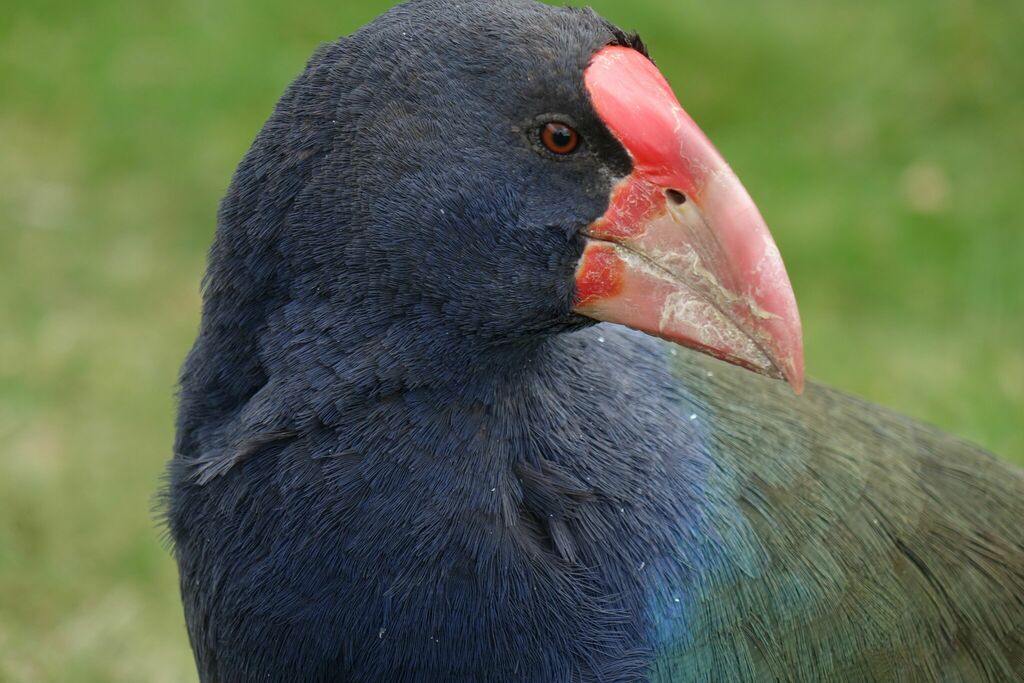
South Island Takahe
Photo © John Barkla
Photo © John Barkla — CC BY 4.0 — Source: iNaturalist photo #475177039The South Island takahē (Porphyrio hochstetteri) is a flightless swamphen indigenous to New Zealand and the largest living member of the rail family. It is often known by the abbreviated name takahē, which it shares with the recently extinct North Island takahē. The two takahē species are also known as notornis. Takahē were hunted extensively by both early European settlers and Māori, and takahē bones have been found in middens in the South Island. Fossil remains have also been found across the South Island. They were not named and described by Europeans until 1847, and then only from fossil bones. In 1850 a living bird was captured, and three more collected in the 19th century. After another bird was captured in 1898, and no more were to be found, the species was presumed extinct. Fifty years later, however, after a carefully planned search, South Island takahē were dramatically rediscovered in November 1948 by Geoffrey Orbell in an isolated valley in the South Island's Murchison Mountains. The species is now managed by the New Zealand Department of Conservation, whose Takahē Recovery Programme maintains populations on several offshore islands as well as Takahē Valley. Takahē has been reintroduced to numerous locations across…
No community photos yet. Log in to add the first one.
No community observations of this species yet.