Identification
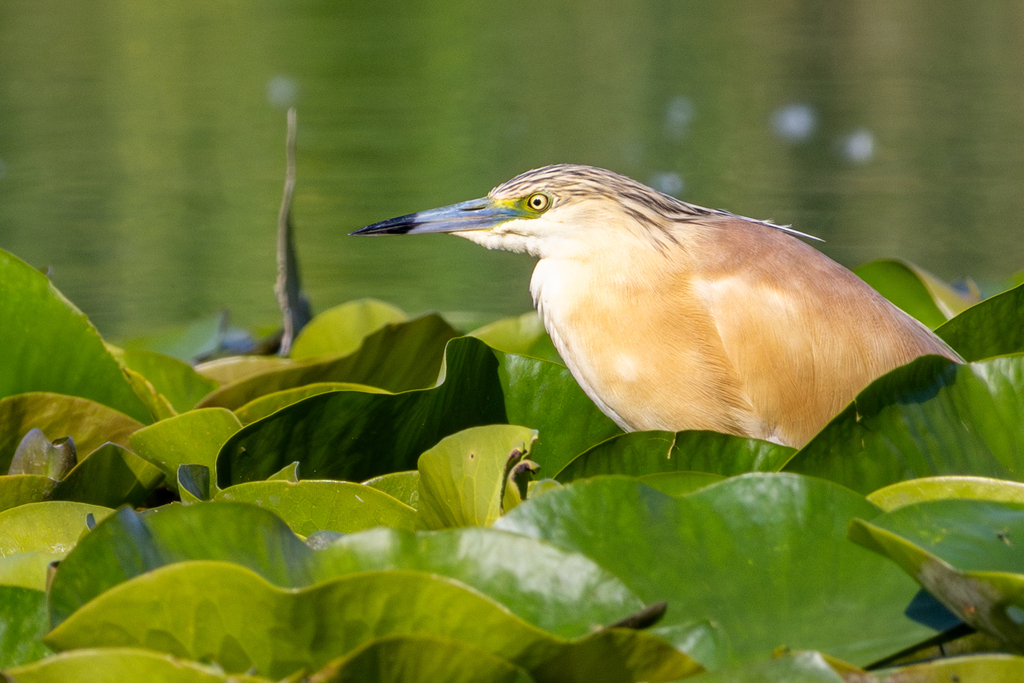
The squacco heron is a small, stocky heron measuring 44–47 cm in length with a wingspan of 80–92 cm. At rest, it presents an unassuming appearance: buff-brown backed with a short neck, short thick bill, and compact body. However, this modest plumage conceals a striking transformation. In flight, the bird appears dramatically white due to the contrasting colour of its wings—a spectacular shift that makes identification in the air quite straightforward. During the breeding season, adults develop long, elegant neck feathers that enhance their profile. Non-breeding birds show tawny-coloured plumage with lighter streaking, a smaller bill, and narrower wing tips, traits shared with related species such as the Indian pond heron and Malagasy pond heron.
Range & Habitat
The squacco heron is of Old World origins, breeding across southern Europe and the Greater Middle East in freshwater localities before undertaking a significant annual migration. The species winters in sub-Saharan Africa, making it a true migrant rather than a year-round resident. It is rare north of its established breeding range, though vagrants have been recorded as far afield as the Fernando de Noronha islands and, more rarely, mainland South America, testament to the occasional wandering nature of this small heron.
The breeding habitat consists of marshy wetlands in warm countries, where these birds favour freshwater environments rich in food sources and suitable nesting sites.
Behaviour & Diet
Squacco herons are colonial nesters, typically breeding in small groups often alongside other wading birds. They construct their nests as platforms of sticks built in trees or shrubs, a strategy that offers protection from ground predators. Three to four eggs are laid per clutch, ensuring modest but sustainable breeding productivity. The diet is opportunistic and varied, consisting of fish, frogs, and insects—typical prey for small herons inhabiting freshwater wetlands. Like other herons, squacco herons can host intestinal parasites, including the Acanthocephalan parasite Ardeirhynchus spiralis.
Best Time & Places to See It
To encounter squacco herons in their breeding range, visit southern Europe and the Greater Middle East during the breeding season when birds are present and active. Spring arrival marks the beginning of breeding activity, making this an excellent period for observation. The best locations are marshy wetlands and freshwater habitats where breeding colonies establish themselves. Winter observers should focus on sub-Saharan Africa, where the entire European and Middle Eastern breeding population congregates during the non-breeding season.
Photography Tips
Photograph squacco herons in flight to capture their most distinctive feature: the brilliant white wing coloration that transforms their appearance dramatically against the sky. At rest, frame the buff-brown back and stocky profile; during breeding season, focus on capturing the long neck feathers. Patience and a telephoto lens are essential, as these birds frequent wetland habitats where distance from the photographer is often necessary. Early morning and late afternoon light will enhance both the warm tones of their resting plumage and the brightness of their wings in flight.