Identification
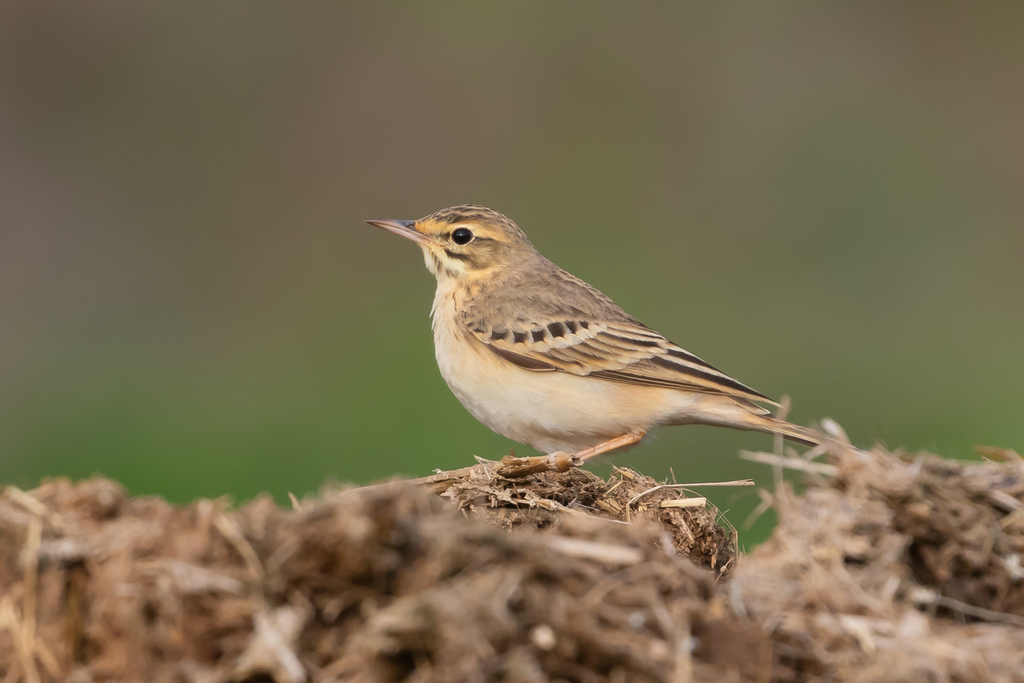
The tawny pipit is a large pipit measuring 16 centimetres long with a wingspan of 25–28 centimetres. On the ground, it presents an understated appearance: mainly sandy brown above with pale underparts. While superficially similar to Richard's pipit, the tawny pipit is slightly smaller with shorter wings, tail, and legs, plus a narrower dark bill and noticeably less streaking overall. In flight, this species demonstrates strong, direct movement and produces a characteristic "schip" call, higher pitched than that of Richard's pipit. Its song comprises a short, loud repetition of a disyllabic "chir-ree chir-ree."
In south Asian wintering grounds, careful observation may be needed to distinguish the tawny pipit from other large pipits present in the region, including Richard's pipit, Blyth's pipit, and paddyfield pipit.
Range & Habitat
The tawny pipit breeds across much of the central Palearctic, from northwest Africa and Portugal in the west to Central Siberia and Inner Mongolia in the east. This wide breeding range reflects the species' tolerance for open, arid landscapes. As a migrant, the species abandons its breeding grounds in winter, moving south to tropical Africa and the Indian subcontinent where it remains until the breeding season returns.
Breeding habitat consists of dry open country, including semi-desert environments where sparse vegetation and open ground predominate.
Behaviour & Diet
The tawny pipit is insectivorous, hunting small invertebrates in the manner typical of its pipit relatives. Like many ground-breeding birds, it nests directly on the ground in its arid breeding habitat, with clutches typically comprising 3–6 eggs. The female undertakes the majority of incubation duties, with eggs hatching after approximately 12 days. Once chicks hatch, both parents share the responsibility of feeding the nestlings until they fledge.
Best Time & Places to See It
To observe tawny pipits in their breeding plumage and behaviour, visit the central Palearctic regions during the breeding season. For those unable to access breeding grounds, the species can be encountered in tropical Africa and the Indian subcontinent during the northern winter months, when birds migrate south to escape the cold.
Photography Tips
Photographers should note that the tawny pipit's sandy-brown colouration provides natural camouflage against dry, open ground, making detection challenging. When birds are in flight, capture their strong, direct flight style and listen for the distinctive "schip" call to locate them. The species' preference for open country means relatively unobstructed sight lines, but patience is essential. During breeding season, the loud, repetitive song may help pinpoint individuals for photography, though approaching nesting birds should be done with care to avoid disturbance.